How GeoTel Empowers Smarter Urban Planning Through Connectivity and Data
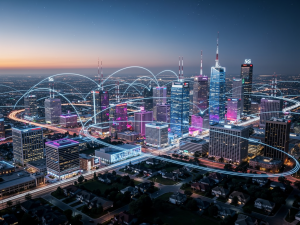
The dynamics of urban planning have experienced a transformative shift in recent years, largely driven by advances in telecommunications infrastructure, geospatial data, and digital twin technologies. As cities expand and infrastructure ages, the need for data-driven, connectivity-based planning has never been more critical. GeoTel, a leader in telecom infrastructure data and geospatial solutions, stands at the forefront of this revolution, equipping urban planners with the tools needed to design smarter, more resilient, and inclusive urban spaces.
The Changing Landscape of Urban Planning

Pexels
Urban planning today is about more than roads, zoning, and utilities; it is a multidisciplinary process that integrates environmental sustainability, smart technologies, and digital networks. As climate resilience, walkability, and digital inclusion become priorities, the necessity for robust broadband, 5G, and IoT infrastructures grows. GeoTel’s expertise in mapping telecom elements like fiber routes, lit buildings, and cell towers ensures planners have access to critical data for making informed decisions.
An illustrative example of this evolution can be seen in the Tampa Bay Regional Planning Council’s adoption of augmented reality (AR) models, which give residents a glimpse into climate-resilient infrastructure projects. This approach not only improves transparency but also fosters public trust. GeoTel complements such initiatives by providing geospatial data layers that integrate connectivity planning into broader infrastructure scenarios, ensuring communities are future-ready.
GeoTel’s Role in the Era of Urban Digital Twins

Pexels
One of the most groundbreaking trends in urban development is the use of digital twins. These virtual models enable planners to simulate systems like traffic flow, energy distribution, and infrastructure resilience. However, many current digital twin models fail to incorporate vital telecom components. GeoTel bridges this gap by offering datasets that layer in fiber networks, broadband coverage, and cell sites, enabling a holistic understanding of urban environments.
Planners can use GeoTel’s data-fed tools like TeleTracker to visualize connectivity alongside utilities, buildings, and environmental systems. This integration is essential for creating smart cities where seamless communication networks support IoT devices, emergency services, and public infrastructure. By layering telecom data onto planning maps, cities can better anticipate future demands and mitigate challenges, ensuring development is both resilient and scalable.
Future-Proofing Urban Communities with Telecommunications

Pexels
The integration of telecom infrastructure into urban planning isn’t just a luxury; it is a necessity in today’s digital age. Cities that fail to address broadband, fiber, and 5G connectivity risk creating neighborhoods that are digitally underserved and less competitive. GeoTel highlights this issue by emphasizing the role of telecom data in aligning urban planning with future technological trends, such as edge computing, remote work, and smart city initiatives.
GeoTel’s precision mapping tools have proven invaluable in optimizing resources for infrastructure projects like the $10.5 billion GRIP Program. By ensuring telecom data is factored into planning from the outset, cities avoid costly retrofitting and can proactively address resilience, redundancy, and sustainability goals. For example, distributed broadband nodes, fiber backhaul, and edge computing hubs can be strategically placed in areas forecasted for growth.
Engaging Communities and Enhancing Transparency

Pexels
Another significant benefit of GeoTel’s approach to urban planning lies in its ability to enhance public engagement. Immersive tools like GIS, AR, and VR, powered by GeoTel’s telecom datasets, allow planners to showcase connectivity projects during stakeholder meetings. Visualizing fiber routes, broadband coverage, and IoT sensor networks fosters greater understanding and support from communities, reducing resistance and accelerating project timelines.
Furthermore, GeoTel encourages cross-sector collaboration, recognizing that telecom bridges various industries like transportation, real estate, utilities, and IT. By integrating these sectors into a unified planning approach, cities can identify synergies that maximize project outcomes and minimize conflicts, such as overlapping excavation work.
Conclusion: Building Connectivity-Rich Cities

Pexels
GeoTel’s expertise in integrating telecom data into urban planning lays the foundation for smarter, more connected cities. From conducting baseline infrastructure audits to enabling advanced scenario modeling and community engagement, GeoTel empowers planners with the tools they need to design resilient and future-proof urban spaces. As urbanization continues, the question is no longer whether connectivity matters—it’s how early it can be integrated into the planning process.
If you are involved in urban planning, infrastructure development, or smart city initiatives, ask yourself this: Does your plan account for connectivity? Through its geospatial data and mapping solutions, GeoTel ensures that digital infrastructure becomes a central component of modern urban design. For future-ready cities, partnering with GeoTel represents a step towards smarter, more sustainable development.