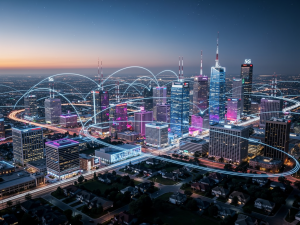
The Role of GeoTel in Shaping the Future of Urban Planning Through Connectivity

As cities continue to expand and adapt to the demands of the modern era, urban planners are now tasked with addressing challenges that go far beyond traditional infrastructure. Climate resilience, sustainable land use, digital inclusion, and walkability are at the forefront of urban planning initiatives, requiring integration of both physical and digital networks. Telecom infrastructure has emerged as a critical pillar in the planning process, encompassing broadband, 5G, IoT networks, and more. GeoTel, a leading provider of telecommunications infrastructure data, is playing a transformative role by equipping planners with the tools necessary to make data-driven decisions that connect people, systems, and places.
The Evolution of Urban Planning and the Rise of Digital Twins

Pexels
Urban planning has undergone a seismic shift thanks to advances in geospatial data, telecommunications infrastructure, and digital twin modeling. Digital twins offer virtual, data-rich simulations of cities, allowing planners to model and predict the behavior of systems like traffic, energy, and communications in response to changing conditions. Today, these virtual models are becoming crucial to engaging communities and enhancing transparency. GeoTel enables this transition by providing essential datasets, such as fiber route mapping and connectivity layers, which can be seamlessly incorporated into digital twins. With this integration, cities can better design resilient and sustainable systems that include robust digital infrastructure alongside roads, utilities, and buildings.
An excellent case study is the Tampa Bay Regional Planning Council’s use of AR models to visualize climate-resilient infrastructure. By layering telecommunications data into digital models, planners can ensure future systems have the connectivity necessary to support smart city initiatives, broadband distribution, and IoT innovation. This technology empowers stakeholders with tools to build equitable and inclusive smart cities.
Connectivity as a Foundation for Sustainability and Resilience

Pexels
Modern urban planning now prioritizes low-carbon design, sustainability, and resilience in the face of climate risks. Connectivity plays a significant role in achieving these goals. Reliable fiber routes, 5G networks, and distributed broadband nodes are fundamental to connecting communities and enhancing their ability to withstand disruptions. GeoTel supports these goals by delivering comprehensive datasets and GIS tools that help urban planners integrate telecom networks into broader infrastructure planning.
For example, GeoTel’s precision mapping tools facilitate projects like the $10.5 billion GRIP Program, ensuring efficient deployment of resources and enabling future-proof urban designs. Planners who fail to incorporate telecommunications infrastructure into their designs risk building communities that are underserved, lacking redundancy, and ill-equipped to meet the growing demands for connectivity. By including telecom data in early planning stages, cities can avoid costly retrofits and create technology-ready environments that foster productivity, innovation, and sustainability.
Practical Urban Planning Tips with GeoTel’s Expertise

Pexels
For urban planners, developers, and city officials aiming to integrate connectivity into their projects, GeoTel offers actionable insights and tools. A few practical tips include:
- Data Availability: Ensure access to up-to-date information on fiber routes, cell tower locations, and broadband nodes to avoid planning blind spots. GeoTel’s datasets provide this critical data.
- GIS Integration: Incorporate telecom infrastructure into GIS models alongside utilities, land use, and zoning schemes. GeoTel’s TeleTracker mapping facilitates dynamic scenario modeling to coordinate multi-layered projects seamlessly.
- Future-Proofing: Design spaces with scalable connectivity in mind, including provisions for IoT and edge computing networks to support smart city features.
- Public Engagement: Maximize community buy-in through immersive visualizations like AR and VR, showing not just roads and buildings but also telecom infrastructure expansion.
- Cross-Sector Collaboration: Telecommunications intersects with other sectors such as transportation, energy, and real estate. Coordinate projects to align infrastructure development across multiple domains and avoid potential conflicts.
GeoTel: A Catalyst for Smarter Urban Spaces

Pexels
GeoTel’s role in urban planning goes beyond providing datasets—it enables cities to thrive in a digitally connected age. By embedding telecom data into GIS environments and innovative spatial tools, GeoTel helps urban planners develop smarter, more resilient, and equitable neighborhoods. As connectivity becomes a cornerstone of urban design, solutions such as GeoTel’s empower stakeholders to build collaborative, future-ready infrastructures.
Whether you’re initiating smart city projects or upgrading existing neighborhoods, one key question remains: where is the connectivity data? If it’s missing, critical opportunities for digital transformation and resilience may slip away. GeoTel offers the expertise and tools needed to fill this gap, ensuring connectivity is no longer an afterthought but a foundational component of modern urban spaces.