Can Simandou Transform Guinea into a Global Economic Powerhouse?
Guinea is on the brink of an economic transformation, spearheaded by the massive Simandou iron ore mining project. The venture, expected to begin production in late 2025, promises to reshape the country’s industrial landscape. However, the primary question remains: can Guinea turn its vast natural resource wealth into a catalyst for enduring economic growth? With abundant iron reserves and hydroelectric potential, Simandou offers an opportunity to avoid the dreaded ‘resource curse,’ a condition that often plagues resource-rich nations without robust industrial frameworks.
An Ambitious Vision for Industrial Development

Pexels
Guinea’s government, led by visionary planning from leaders like Ismaël Nabé, is determined to build industries that increase value locally. Moving beyond merely exporting raw materials, the project emphasizes ‘pelletisation,’ the process of compressing crushed ore into high-grade pellets. This technique not only enhances processing efficiency but also makes Guinea one of the few players globally capable of contributing to “green steel” production. Backed by the country’s untapped renewable energy potential, Simandou could position Guinea as a leader in sustainable iron production, setting new benchmarks for resource-driven industrialization.
However, power infrastructure limitations loom large over this vision. Though Guinea has been dubbed West Africa’s “water tower,” with numerous rivers providing hydroelectric potential, it currently produces just 1,200 to 1,300 MW of electricity—far below the 10,000 MW target set for its ambitious Simandou 2040 economic program. The government plans to solve this deficit in phases, starting with exporting raw ore and progressively developing power-intensive activities like smelting, fueled by hydro and solar energy sources.
$30 Billion Investment for Holistic Growth
Pexels
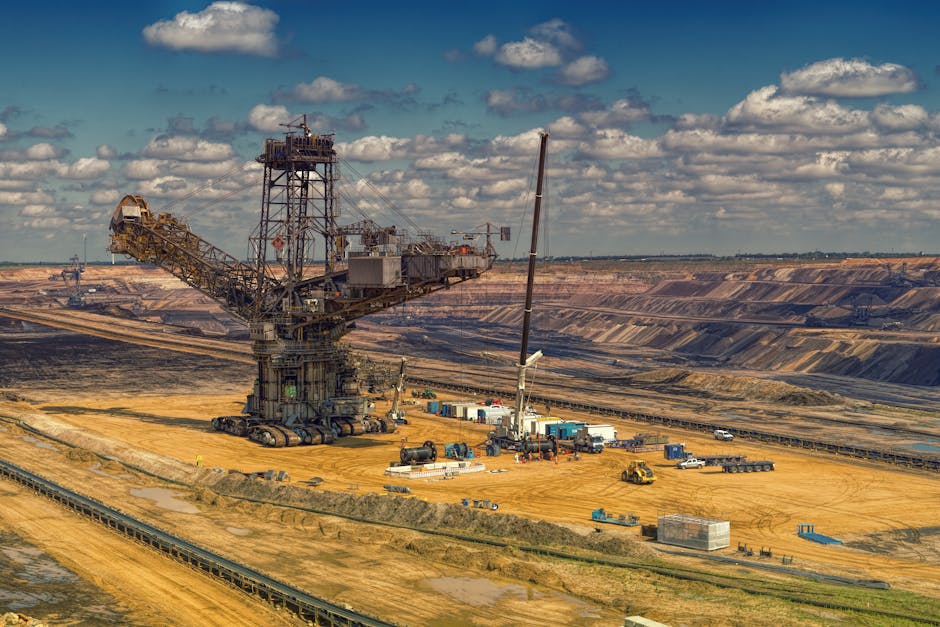
Transforming Simandou into the cornerstone of Guinea’s economy requires a staggering investment of $30 billion to $35 billion. The funds will support not only mining operations but also the development of crucial infrastructure like railways, ports, and renewable energy facilities. A sovereign wealth fund is slated to launch next year to stabilize foreign-exchange dynamics and attract international investment. Structured according to global governance standards, the fund aims to channel profits from Simandou back into Guinea’s industrialization efforts.
To diversify its financial base, Guinea is exploring a range of innovative funding mechanisms, including Islamic finance, Samurai bonds, and diaspora bonds. These instruments will provide the long-term support needed to underwrite economic plans that go beyond mining. Minister Nabé has emphasized that this diversity is essential for fostering resilience and ensuring that Guinea is not overly reliant on any single stream of revenue or resource.
A Vision Beyond Mining

Pexels
Simandou’s impact extends far beyond iron ore. Complementing the mining project are plans to develop industrial zones along the 600 km railway that connects the mines to the ports. These zones will support agro-processing, logistics, and manufacturing, positioning Guinea as a regional hub for semi-finished and finished goods. The bauxite sector, already a cornerstone of Guinea’s mining industry, is also set to benefit as rail and port expansions ease the transition from raw exports to value-added processing.
Agriculture is poised to be one of the earliest beneficiaries of these developments. Cold-chain facilities at the new Morébaya Port will enable fresh produce from Guinea’s highlands to reach regional and international markets with greater efficiency. This diversification echoes Guinea’s national aspirations: to ensure the wealth generated by Simandou contributes meaningfully to the broader economy, supporting sustainability for generations to come.
Although challenges remain, including political instability and energy deficits, Simandou represents an unparalleled opportunity for Guinea. By integrating mining, industrial development, and energy infrastructure, the project aims to replicate the transformative prosperity seen in oil-rich Middle Eastern economies. With effective governance and stable investment, Simandou could very well mark the dawn of Guinea’s industrial renaissance.