Enterprise IoT to Drive eSIM Growth as Global Adoption Climbs 30% by 2026
eSIM adoption is poised to grow by 30% in 2026, reaching 1.5 billion devices worldwide, according to new data from Juniper Research. While smartphones often dominate the consumer narrative around eSIMs, the report highlights a significant shift: enterprise IoT deployments, driven by industries like logistics, energy, and smart cities, are fueling the next phase of growth rather than consumer upgrades.
GSMA’s IoT Specification Unlocks Enterprise eSIM Potential

The rise in enterprise eSIM adoption coincides with the 2025 launch of the GSMA’s SGP.32 IoT eSIM specification, designed for large-scale industrial needs. Unlike earlier standards tailored to consumer devices, SGP.32 enables server-driven bulk provisioning. This allows enterprises to activate and manage thousands of devices simultaneously, removing physical intervention barriers common in legacy provisioning models.
Enterprise use cases like connected logistics networks, remote energy monitoring, and smart street lighting are among the biggest drivers. Together, these sectors are projected to add 75 million new eSIM connections in 2026 alone. Juniper’s analysts suggest that standardized, scalable connectivity solutions like SGP.32 will form the backbone of most future enterprise IoT deployments.
Structural Challenges for the eSIM Ecosystem

Despite its growth trajectory, the eSIM market faces challenges as deployment patterns evolve. Historically, eSIM provisioning relied on a pull model, where devices individually download profiles as needed. This approach worked for smaller-scale consumer use but fails to scale for enterprise environments that manage tens of thousands of devices. Vendors are now under pressure to enable push-provisioning capabilities, streamlining connectivity setup and management for centralized IT teams.
“Providers focusing solely on consumer models risk being sidelined,” warns the report, emphasizing that platforms must invest in automation, orchestration, and API-driven solutions to keep pace with enterprise demand.
The Rise of iSIM: Integrating Connectivity at the Chip Level
Alongside eSIM, the integrated SIM (iSIM) market is quietly gaining traction. Unlike eSIMs, which require a dedicated module, iSIMs embed connectivity directly into a device’s main chipset. Standardization work by the GSMA under SGP.41 and SGP.42 has catalyzed this growth, helping iSIM connections rise from 800,000 in 2024 to a projected 10 million by 2026. By 2028, that number could reach 210 million.
iSIM technology is particularly suited to use cases where space, energy efficiency, and cost constraints are critical, such as smart meters and compact logistics trackers. However, Juniper’s analysis notes that vendors will need to offer platform flexibility to manage both eSIM and iSIM deployments seamlessly. Unified management across form factors will likely determine market leaders in the coming years.
Consumer eSIM Adoption: Steady but Less Disruptive

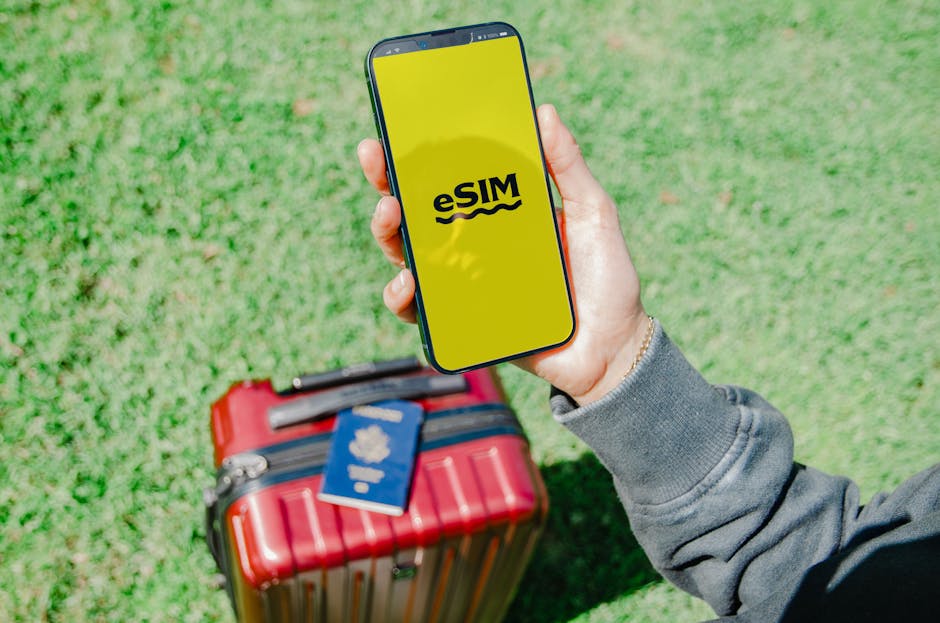
On the consumer side, eSIM adoption is growing steadily, driven primarily by travel-related use cases. Separate data from CCS Insight reveals that a quarter of UK consumers have used an eSIM to access local mobile rates while abroad. It’s a niche but growing trend fueled by instant activation and lower costs compared to traditional roaming.
Domestically, users are also extending phone upgrade cycles, with nearly half of UK consumers opting for SIM-only contracts. While this prolongs device lifespans, it indirectly benefits eSIM adoption by familiarizing users with standalone connectivity management.
What’s at Stake for eSIM Providers?

Juniper’s findings suggest the eSIM narrative is splitting along two paths: consumer-focused convenience on one side and enterprise-scale connectivity infrastructure on the other. For telecom providers and vendors, this represents both an opportunity and a challenge. Platforms optimized for centralized scale and automation have the potential to dominate industrial IoT verticals. Conversely, those clinging to outdated consumer provisioning models may struggle to remain relevant as enterprise systems demand more sophisticated capabilities.
Moreover, the emergence of iSIM further disrupts the market, pushing vendors to build agnostic platforms capable of managing diverse connectivity technologies across industries. Analysts predict this shift could position connectivity as a strategic infrastructure play, much like cloud computing’s evolution in the 2010s.
With eSIM adoption accelerating across both enterprise and consumer segments, the industry appears to be entering a transformative phase. The critical question now is: Will vendors move beyond legacy models into next-generation connectivity orchestration, or risk being sidelined by more agile rivals?
For more details, read the original report from Juniper Research.