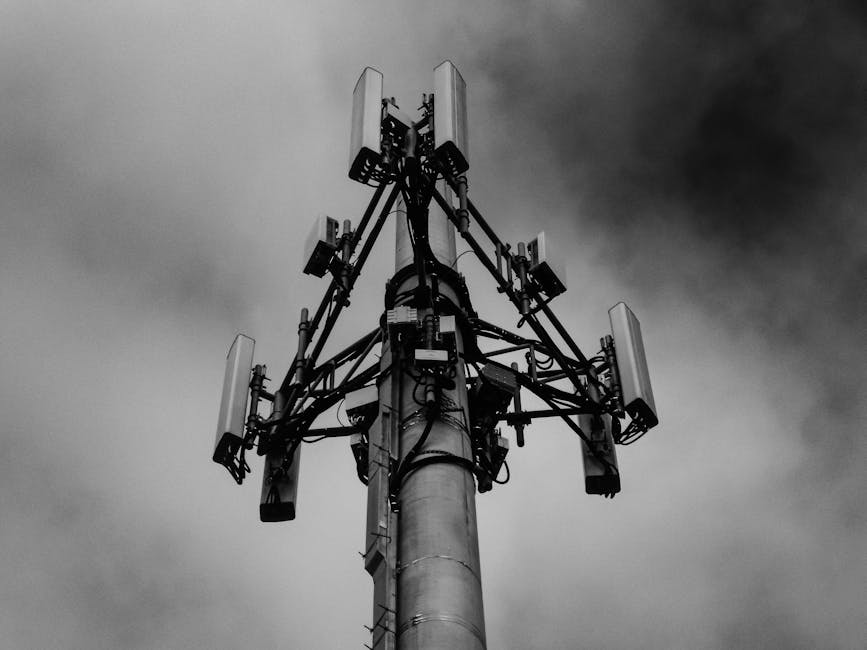
The transformative impact of 6G technology on telecom and defense sectors is poised to redefine global connectivity and national security paradigms within the next decade. As the successor to 5G, 6G is not merely an incremental upgrade but a foundational leap towards an intelligent, ubiquitous network fabric integrating terrestrial, aerial, and satellite communications. For telecom operators, this evolution promises unprecedented data speeds, near-zero latency, and pervasive AI integration. However, the most profound implications of 6G will manifest in the defense and security domain, where it will underpin next-generation command and control, enable autonomous swarms, and create new frontiers in electronic warfare and cyber defense. Consequently, understanding this dual-impact trajectory is essential for policymakers, industry leaders, and security strategists navigating the coming technological upheaval.
From 5G to 6G: Defining the Next Network Evolution
The journey from 5G to 6G represents a fundamental shift from enhanced mobile broadband to a truly intelligent and integrated communication ecosystem. While 5G focuses on three core pillars—enhanced Mobile Broadband (eMBB), Ultra-Reliable Low Latency Communications (URLLC), and massive Machine-Type Communications (mMTC)—6G aims to fuse the physical, digital, and human worlds seamlessly. Technical targets for 6G networks include peak data rates potentially exceeding 1 terabit per second, latency reduced to sub-millisecond levels, and connection densities supporting 10 million devices per square kilometer. Furthermore, 6G will operate in new spectrum bands, including the sub-terahertz range (100 GHz to 1 THz), unlocking vast bandwidth but presenting significant engineering challenges for signal propagation and hardware design.
In addition to raw performance, the core architectural philosophy of 6G diverges significantly. It envisions a native integration of artificial intelligence and machine learning into the network fabric, enabling self-optimizing, self-healing systems. This shift from network-as-a-pipe to network-as-an-intelligent-platform is crucial for managing the immense complexity and scale. Moreover, 6G will not be a standalone terrestrial network; it will be a unified architecture encompassing low-earth orbit (LEO) satellites, high-altitude platform stations (HAPS), and underwater networks, providing truly global coverage. This integrated approach is what will enable its most disruptive applications, particularly for defense and critical infrastructure.
Revolutionizing Telecommunications: The Civilian Sector Impact
The impact of 6G technology on telecom will catalyze a new era of immersive experiences, hyper-automation, and sustainable connectivity. Telecom operators will transition from connectivity providers to purveyors of sophisticated, context-aware digital experiences. For instance, extended reality (XR), encompassing augmented, virtual, and mixed reality, will move beyond niche applications to become a mainstream platform for work, education, and social interaction, requiring the ultra-high bandwidth and low latency that 6G promises. Furthermore, the concept of the “tactile internet” will become a reality, allowing for real-time haptic feedback over networks, enabling remote surgery, precision tele-operation of machinery, and advanced collaborative robotics.
On the infrastructure side, 6G will drive massive network densification and intelligence. Network management will become almost entirely autonomous through embedded AI, predicting congestion, mitigating cyber threats, and allocating resources in real-time without human intervention. This will be essential for supporting smart cities where billions of sensors continuously monitor everything from traffic and energy grids to environmental conditions. Consequently, telecom business models will evolve, with revenue increasingly generated from slicing the network into dedicated, secure virtual channels for enterprises, municipalities, and vertical industries. However, this revolution demands immense investment in new fiber backhaul, edge computing nodes, and energy-efficient hardware, posing significant financial and logistical challenges for the industry.
Key Telecom Innovations Enabled by 6G
Several key innovations will define the 6G era in telecom. First, joint communication and sensing will allow network infrastructure to simultaneously provide connectivity and act as a distributed radar system, enabling applications like gesture recognition, occupancy monitoring, and health vitals sensing. Second, AI-native air interfaces will dynamically adapt modulation, coding, and beamforming based on real-time AI analysis of channel conditions and user needs. Third, the proliferation of reconfigurable intelligent surfaces (RIS)—smart metamaterials that can manipulate electromagnetic waves—will turn passive environments into active signal reflectors, dramatically improving coverage and energy efficiency.
The Defense Imperative: 6G as a Strategic National Asset
The impact of 6G technology on defense is so significant that nations are already treating its development as a matter of strategic sovereignty and military advantage. Unlike previous generations, 6G’s architecture—with its integrated space-air-ground-sea networks, AI-driven operations, and massive device interconnectivity—maps directly onto modern warfare doctrines of Joint All-Domain Command and Control (JADC2). This network will be the central nervous system for future battlefields, fusing data from satellites, drones, soldiers, vehicles, and intelligence sensors into a single, coherent, real-time operational picture. The ability to make decisions at machine speed, far faster than human adversaries, could define the outcome of conflicts.
Moreover, 6G will enable new classes of autonomous and collaborative weapon systems. Swarms of inexpensive drones, communicating via secure 6G links, could execute complex coordinated maneuvers for surveillance, electronic attack, or kinetic strikes. Autonomous ground and maritime vehicles will rely on 6G for high-fidelity situational awareness and coordinated logistics. The sub-terahertz bands also offer potential for extremely high-resolution radar and imaging, enhancing target identification and classification. Consequently, major defense departments worldwide, including the U.S. Department of Defense and NATO allies, are heavily investing in 6G research, recognizing that technological superiority in this domain is non-negotiable for future security.
“The nation that leads in 6G will lead in the future of warfare. It’s not just about faster phones; it’s about controlling the information spectrum that every modern weapon system and command decision depends on.” – Senior Defense Technology Strategist.
Convergence and Dual-Use: Blurring Lines Between Civilian and Military Tech
A defining characteristic of the 6G era will be the profound convergence and dual-use nature of its underlying technologies. The same core innovations that enable holographic telepresence or autonomous vehicles in the civilian sector will be directly applicable to military command centers and unmanned combat platforms. This blurring of lines presents both opportunities and challenges. On one hand, it can accelerate innovation and reduce costs through shared R&D and commercial scale. On the other hand, it creates complex security vulnerabilities, as adversaries may exploit commercial network equipment or standards to compromise defense networks.
Key dual-use technologies include Open RAN (Radio Access Network) architectures, which promote vendor diversity but also increase the attack surface for malicious actors. Similarly, the software-defined and virtualized nature of 6G core networks offers flexibility for both telecom operators and military planners to dynamically create network slices. However, a vulnerability in the shared virtualization layer could jeopardize both commercial and classified communications. Therefore, a critical task for governments and standards bodies will be to develop security-by-design principles and robust testing regimes that protect national security interests without stifling commercial innovation. This delicate balance will be a central policy battleground in the coming years.
Security and Cyber Defense in the 6G Era
The expansive and intelligent nature of 6G networks introduces a vastly more complex and perilous threat landscape, making advanced cyber defense integral to its architecture. The attack surface explodes with billions of new connected devices, many of them simple sensors with minimal inherent security. The pervasive use of AI within the network, while beneficial for optimization, also presents a target; adversarial machine learning attacks could poison AI training data or manipulate network decisions. Furthermore, the integration of non-terrestrial networks (NTN) like satellites adds physical and link-layer vulnerabilities that are harder to monitor and defend than traditional ground-based infrastructure.
In response, 6G security frameworks must be built on a zero-trust architecture, where no entity inside or outside the network is inherently trusted. Every device, user, and data flow must be continuously authenticated and authorized. Post-quantum cryptography (PQC) will also be essential to protect communications against future quantum computing attacks that could break today’s encryption. For defense applications, the concept of cyber resilience will be paramount—networks must be able to maintain core functions even while under sophisticated, sustained attack. This may involve AI-driven anomaly detection that operates at network speed, automated threat hunting, and the ability to dynamically isolate compromised network slices without cascading failures.
The Global Race for 6G Standardization and Spectrum
The battle to shape 6G standards is already intensifying, with profound implications for both the telecom industry and national defense. Historically, leadership in standard-setting has conferred significant economic advantage and influence over the global technology ecosystem. For 6G, the stakes are even higher because the standards will dictate how seamlessly civilian and defense applications can interoperate and how secure the global infrastructure will be. Key players including the United States, China, the European Union, Japan, and South Korea are investing billions in national 6G research initiatives and aggressively positioning their companies and research institutions within international bodies like the International Telecommunication Union (ITU) and 3GPP.
Spectrum allocation is the other critical front in this race. The sub-terahertz bands vital for 6G’s peak speeds are a largely uncharted regulatory territory. Nations must decide how to allocate these precious frequencies between licensed mobile use, unlicensed Wi-Fi-like applications, and government/military systems. Harmonized global spectrum bands are desirable for creating scale and reducing device cost, but strategic competition may lead to fragmentation. For example, will the same bands used for civilian ultra-high-definition video be reserved for military high-capacity backhaul or radar? These decisions, often made behind closed doors, will have a decades-long impact on technological leadership, economic competitiveness, and military capability.
Major National 6G Initiatives
- United States: The “Next G Alliance,” led by the Alliance for Telecommunications Industry Solutions (ATIS), coordinates national 6G efforts with strong DoD participation via initiatives like the Pentagon’s “5G-to-NextG” program.
- China: A state-coordinated effort with major investments through Huawei, ZTE, and national research labs, aiming for early commercialization and standard dominance.
- European Union: The Hexa-X and Hexa-X-II projects unite key industry and academic players like Nokia and Ericsson under the EU’s 6G flagship research program.
- South Korea & Japan: Both have ambitious government-backed roadmaps targeting 2028-2030 for 6G pre-commercial trials, building on their strong 5G foundations.
Ethical, Legal, and Policy Challenges on the Horizon
The deployment of 6G will force a reckoning with a host of ethical, legal, and policy challenges that extend far beyond technical specifications. The network’s pervasive sensing capability, enabled by joint communication and sensing, raises monumental privacy concerns. Could your 6G router unintentionally become a device that monitors your movements and vital signs? Furthermore, the deep integration of AI demands clear frameworks for accountability and transparency. If an AI-driven network slice for emergency services fails during a crisis, or if a military autonomous system makes a fatal error based on network data, who is responsible—the operator, the equipment vendor, or the algorithm developer?
From a policy perspective, governments must grapple with the digital divide. 6G could exacerbate global inequalities if its ultra-advanced services are only deployed in wealthy urban centers, leaving rural and developing regions behind. Additionally, the environmental footprint of 6G—with its dense infrastructure and energy-hungry compute—must be addressed through mandates for energy efficiency and sustainable lifecycle management. For defense, new rules of engagement and international norms will be needed for cyber and electronic warfare in the 6G spectrum. How do nations deter attacks on the shared civilian-military network backbone without escalating into broader conflict? These are not engineering problems but profound societal questions that require inclusive debate and proactive governance.
Preparing for the 6G Future: Strategic Recommendations
Organizations and nations cannot afford to be passive observers of the 6G transition; strategic preparation must begin today. For telecom operators and equipment vendors, this means investing in foundational research, particularly in AI/ML for networks, sub-terahertz radio technology, and integrated satellite-terrestrial architectures. Participation in standards bodies is non-negotiable to ensure future products align with global directions. Furthermore, operators should start modernizing their transport and core networks now, as 6G will demand even more fiber and edge computing capacity than 5G.
For defense and national security establishments, the path is twofold. First, they must become deeply embedded in the 6G development process to ensure military requirements for security, resilience, and performance are “baked in” from the start. Second, they need to invest in 6G testbeds and experimentation environments to understand operational concepts and vulnerabilities before the technology matures. Finally, for policymakers, the imperative is to craft coherent national strategies that align spectrum policy, R&D funding, international diplomacy, and security oversight. Building cross-sector task forces that include industry, academia, and defense experts is essential to navigate the complex interplay of technological promise and peril that 6G represents.
In conclusion, the impact of 6G technology on telecom and defense is a story still being written, but its outlines are clear: a future of unparalleled connectivity intelligence shadowed by unprecedented security challenges and strategic competition. The decisions made in this decade will resonate for generations, determining which nations and enterprises thrive in the intelligent, connected world 6G will create.
Key Takeaways on 6G’s Dual Impact
- Paradigm Shift: 6G is an AI-native, integrated network of networks, not just faster 5G. It will fuse physical and digital realms.
- Telecom Transformation: It will enable immersive XR, the tactile internet, and autonomous network management, creating new business models for operators.
- Defense Revolution: 6G is the backbone for JADC2, enabling swarming drones, real-time battlefield AI, and new electronic warfare capabilities.
- Dual-Use Dominance: The line between commercial and military tech will blur, requiring new security-by-design approaches for shared infrastructure.
- Global Race: Leadership in 6G standards and spectrum is a primary geopolitical and economic battleground for the 2030s and beyond.
Frequently Asked Questions (FAQs)
When will 6G be commercially available?
Most industry roadmaps target pre-commercial trials around 2028-2030, with full commercial deployment likely in the early 2030s. However, defense applications may see earlier, limited deployments.
What is the biggest security threat from 6G?
The massive, AI-driven attack surface is the primary concern. Adversaries could target the AI models controlling the network, billions of insecure IoT devices, or the integrated satellite links, creating systemic risks.
How will 6G change everyday life?
Beyond faster phones, it will enable true holographic communication, pervasive sensing for health and smart environments, and reliable remote control of vehicles and robots, making digital interactions far more immersive and physical.
Why is the defense sector so interested in 6G?
Because it provides the high-capacity, low-latency, resilient, and intelligent connectivity required for next-generation warfare concepts like multi-domain operations and autonomous systems, offering a potential decisive advantage.