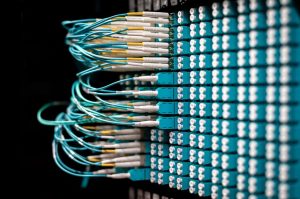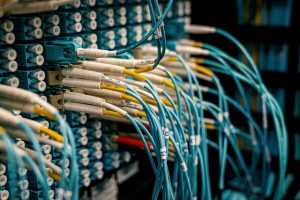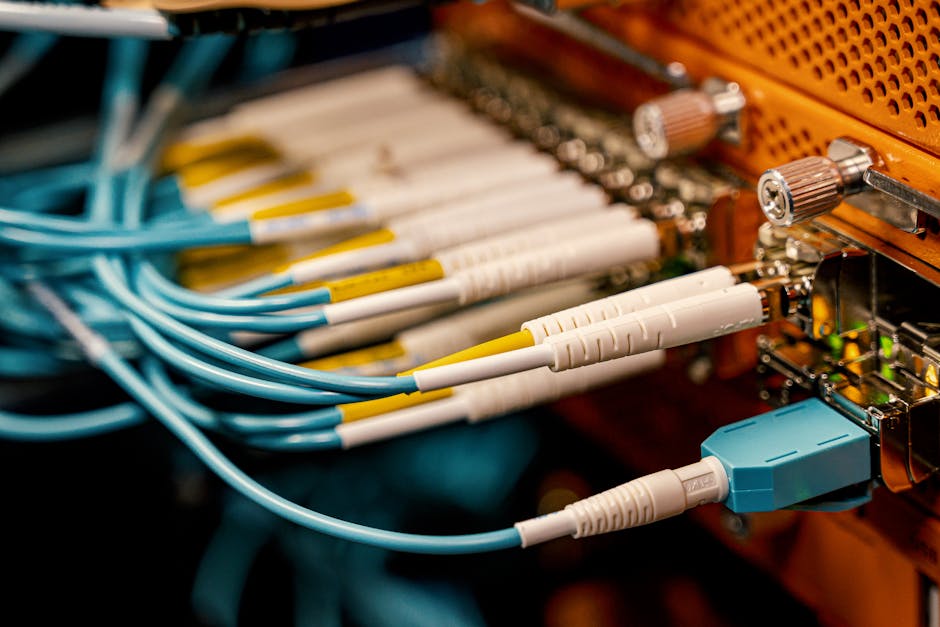
The relentless expansion of the fiber network in Africa represents the most critical infrastructure story on the continent, driving its digital transformation and economic aspirations. For decades, Africa’s connectivity was defined by expensive satellite links and limited submarine cables, creating a digital divide that stifled innovation and growth. However, the past fifteen years have witnessed a seismic shift, with billions of dollars invested in laying thousands of kilometers of terrestrial and submarine fiber optic cables. This infrastructure now forms the backbone of Africa’s internet, enabling everything from mobile money revolutions to remote education and telemedicine. Yet, the journey is far from complete. While major coastal cities and capitals enjoy increasingly robust connectivity, the last-mile challenge of extending high-speed broadband to rural and underserved populations remains a formidable hurdle. This comprehensive guide delves into the current state, explosive growth, persistent challenges, and future trajectory of Africa’s fiber optic landscape, analyzing how this physical network of glass is weaving a new digital future for the continent.
The Current State of Africa’s Fiber Optic Infrastructure
Today, Africa’s connectivity landscape is underpinned by a complex and growing web of fiber optic cables. The continent is now encircled by over a dozen major submarine cable systems, with names like SEACOM, EASSy, WACS, and the newer 2Africa project—now the world’s largest—providing vital international bandwidth gateways. These submarine cables land at key coastal points, from Mombasa and Dar es Salaam in the east to Lagos, Accra, and Cape Town in the west and south. From these landing stations, the digital lifeblood is then carried inland via an expanding mesh of terrestrial backbone networks. National operators and private companies have built extensive cross-country routes, connecting inland capitals and major secondary cities to the global internet.
Consequently, international bandwidth prices have plummeted by over 90% in many African markets since 2010, directly fueling the explosion of mobile data usage and digital services. However, the distribution of this fiber wealth is profoundly uneven. A significant urban-rural divide persists. Major economic hubs like Nairobi, Johannesburg, and Cairo boast fiber-to-the-business (FTTB) and even some fiber-to-the-home (FTTH) deployments, offering gigabit-speed internet. Meanwhile, vast swathes of rural Africa remain dependent on slower, less reliable wireless technologies, with fiber backhaul often terminating at district towns, leaving the final connection to villages unfulfilled. This disparity creates a two-tiered digital economy that limits inclusive growth.
Key Players and National Backbones
The development of national backbone networks has often been led by a mix of state-owned incumbents, private telecom operators, and specialized infrastructure companies. For instance, Kenya’s National Optic Fibre Backbone Infrastructure (NOFBI), extended by the government, provides a critical wholesale platform. In Nigeria, companies like MainOne (now part of Equinix) and Glo 1 have built extensive terrestrial networks alongside the incumbent. South Africa boasts a mature and competitive market with dense fiber networks from players like Openserve, Vumatel, and Dark Fibre Africa. Furthermore, regional initiatives like the Central African Backbone (CAB) project, supported by the World Bank, aim to interconnect landlocked nations. These networks collectively form the continental skeleton, but their interoperability and open-access policies vary widely, affecting end-user costs and service quality.
The Remarkable Growth and Investment Surge
The growth trajectory of Africa’s fiber network has been nothing short of remarkable, attracting substantial investment from diverse sources. International technology giants, recognizing Africa’s potential as the next billion-strong internet market, have become pivotal investors. Google’s Equiano cable, landing in Nigeria, Namibia, South Africa, and St. Helena, and Meta’s portion of the 2Africa cable are prime examples of this private capital influx. These companies are not merely providing capacity; they are actively shaping the infrastructure landscape to support their own ecosystems and cloud services. Simultaneously, private equity and infrastructure funds are heavily investing in independent fiber network operators (FNOs) who focus on last-mile FTTH and FTTB deployments in urban centers, seeing strong returns from enterprise and residential demand.
This surge is quantified by data from the African Fibre Broadband Association, which reports consistent double-digit annual growth in fiber route kilometers across the continent. The demand driver is clear: as smartphone penetration soars and data consumption patterns mirror global trends towards video streaming and cloud applications, the need for high-capacity, low-latency fixed broadband becomes non-negotiable for sustainable growth. Investment is also flowing into supporting infrastructure, such as carrier-neutral data centers in cities like Johannesburg, Nairobi, and Lagos, which rely on robust fiber interconnections to function as vital digital hubs. This virtuous cycle of investment, deployment, and rising demand is accelerating the continent’s digital maturity.
Persistent Challenges: The Last-Mile and Beyond
Despite the impressive progress, deploying and operating a fiber network in Africa faces a unique set of entrenched challenges. The most cited is the last-mile connectivity gap. Running fiber to a suburban neighborhood or a remote village is exponentially more expensive per subscriber than connecting a dense urban business district. Terrain, right-of-way issues, and low population density in rural areas often render traditional business models unviable without subsidy or innovative approaches. Furthermore, the cost of customer premises equipment (CPE) and the actual fiber drop to the home can be prohibitive for many consumers, even when the backbone passes nearby.
Operational challenges are equally daunting. Many countries suffer from frequent fiber cuts, caused by road construction, vandalism, or theft of cable for scrap metal. These outages can cripple connectivity for entire regions and incur massive repair costs. Additionally, bureaucratic hurdles and complex permitting processes can delay projects for years, increasing costs and stifling competition. High taxes on telecom equipment and a lack of harmonized regulations across borders also increase the cost of building and operating pan-African networks. How can operators overcome these barriers to achieve universal, affordable access? The answer lies in a combination of technology, policy, and business model innovation.
Power Infrastructure and Security Concerns
An often-overlooked challenge is the unreliable power grid in many African nations. Fiber networks require powered amplification points (repeaters) and active equipment in exchanges. Persistent power outages necessitate extensive investment in backup generators, solar power, and battery systems, driving up operational expenses. Security is another critical concern. Besides cable theft, network hubs and towers can be targets for theft and vandalism, requiring significant spending on physical security, which further adds to the cost structure of providing services.
Innovative Solutions and Emerging Technologies
To bridge the connectivity chasm, stakeholders are deploying a toolbox of innovative solutions. For last-mile reaches, Fixed Wireless Access (FWA) using 4G/LTE and, increasingly, 5G mmWave, is a popular complement to fiber. It uses wireless links for the final connection while still being fed by a fiber backhaul point, offering a quicker and sometimes cheaper deployment. In remote or difficult terrain, High-Altitude Platform Stations (HAPS) and Low Earth Orbit (LEO) satellite constellations, like Starlink, are emerging as viable alternatives or stop-gaps. While not a replacement for fiber’s unlimited capacity, they can provide quality broadband where laying cable is impractical.
On the business model front, open-access networks are gaining traction. These involve a single entity building and maintaining the passive fiber infrastructure (the ducts and cables), which is then leased on a non-discriminatory basis to multiple retail internet service providers (ISPs). This model promotes competition, reduces duplication of infrastructure, and lowers barriers to entry for smaller ISPs. Moreover, community-based models and public-private partnerships (PPPs) are being tested to share the financial risk and align incentives for reaching underserved areas. Technological innovations in fiber itself, such as micro-trenching and blown fiber techniques, are also reducing deployment costs and disruption in urban areas.
The Transformative Impact on Economy and Society
The proliferation of the fiber network in Africa is far more than a technical achievement; it is a catalyst for profound socio-economic transformation. At the macro level, the World Bank estimates that a 10% increase in broadband penetration can lead to a 1.38% increase in GDP growth in developing economies. Fiber enables the digitalization of entire sectors: it allows for real-time mobile banking and fintech services that have revolutionized financial inclusion. It supports e-government platforms, making public services more accessible and transparent. Furthermore, it is the foundation for a growing tech startup ecosystem, from Nairobi’s “Silicon Savannah” to Lagos’s Yabacon Valley, providing the high-speed, low-latency connectivity needed for software development, cloud computing, and outsourcing.
On a human level, the impact is equally significant. Fiber backhaul makes 4G and 5G mobile broadband viable, connecting millions to information, education, and healthcare. Telemedicine initiatives can stream high-definition medical imaging only with robust fiber connections. E-learning platforms, which became essential during the COVID-19 pandemic, depend on stable, high-bandwidth internet to deliver video lessons and interactive content to students in cities and, increasingly, in towns. The democratization of information and opportunity that fiber enables is gradually leveling the playing field for African youth and entrepreneurs.
Regulatory Landscape and Policy Imperatives
The pace and equity of fiber deployment are heavily influenced by the regulatory environment. Progressive policies can accelerate growth, while restrictive ones can stifle it. Key policy imperatives include streamlining right-of-way approvals and standardizing permit costs across municipalities. Governments can also mandate duct sharing or the inclusion of empty conduits in all new road and building projects, dramatically reducing future deployment costs. Reducing taxes on fiber optic cable and network equipment can also incentivize investment. Most importantly, regulators must champion the open-access principle, ensuring that state-owned or dominant backbone networks are available to all service providers at fair, transparent prices to foster competition and lower end-user costs.
Conversely, policies that create monopolies, impose high spectrum fees on complementary wireless technologies, or lack clarity on foreign investment rules can deter the capital needed for such large-scale infrastructure projects. Successful models, like Kenya’s relatively liberalized telecom sector, show that clear, pro-investment regulation coupled with active government support for universal access projects can yield exceptional results. Regional blocs like the African Union and the Smart Africa Alliance are working to harmonize policies, aiming to create a seamless digital market across borders, which would further attract large-scale infrastructure investors.
The Competitive Landscape: Telcos, ISPs, and New Entrants
The market for fiber-based services in Africa is becoming increasingly dynamic and competitive. Traditional mobile network operators (MNOs) like MTN, Safaricom, and Vodacom are aggressively expanding their fiber portfolios, both for enterprise backhaul and consumer FTTH offerings, bundling internet with mobile and television. They compete with specialized fiber companies like Liquid Intelligent Technologies, which operates a vast pan-African network, and national players like CSquared in West Africa. Furthermore, a new breed of last-mile FTTH operators is thriving in specific urban markets—companies like MetroFibre in South Africa or Jamii Telecom in Kenya focus intensely on dense urban and suburban rollouts.
This competition is beneficial for consumers and businesses, leading to lower prices, higher speeds, and improved customer service. The battleground is expanding from mere connectivity to value-added services like cloud security, Software-as-a-Service (SaaS) offerings, and managed network services. As the market matures, consolidation is also expected, with larger players acquiring smaller networks to achieve scale. The ultimate winners will be those who can not only build network but also efficiently operate, maintain, and innovate on top of it, solving real-world problems for their customers.
The Future Outlook: Towards a Fully Connected Continent
The future of Africa’s fiber network points towards greater depth, resilience, and integration. The ongoing rollout of new, higher-capacity submarine cables like 2Africa and Equiano will continue to drive down international bandwidth costs for the next decade. Inland, the focus will shift from national backbones to regional cross-border links and, crucially, to intensive metro and access network builds. The next wave of investment will target secondary cities, peri-urban areas, and industrial parks. Technologically, the adoption of fibre-to-the-home (FTTH) standards and the evolution towards 10G PON and beyond will future-proof networks, ensuring they can handle the data demands of tomorrow’s applications.
Integration with other technologies will define the future. Fiber will be the indispensable anchor for 5G standalone networks, requiring dense small cell grids all connected by fiber. It will also form the backbone for smart city initiatives, connecting sensors, cameras, and IoT devices across urban landscapes. The vision of a fully connected Africa remains a long-term endeavor, but the trajectory is firmly positive. With continued investment, smart regulation, and public-private collaboration, the continent’s fiber network will evolve from a patchwork of cables into a ubiquitous, resilient, and intelligent grid that powers inclusive growth and innovation for all its people.
Key Takeaways and Actionable Insights
“Africa’s digital transformation is being written in strands of glass. The fiber laid today is the foundation for the economies and societies of tomorrow.” – Industry Analyst.
The journey of building Africa’s digital backbone is complex but filled with opportunity. For stakeholders, the path forward involves several clear actions:
- For Governments: Prioritize fiber-friendly policies, streamline regulations, invest in open-access national backbones, and integrate ducting into public works projects.
- For Investors: Look beyond saturated urban cores to secondary cities and innovative last-mile business models. Consider the long-term growth story anchored by demographic and digital adoption trends.
- For Enterprises: Leverage improving fiber connectivity to digitize operations, adopt cloud services, and reach new markets. Reliable internet is no longer a luxury but a core utility for business competitiveness.
- For Consumers and Communities: Advocate for better connectivity. Understand the value of fixed broadband as a complement to mobile and support local initiatives that promote digital inclusion.
Frequently Asked Questions (FAQs)
Which African country has the best fiber network?
South Africa, Mauritius, and Kenya are often cited as leaders due to their extensive terrestrial coverage, multiple submarine cable landings, and competitive markets. South Africa has the most mature and dense FTTH market, while Kenya is renowned for its innovative mobile money ecosystem built on robust fiber backhaul.
How much does it cost to install fiber internet in Africa?
Costs vary wildly. In major cities, installation can be free or low-cost with a service contract, with monthly prices ranging from $30 to $100 for high-speed plans. In more remote or newly served areas, installation fees can be several hundred dollars due to the civil works required. Overall, prices have fallen dramatically but are still higher than in many developed markets.
What is the main internet source for Africa?
While satellite and microwave radio links serve remote areas, the primary source of high-bandwidth international internet for Africa is undersea fiber optic cables. Over 95% of international data travels via these submarine systems, which land at coastal stations and are then distributed inland.
Is Starlink a threat to fiber development in Africa?
Not a threat, but a complement. Starlink and other LEO satellite services are ideal for hard-to-reach rural areas, emergencies, and mobile applications (like mining or shipping) where laying fiber is impossible or uneconomical. However, they cannot match the low cost-per-bit and high capacity of fixed fiber for dense urban and suburban markets. They will help fill gaps, not replace the fiber backbone.
Conclusion
The story of the fiber network in Africa is a narrative of ambition meeting pragmatism. From a state of severe deficit, the continent has engineered one of the world’s most rapid infrastructure build-outs, fundamentally altering its connectivity destiny. The challenges of the last mile, high costs, and operational hurdles are real and persistent, yet they are being met with unprecedented levels of investment, innovation, and collaborative will. As this digital backbone strengthens and extends, its vibrations will be felt across every sector—from healthcare and education to finance and governance—unlocking human potential and entrepreneurial energy on a massive scale. The ultimate success of this endeavor will not be measured merely in kilometers of cable laid, but in the economic opportunities created, the services delivered, and the doors opened for millions of Africans. The connection continues, and the future is being built, one strand of light at a time.