The global fiber network is undergoing a period of unprecedented expansion and transformation, driven by insatiable demand for bandwidth and the foundational needs of next-generation technologies. This relentless push to connect the world with light-speed data pathways is reshaping economies, societies, and the very fabric of the telecommunications industry. However, beneath the surface of this digital gold rush lie significant hurdles, from massive capital requirements and skilled labor shortages to complex geopolitical and regulatory landscapes. Analyzing the global fiber network reveals a dynamic interplay of ambitious trends and persistent challenges that will define connectivity for decades to come.
Key Takeaways

- Global fiber deployment is accelerating, driven by 5G backhaul, cloud computing, and government broadband initiatives.
- The digital divide remains a critical challenge, with rural and remote areas posing significant economic and logistical hurdles for fiber rollout.
- Supply chain volatility and a severe shortage of skilled fiber technicians are major bottlenecks impacting project timelines and costs.
- Innovations in deployment techniques, like micro-trenching and aerial fiber, are crucial for reducing the cost and time of network builds.
- Future-proofing networks with high-fiber-count cables and flexible architectures is essential to avoid costly overbuilds within a few years.
- Public-private partnerships (PPPs) are becoming an indispensable model for funding large-scale, socially critical fiber infrastructure projects.
The Accelerating Pace of Global Fiber Deployment

The worldwide rollout of fiber-optic infrastructure is not just continuing; it is accelerating at a remarkable pace. According to industry analysts at Corning, global demand for optical fiber reached record levels in recent years, surpassing 500 million fiber-km annually. This surge is fueled by several concurrent mega-trends. First, the commercialization of 5G networks demands dense, high-capacity fiber backhaul to connect cell towers and small cells. Without a robust fiber foundation, the promised low-latency and high-speed benefits of 5G simply cannot be realized. Consequently, mobile network operators are becoming some of the largest investors in fiber infrastructure, often through joint ventures with established carriers.
Secondly, the hyperscale shift to cloud computing and the proliferation of massive data centers are creating voracious demand for inter-city and transoceanic fiber links. Companies like Amazon Web Services, Microsoft Azure, and Google Cloud are investing billions in their own private global fiber networks to ensure low-latency, reliable connectivity between their data centers and to end-users. Furthermore, the post-pandemic normalization of hybrid work models and high-definition streaming services has cemented bandwidth-intensive applications as a daily necessity for consumers and businesses alike. This sustained demand provides a strong economic rationale for continued fiber investment, creating a virtuous cycle of build-out and consumption.
Regional Hotspots and Investment Drivers
Deployment is not uniform globally, with certain regions leading the charge. North America and Asia-Pacific, particularly China, South Korea, and Japan, have been traditional leaders in fiber-to-the-home (FTTH) penetration. However, Europe is now experiencing a significant catch-up wave, spurred by ambitious targets from the European Commission’s Gigabit Society 2030 initiative. In emerging markets across Latin America, Africa, and Southeast Asia, fiber is often deployed as a leapfrog technology, bypassing legacy copper networks entirely to deliver high-speed internet for the first time. These regional variations are heavily influenced by government policy, regulatory frameworks, and the competitive landscape of local internet service providers.
Confronting the Persistent Digital Divide

Despite the global build-out, a stark digital divide persists, representing one of the most significant social and economic challenges of our time. The economics of fiber deployment are fundamentally challenging in low-density rural and remote areas. The cost per premises passed can be three to five times higher than in urban settings due to greater distances, difficult terrain, and lower potential subscriber density. This creates a market failure where private operators, driven by shareholder returns, are reluctant to invest without substantial subsidies or guaranteed offtake. The result is that millions of people remain trapped with subpar satellite or fixed wireless connections, limiting their access to education, telehealth, remote work, and modern commerce.
Bridging this gap requires innovative thinking and collaborative models. Many governments are now treating fiber infrastructure as a critical utility, akin to water or electricity. This has led to a rise in state-funded and municipal network projects. For example, the United States is deploying an unprecedented $42.45 billion through the Broadband Equity, Access, and Deployment (BEAD) Program, explicitly targeting unserved and underserved locations. The success of these programs hinges not just on funding, but on effective planning, avoiding overbuild in already-served areas, and ensuring long-term operational sustainability. Furthermore, how can emerging technologies like Low Earth Orbit (LEO) satellites complement, rather than compete with, terrestrial fiber in closing the last-mile gap?
Supply Chain and Skilled Labor Bottlenecks
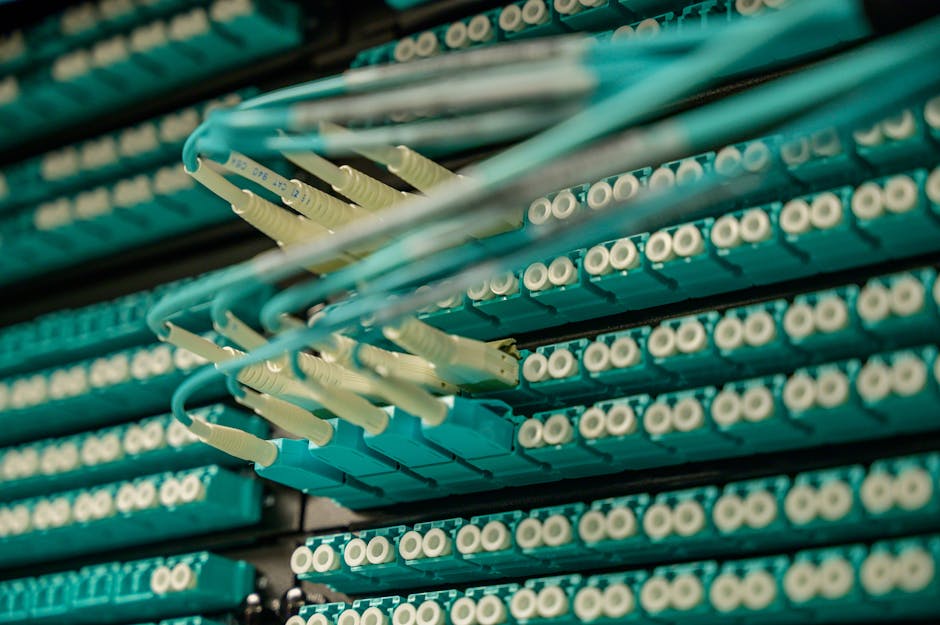
The fiber industry is grappling with severe constraints on both materials and manpower, creating substantial headwinds for deployment timelines. On the supply side, the industry relies on a complex global supply chain for key components like optical fiber cable, connectors, and electronics. Disruptions from geopolitical tensions, trade policies, and residual effects from the COVID-19 pandemic have led to volatility in prices and extended lead times for critical equipment. A shortage of helium, a gas essential for manufacturing fiber optic cable, has further exacerbated these challenges, forcing manufacturers to seek alternatives and manage allocations carefully.
Perhaps an even more pressing challenge is the acute shortage of skilled labor. Deploying fiber requires a specialized workforce: planners, engineers, splicers, and technicians. The work is physically demanding and requires significant training and certification. The industry is facing a “silver tsunami” as an aging workforce retires, without enough new entrants to replace them. This shortage drives up labor costs, delays projects, and can compromise quality if work is rushed or performed by undertrained personnel. Addressing this requires a multi-pronged approach: investing in vocational training programs, promoting the industry as a high-tech career path, and leveraging technology like AI-powered network design and automated fusion splicing equipment to improve installer productivity.
Innovation in Deployment Techniques and Technology
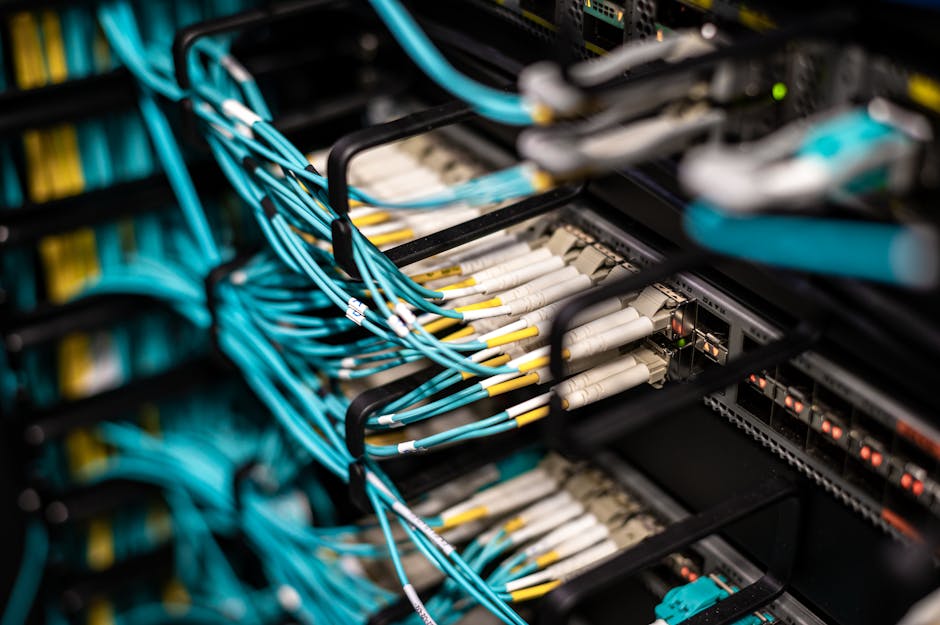
To overcome cost and speed barriers, the industry is rapidly innovating in how fiber is deployed. Traditional trenching, which involves digging a deep ditch, laying conduit, and then fiber, is expensive, time-consuming, and disruptive. In response, operators are increasingly turning to alternative methods. Micro-trenching involves cutting a very narrow and shallow slot (often just 1-2 inches wide and 12-18 inches deep) into the road surface or sidewalk, laying micro-duct or direct-buried fiber, and sealing it with a specialized compound. This method drastically reduces restoration time and public disruption.
Similarly, aerial deployment on existing utility poles is being optimized with new, lighter, and more durable fiber cables. Furthermore, companies are employing existing infrastructure creatively, such as placing fiber within sewer and water lines or leveraging unused “dark fiber” in railway and power utility rights-of-way. On the technological front, advancements in fiber itself are crucial. The shift from traditional G.652.D single-mode fiber to bend-insensitive fibers and smaller-diameter cables allows for denser packing in ducts and easier installation in tight spaces. Meanwhile, coherent optics technology is pushing the capacity limits of a single fiber strand, enabling terabit-level transmission over existing cables and delaying the need for costly new trenching.
The Critical Imperative of Future-Proofing Networks

Building a fiber network is a capital-intensive, long-term investment. A critical mistake is to deploy a network that is merely sufficient for today’s needs, only to require a costly upgrade or complete overbuild in five to ten years. Therefore, the principle of future-proofing is paramount in modern network design. This means installing higher-fiber-count cables than initially needed. The marginal cost of adding more fiber strands during initial construction is minimal compared to the astronomical cost of digging up streets a second time. Many operators now consider a 288-fiber cable as a standard starting point for backbone routes, even if only a fraction is lit initially.
Future-proofing also extends to the network architecture. A fiber-deep or Fiber-to-the-X (FTTx) approach that brings fiber as close as possible to the end-user—whether a home, business, or antenna—maximizes flexibility. This architecture easily supports not just gigabit broadband today but can be upgraded to 10G, 25G, or even 100G services in the future simply by changing the electronics at either end. Moreover, designing networks with flexibility in mind, such as using centralized splitting in PON networks, simplifies upgrades and maintenance. The question for every network planner is: are we building for the bandwidth demands of 2035, or just 2025?
Financing Models and the Rise of Public-Private Partnerships
The scale of investment required for comprehensive fiber networks has catalyzed the evolution of new financing and ownership models. The traditional model of a single telecom incumbent funding and owning the entire network is being supplemented by more diverse approaches. Private equity and infrastructure funds are pouring capital into the sector, attracted by the stable, utility-like returns of fiber assets. These funds often create specialized fiber companies (like Zayo in the US or Cellnex in Europe) that build wholesale, open-access networks, leasing capacity to multiple retail service providers.
The most significant trend for addressing the digital divide and funding large-scale national projects is the proliferation of Public-Private Partnerships (PPPs). In a PPP, public entities (municipalities, states, or national governments) provide funding, favorable regulations, or rights-of-way access, while private partners bring technical expertise, operational experience, and additional capital. This model shares the financial risk and aligns public policy goals with private sector efficiency. For instance, a city might fund the construction of a conduit network (the “dig once” policy) and then lease space within it to private ISPs to deploy their fiber. Successful PPPs require clear contracts, transparent governance, and a long-term commitment from both sides to ensure the network’s success benefits the entire community.
Regulatory and Policy Landscapes as Enablers or Barriers
Government policy and regulation are perhaps the most powerful external levers affecting the pace and shape of fiber deployment. Pro-investment policies can act as a powerful catalyst. These include streamlining the permitting process, establishing “dig once” rules for public works projects, enforcing fair and cost-based access to utility poles and ducts (poles attachment rates), and providing tax incentives or grants. The European Union’s European Electronic Communications Code (EECC) is a prime example of regulation designed to incentivize fiber investment by providing predictable rules and promoting infrastructure sharing.
Conversely, outdated or restrictive regulations can stifle growth. Onerous permitting delays, excessive local fees, and disputes over pole attachment rates can add significant cost and time to projects. Furthermore, the regulatory treatment of fiber networks—whether they are considered a competitive service or a essential infrastructure subject to wholesale access requirements—directly impacts the risk profile and potential return on investment for operators. Policymakers face a delicate balancing act: encouraging competition and consumer protection while also creating a stable environment that justifies the massive, long-term capital commitments required for fiber. Navigating this complex telecom policy landscape is a constant challenge for network builders.
Conclusion
The analysis of the global fiber network presents a picture of powerful momentum tempered by substantial, yet surmountable, obstacles. The trends are clear: deployment is accelerating, driven by 5G, cloud, and insatiable data demand, while innovation is reducing costs and improving techniques. However, the challenges of the digital divide, supply chain fragility, a skilled labor shortage, and the need for future-proof planning require concerted effort from industry, governments, and communities. The path forward hinges on smart capital allocation through innovative financing like PPPs, supportive and forward-looking regulation, and a sustained commitment to workforce development.
Ultimately, the global fiber network is more than just cables in the ground; it is the central nervous system of the 21st-century digital economy. Successfully navigating its current trends and challenges will determine which regions thrive and which are left behind. As we look to a future of metaverse applications, ubiquitous AI, and technologies yet unimagined, the resilience, capacity, and reach of our fiber infrastructure will be the fundamental enabler. Is your organization prepared to build, fund, or leverage the next generation of this critical global asset?