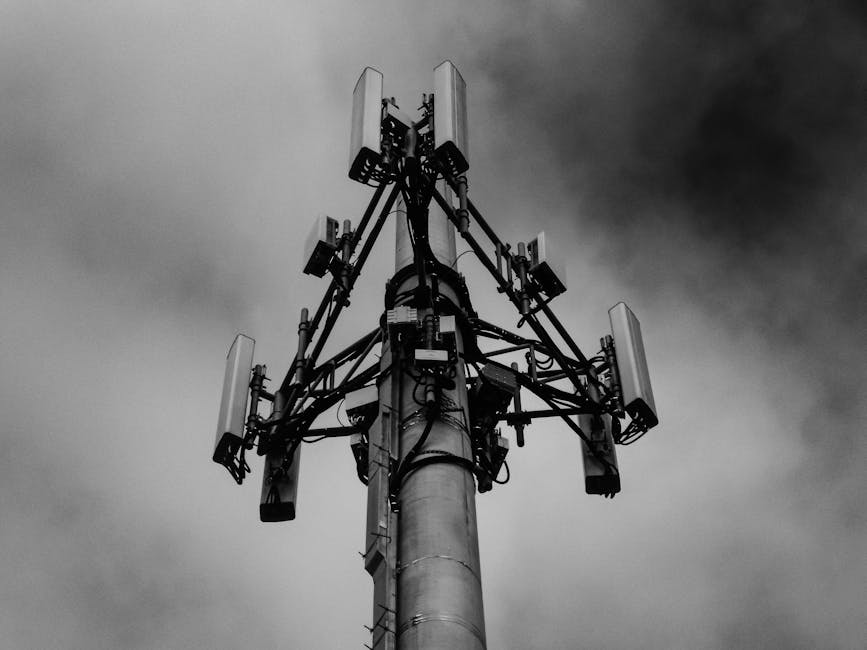
The role of AI in modern telecom infrastructure is no longer a futuristic concept but a fundamental operational reality, driving unprecedented efficiency, reliability, and innovation. As networks grow exponentially in complexity with the rollout of 5G, IoT proliferation, and escalating user demands, artificial intelligence and machine learning have become indispensable tools for managing this digital ecosystem. Consequently, telecom operators worldwide are leveraging AI to automate complex processes, predict network failures before they occur, and optimize resources in real-time, transforming from traditional service providers into intelligent, self-healing platforms. This comprehensive analysis will explore the multifaceted applications of AI across the telecom landscape, detailing how it is reshaping everything from core network operations to customer experience and security.
Key Takeaways

- AI enables predictive maintenance and self-healing networks, drastically reducing downtime and operational costs.
- Machine learning algorithms are critical for dynamic 5G network slicing and real-time resource optimization.
- AI-powered analytics transform vast network data into actionable insights for capacity planning and investment.
- Intelligent automation handles repetitive tasks, freeing human engineers for strategic, high-value work.
- Advanced AI systems are essential for detecting and mitigating sophisticated, real-time cybersecurity threats.
- The future points towards fully autonomous networks, with AI managing end-to-end operations.
Introduction to AI’s Transformative Impact on Telecom

The telecommunications industry is undergoing a seismic shift, propelled by the integration of artificial intelligence into its core infrastructure. Historically, network management relied on manual configuration, reactive troubleshooting, and static rules, an approach increasingly untenable in the face of modern demands. However, the advent of sophisticated AI, particularly machine learning and deep learning, provides the computational power and analytical prowess to manage this complexity. For instance, an AI system can analyze terabytes of network performance data in seconds, identifying subtle patterns indicative of an impending hardware failure that would be invisible to human analysts. This capability is not merely incremental; it represents a paradigm shift towards proactive, predictive, and autonomous network management. Furthermore, as detailed in a report by the Gartner research firm, by 2025, over 50% of data center network operations will integrate AI-driven automation, highlighting the speed of this adoption.
In addition to operational efficiency, AI is a critical enabler for new revenue streams and services. The rollout of 5G networks, with their promise of ultra-low latency and massive device connectivity, is inherently dependent on AI for functions like dynamic spectrum management and network slicing. Without intelligent automation, the manual orchestration of thousands of virtualized network slices, each with unique performance requirements, would be impossible. Consequently, AI is the backbone that makes advanced 5G use cases—from autonomous vehicles to remote robotic surgery—feasible and reliable. This foundational role ensures that AI’s importance will only grow as networks evolve towards 6G and beyond, making it a cornerstone of modern telecom strategy.
AI for Network Optimization and Performance Management

One of the most significant roles of AI in modern telecom infrastructure is the continuous optimization of network performance and resource allocation. Modern networks generate a constant, overwhelming stream of data from routers, switches, base stations, and user devices. AI algorithms excel at parsing this data deluge to identify bottlenecks, predict congestion, and automatically reroute traffic for optimal flow. For example, machine learning models can learn typical usage patterns for a cell tower—such as high demand during weekday commutes or special events—and pre-emptively allocate bandwidth and computing resources at the network edge. This proactive approach prevents service degradation and ensures a consistently high quality of experience (QoE) for users, a key competitive differentiator in crowded markets.
Dynamic Traffic Steering and Load Balancing
AI-driven traffic management goes beyond simple load balancing rules. Using reinforcement learning, a subset of AI where systems learn by trial and error to maximize a reward, networks can now make real-time decisions on traffic steering. Should video streaming traffic from a congested node be offloaded to a less busy 5G small cell or a Wi-Fi network? An AI agent can evaluate latency, jitter, packet loss, and backhaul capacity across multiple pathways in milliseconds to make the optimal choice. This dynamic capability is vital for supporting latency-sensitive applications like online gaming and video conferencing. Moreover, it allows operators to utilize their entire heterogeneous network (4G, 5G, Wi-Fi, fiber) as a unified, intelligent fabric, maximizing asset utilization and delaying costly capital expenditures on new hardware.
Radio Access Network (RAN) Intelligence
The Radio Access Network, comprising cell towers and base stations, is a primary focus for AI optimization. Open RAN (O-RAN) architectures, which promote interoperability between vendors, specifically incorporate an AI-powered RAN Intelligent Controller (RIC). This software component uses near-real-time analytics to manage radio resources. For instance, it can adjust antenna tilt, power levels, and handover parameters dynamically to improve coverage, reduce interference, and enhance energy efficiency. During periods of low demand, an AI-powered RIC can put certain radio components into sleep mode, significantly reducing the network’s energy consumption—a major operational cost and sustainability goal for operators. This application demonstrates how AI translates directly into both improved service and substantial cost savings.
Predictive Maintenance and Self-Healing Networks

Moving from reactive to proactive operations is perhaps the most valuable application of AI in telecom infrastructure. Predictive maintenance uses AI to analyze historical and real-time data from network equipment—such as temperature, voltage, vibration, and error logs—to forecast potential failures before they cause service outages. A model might detect that a fiber-optic line amplifier is showing subtle signs of laser diode degradation, enabling technicians to replace it during a scheduled maintenance window rather than in a panic at 2 a.m. when it fails completely. This shift not only improves network reliability but also optimizes spare parts inventory and field dispatch schedules, leading to dramatic reductions in operational expenditures (OPEX).
The logical evolution of predictive maintenance is the self-healing network. These systems use AI not just to predict issues but to automatically diagnose and remediate them without human intervention. For example, if a software bug in a core router configuration begins causing packet loss, an AI system can isolate the faulty software container, roll back to a stable version, and restart the service—all within minutes. Similarly, in a physical layer scenario, if a backhaul fiber is cut, AI can instantly recalculate all affected traffic routes and reconfigure the network to use redundant paths. As noted by the TM Forum, the industry body driving telco transformation, the goal is to achieve “zero-touch” operations where networks are autonomously managed. This level of automation is crucial for managing the scale and complexity of future networks, where human response times are simply too slow.
AI as the Engine for 5G and Network Slicing

The successful deployment and operation of 5G networks are intrinsically linked to artificial intelligence. 5G’s core promises—enhanced mobile broadband (eMBB), massive machine-type communications (mMTC), and ultra-reliable low-latency communications (URLLC)—require a flexibility and responsiveness that only AI can provide at scale. The cornerstone of this flexibility is network slicing, which creates multiple virtual, end-to-end networks on a shared physical infrastructure. Each slice can be tailored for a specific application, like a high-bandwidth slice for stadium VR experiences and a ultra-reliable slice for a smart grid.
However, creating, orchestrating, and assuring the performance of these slices in real-time is a monumental task. AI is the essential orchestrator here. It continuously monitors the performance of each slice against its service level agreement (SLA). If a slice for a remote surgery session is experiencing latency spikes, the AI can instantly prioritize its traffic and allocate additional resources from a less critical slice. This dynamic resource allocation ensures that critical services always have the guaranteed performance they need. Furthermore, AI aids in the lifecycle management of slices, automating their creation, scaling, and decommissioning based on demand. Without AI, network slicing would be a static, manually configured feature, unable to deliver on the dynamic promise of 5G. This synergy is why leading researchers at institutions like the Massachusetts Institute of Technology are heavily focused on AI algorithms for next-generation network management.
Enhancing Cybersecurity with AI-Powered Threat Detection

Telecom networks are prime targets for cyberattacks, serving as the critical backbone for national economies and security. Traditional, signature-based security tools are inadequate against novel, sophisticated, and rapidly evolving threats like zero-day exploits and advanced persistent threats (APTs). Here, AI and machine learning offer a powerful defense by enabling behavioral analysis and anomaly detection. By establishing a baseline of “normal” network traffic patterns, AI systems can identify subtle, malicious deviations that would evade conventional filters. For instance, a distributed denial-of-service (DDoS) attack often begins with low-level probing; AI can detect this anomalous scan traffic and mitigate it before the full-scale attack launches, protecting network availability.
Moreover, AI can correlate threats across vast, multi-vendor network environments. A suspicious login attempt on a provisioning system, coupled with unusual configuration changes on a core router in a different region, might together signal a coordinated attack. A human security analyst might miss this connection, but an AI-powered Security Orchestration, Automation, and Response (SOAR) platform can instantly identify the correlation, trigger an automated response (like isolating the compromised router), and alert the security team. This capability is vital for protecting not just the network itself but also the sensitive customer data it carries. As telecom infrastructure becomes more software-defined and virtualized, its attack surface grows, making AI-driven security not just an advantage but an absolute necessity for maintaining trust and compliance. For more on securing these new architectures, explore our guide on network infrastructure security.
Intelligent Customer Support and Network Analytics
The role of AI in modern telecom infrastructure extends beyond the network core to directly enhance customer experience and business intelligence. AI-powered chatbots and virtual assistants are now frontline tools for customer service, handling routine inquiries about billing, data usage, and service troubleshooting. These systems use natural language processing (NLP) to understand customer intent and can often resolve issues without human agent involvement, drastically reducing call center volumes and wait times. More advanced systems are proactive; by analyzing network data, an AI can detect that a customer’s home Wi-Fi is experiencing intermittent connectivity and send a pre-emptive text message with troubleshooting steps or schedule a technician visit before the customer even calls to complain.
On the business side, AI-driven analytics transform raw network data into strategic insights. Operators can understand granular usage patterns, predict churn by identifying dissatisfied customers based on service interaction patterns, and optimize marketing campaigns for new offerings like fiber optics connectivity packages. For example, AI can analyze geospatial data to pinpoint neighborhoods with poor coverage and high demand, guiding targeted infrastructure investments for the highest return. This data-driven decision-making allows operators to move from gut-feel strategies to precise, evidence-based planning, improving capital efficiency and competitive positioning. In essence, AI turns the network from a cost center into a rich source of business intelligence.
The Future: Towards Fully Autonomous Networks
The trajectory of AI in telecom points unequivocally towards the realization of fully autonomous networks. Industry consortia like the TM Forum have outlined detailed frameworks and maturity models for this evolution, culminating in Level 5 autonomy where networks are self-configuring, self-healing, self-optimizing, and self-protecting with zero human intervention. The journey involves increasing the cognitive capabilities of AI systems, moving from executing pre-defined rules to understanding context and making intent-based decisions. A future autonomous network might receive a business goal like “maximize energy efficiency while maintaining SLAs for priority enterprise customers,” and its AI would continuously adjust thousands of parameters across the network to achieve that goal.
“The integration of AI is not just about automation; it’s about building a cognitive layer that allows the network to understand, learn, and adapt to its environment in real-time. This is the foundation for 6G,” explains a lead network architect from a global telecom vendor.
This future will also see closer integration with edge computing, where AI models run directly on network edge devices to make ultra-low-latency decisions for applications like industrial IoT and augmented reality. Furthermore, the development of digital twin technology—a virtual, AI-driven replica of the physical network—will allow operators to simulate changes, predict outcomes, and train AI models in a risk-free environment before deploying them in the live network. The road to autonomy presents challenges, including the need for massive, high-quality datasets, model explainability, and robust ethical frameworks, but the direction is clear. AI is set to become the central nervous system of global telecommunications.
Conclusion
The integration of artificial intelligence is fundamentally redefining the role and capabilities of modern telecom infrastructure. From ensuring the flawless operation of 5G networks through intelligent slicing to predicting hardware failures and autonomously neutralizing cyber threats, AI has moved from an experimental technology to an operational imperative. It delivers tangible benefits: slashing operational costs, enhancing customer satisfaction, unlocking new revenue streams, and future-proofing networks against unprecedented complexity. As we look ahead, the vision of self-driving, fully autonomous networks is steadily materializing, promising a new era of efficiency and innovation.
Ultimately, the role of AI in modern telecom infrastructure is that of a transformative force, turning static networks into dynamic, resilient, and intelligent platforms. For telecom operators, the choice is no longer whether to adopt AI, but how quickly and comprehensively they can integrate it into every layer of their operations. The journey requires investment in talent, data governance, and partnerships, but the competitive and operational advantages are undeniable. Is your organization prepared to harness the full potential of AI to power the networks of tomorrow?