
When terrestrial communication networks collapse during a disaster, blackout satcom systems become the lifeline for critical infrastructure operations. These specialized satellite communication platforms are engineered to function autonomously when all other forms of connectivity—cellular, landline, internet, and even power grids—are unavailable or deliberately disrupted. For entities responsible for national security, emergency response, utilities, and financial markets, understanding and deploying these systems is not merely a contingency plan; it is a fundamental operational requirement. This comprehensive guide will dissect the architecture, technology, providers, and strategic implementation of blackout satcom, providing you with the knowledge to build truly resilient communications.
Key Takeaways

- Blackout satcom systems are designed for autonomous operation during total grid and terrestrial network failure.
- Key components include hardened terminals, L-band/MSS or portable VSAT, and independent power systems.
- Leading providers like Inmarsat, Iridium, and Thuraya offer specialized services for critical infrastructure.
- Successful implementation requires thorough risk assessment, redundancy planning, and regular “black start” testing.
- Regulatory compliance, including licensing and spectrum management, is a critical but often overlooked factor.
- The future lies in hybrid LEO/GEO architectures and direct-to-device capabilities for enhanced resilience.
What Are Blackout Satcom Systems?

Blackout satcom systems refer to a class of satellite communication solutions specifically engineered to maintain functionality during a “blackout” scenario. This scenario is defined by the simultaneous failure of the public electrical grid and all terrestrial telecommunication networks, whether due to natural disaster, cyber-attack, electromagnetic pulse (EMP), or coordinated physical attack. Consequently, these systems are not merely backup links; they are self-contained, hardened communication nodes. Their core design philosophy prioritizes autonomy above all else, ensuring that critical command, control, and situational awareness data can still flow when the world goes dark.
To achieve this, blackout satcom diverges significantly from standard commercial VSAT or mobile satellite services. For instance, a standard corporate satellite link might rely on a local ISP for its network management traffic or require grid power for the modem and amplifier. In contrast, a true blackout system is designed with a “clean interface,” meaning it has no dependencies on terrestrial infrastructure for its core operation. Every component, from the power supply to the network gateway, is either self-powered or connected via a satellite-based path that remains outside the affected area. This architectural purity is what separates a robust backup from a guaranteed lifeline.
Defining the “Blackout” Scenario
The term “blackout” encompasses a spectrum of high-impact, low-probability events. A primary concern is a Geomagnetic Disturbance (GMD) caused by a massive solar coronal mass ejection, which could induce destructive currents in long-distance power lines and transformers, causing a continent-wide grid collapse. Similarly, a high-altitude nuclear detonation could generate an Electromagnetic Pulse (EMP) that fries unprotected electronics across a vast region. Furthermore, sophisticated cyber-physical attacks, like the 2015 Ukraine grid hack, demonstrate how targeted strikes can cripple infrastructure. Blackout satcom systems are stress-tested against these specific threats, often involving shielding, component hardening, and protocols that assume a complete loss of local support.
“In critical infrastructure protection, redundancy is not about having two of the same thing; it’s about having two fundamentally different things. Blackout satcom provides that essential diversity of path and power that terrestrial networks simply cannot offer during a wide-area crisis.” – Dr. William Graham, former Chairman of the U.S. EMP Commission.
Core Architecture and Key Components

The architecture of a blackout satcom system is a study in redundancy and independence. At its heart is the satellite terminal, which must be physically hardened and capable of rapid deployment or activation. For fixed sites, this often means a radome-protected antenna with a built-in heating element to shed snow and ice, mounted on a stable, non-penetrating roof platform to avoid building dependencies. The terminal connects to a satellite in either Geostationary Orbit (GEO) or a constellation in Low Earth Orbit (LEO). GEO satellites, like those operated by Inmarsat or Viasat, provide constant coverage over a wide area but require precise pointing and have higher latency. LEO constellations, like Iridium or Starlink, offer global coverage, lower latency, and are often more resistant to localized interference due to their proliferated nature.
Power independence is the most critical subsystem. A robust blackout system will incorporate multiple layered power sources. The first layer is a large-capacity, deep-cycle battery bank kept at full charge by a continuous grid trickle-charge. The second layer is an automatic-start fuel-powered generator (diesel, propane, or natural gas) with on-site fuel reserves for weeks of operation. The third and final layer is often integrated renewable sources, such as solar panels or small wind turbines, providing indefinite trickle-charge capability. All power conditioning equipment—inverters, charge controllers, and distribution panels—must also be shielded or located within a Faraday cage to survive EMP events. According to a U.S. Department of Energy report, power system hardening is the single most cost-effective step for infrastructure resilience.
Network and System Hardening
Beyond the physical link, the network architecture must be equally resilient. This involves using satellite-based Network Operations Centers (NOCs) and gateways located far outside potential threat zones. Traffic should be encrypted end-to-end, not just over the satellite link, to protect data if terminals are compromised. Furthermore, systems should support store-and-forward capabilities, allowing critical data like sensor readings or text-based commands to be queued and transmitted during brief satellite windows if continuous connectivity is disrupted. The internal network behind the terminal should be segmented, with the satcom link serving only the most critical operational technology (OT) networks, preventing it from being overwhelmed by non-essential data from the enterprise IT side.
Leading Satellite Providers and Service Offerings
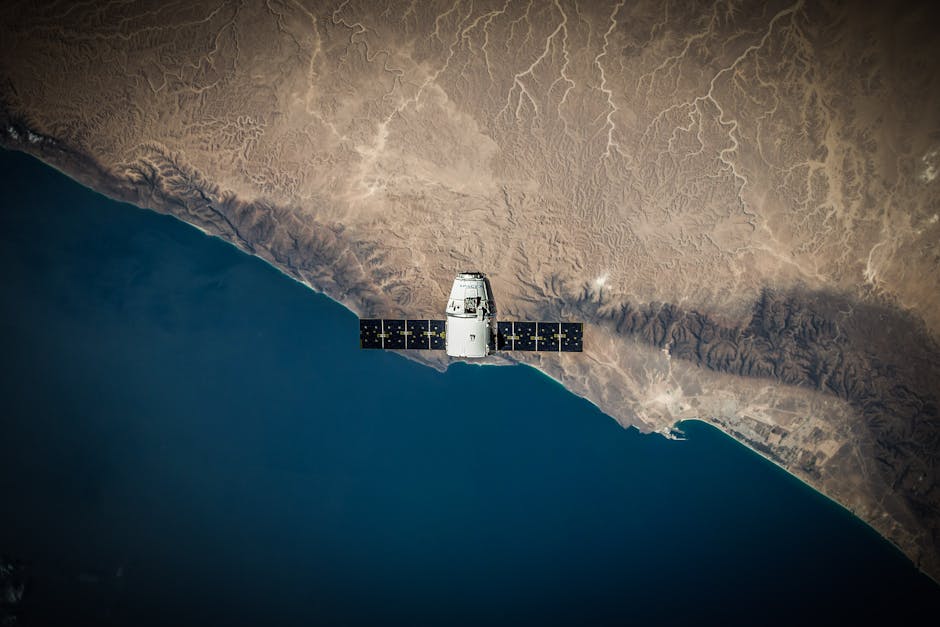
Several satellite operators offer services and hardware packages tailored for blackout and critical communications scenarios. Inmarsat, with its GEO-based Global Xpress (Ka-band) and BGAN (L-band) networks, provides guaranteed bandwidth services with high availability for government and infrastructure clients. Their IsatPhone 2 and BGAN terminals are staples in emergency kits. Iridium offers unique advantages with its cross-linked LEO constellation, providing truly global coverage, including polar regions, with rugged, pocket-sized handsets and Certus broadband terminals. The network’s architecture makes it highly survivable, as the loss of a single satellite does not disrupt service.
Thuraya focuses on the Europe, Africa, Middle East, and Asia regions with its powerful GEO satellites, offering high-gain satellite GSM service that allows standard mobile phones to connect via a satellite adapter. For newer, high-bandwidth needs, SpaceX’s Starlink has introduced a flat-panel, user-terminal system with impressive throughput. While not traditionally hardened, its proliferation and rapid deployment capability make it a compelling option for restoring connectivity to a central command post after an event. Importantly, procurement should focus on services that offer pre-emptive priority access, ensuring your traffic gets through when networks become congested during a crisis, a feature offered by most major providers under special contracts.
Specialized Military and Government Systems
Beyond commercial offerings, there are dedicated military satellite communication (MILSATCOM) systems like the U.S. Mobile User Objective System (MUOS) or the UK’s Skynet. These systems offer ultra-secure, jam-resistant, global narrowband and wideband communications. While primarily for defense, critical national infrastructure sectors like energy and transportation may have access to these capabilities through government partnership programs, especially for assets deemed vital to national security. Engaging with homeland security or emergency management agencies is crucial to understanding available support frameworks.
Implementation Strategy for Critical Infrastructure

Deploying a blackout satcom system begins with a rigorous Business Impact Analysis (BIA) and risk assessment. You must identify which operational functions are truly critical—SCADA control for a dam, transaction clearing for a financial hub, pipeline pressure monitoring—and determine the minimum data throughput and latency required to sustain them. This analysis directly informs the technical specification. For example, telemetry and text-based commands may only need a few kilobits per second via an L-band terminal, while video feeds from security perimeters might require a portable Ka/Ku-band VSAT system. The key is to right-size the solution; over-engineering wastes resources, while under-engineering creates a false sense of security.
Next, develop a layered communication plan. Your blackout satcom is the last-resort, always-available layer. It should be integrated with other redundant systems like high-frequency (HF) radio, terrestrial microwave, or mesh radio networks. Furthermore, establish clear protocols for who can authorize activation, what traffic is prioritized, and how users will be trained on the often-different interfaces of satellite equipment. Physical site preparation is equally vital: securing generator fuel supplies, establishing antenna clearances, and implementing physical security for the now-obviously critical communication asset. A comprehensive plan will address not just the technology, but the people and processes that make it work under extreme duress.
A 2023 study by the Cybersecurity and Infrastructure Security Agency (CISA) found that while 85% of critical infrastructure operators had some form of backup communication, only 37% had tested their systems in a simulated total blackout scenario within the past two years.
Regulatory and Compliance Considerations
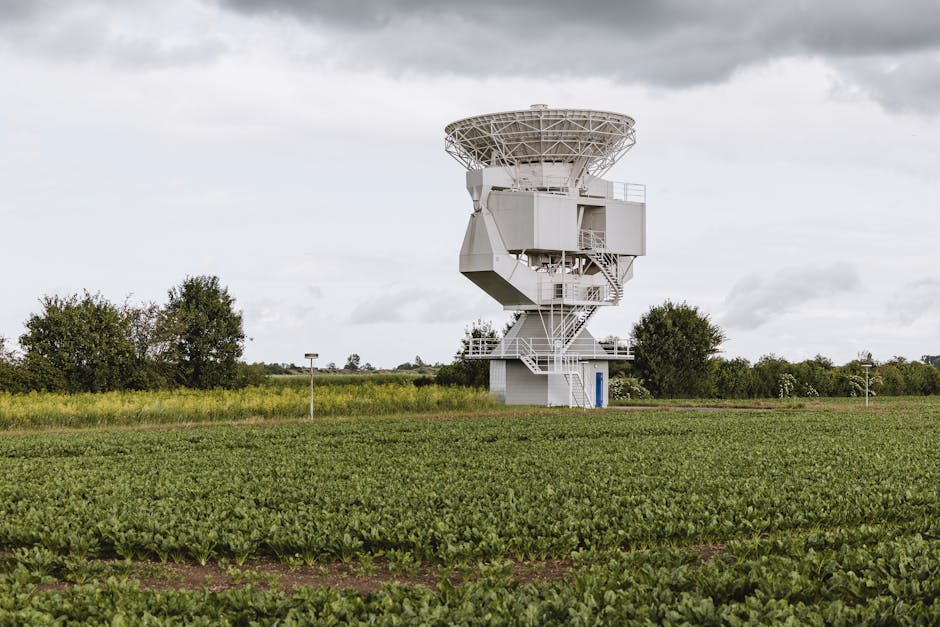
Operating a satellite earth station is subject to national and international regulation. In the United States, you must obtain a license from the Federal Communications Commission (FCC). This process involves coordinating your terminal’s location and frequency use to avoid interfering with other satellite or terrestrial services. For fixed sites, this is a straightforward but mandatory step. For deployable terminals, “blanket” licenses or temporary authorizations may be required. Importantly, if your system is intended for use during a national emergency, you may qualify for special licensing or priority access programs, such as the FCC’s Disaster Information Reporting System (DIRS) or the Telecommunications Service Priority (TSP) program.
Compliance also extends to spectrum management and export controls. The encryption technology used in many hardened satcom terminals may be subject to International Traffic in Arms Regulations (ITAR) or Export Administration Regulations (EAR). Procuring and moving these devices across borders requires careful legal review. Furthermore, industry-specific regulations may apply; for instance, nuclear power plants in the U.S. are governed by Nuclear Regulatory Commission (NRC) rules that dictate specific communication reliability standards, which directly influence satcom system design and testing requirements. Navigating this regulatory landscape is a non-negotiable part of implementation.
Testing, Maintenance, and Training Protocols
A blackout satcom system that is not regularly tested is virtually guaranteed to fail when needed. Testing must go beyond a simple “link establishment” check. It should involve full “black start” exercises, where the primary site is intentionally isolated from grid power and terrestrial networks, forcing operations to run entirely on the satellite link and backup power for a sustained period—12 to 24 hours is a common benchmark. These exercises reveal hidden dependencies, such as a network time server that only syncs via the internet or a critical application that requires frequent license validation from an online server. Testing should also simulate degraded conditions, like heavy rain fade (which affects higher Ka/Ku bands) or partial terminal damage.
Maintenance is a continuous discipline. Batteries must be load-tested and replaced on a scheduled basis, typically every 3-5 years. Generator engines require regular oil changes, filter replacements, and test runs under load. Antenna systems need inspections for corrosion, alignment, and radome integrity. Software and firmware for modems and routers must be kept updated to patch security vulnerabilities. Perhaps most critically, personnel training must be recurrent. New staff must be trained on activation procedures, basic troubleshooting, and the unique limitations of satellite communications (e.g., latency, data costs). Creating simple, laminated quick-start guides and conducting annual drills embeds the capability into the organizational muscle memory.
The Future of Blackout Communications
The landscape of resilient satcom is evolving rapidly with technological advances. The proliferation of Low Earth Orbit (LEO) megaconstellations like Starlink, OneWeb, and Amazon’s Project Kuiper promises unprecedented bandwidth, low latency, and global coverage. For blackout scenarios, their distributed nature provides inherent redundancy; an attack would need to disable hundreds of satellites to disrupt service. Furthermore, the push toward direct-to-device satellite connectivity from companies like Apple (via Globalstar) and SpaceX (with T-Mobile) hints at a future where standard smartphones could maintain basic text and SOS connectivity during cellular blackouts, augmenting dedicated infrastructure systems.
Another key trend is the integration of Artificial Intelligence (AI) and automation. Future systems may use AI to dynamically manage power consumption, automatically switch between satellite constellations or frequency bands based on link quality and threat detection, and even perform self-diagnostics and healing. The concept of the “self-aware network” that can reconfigure itself to maintain critical services in a degraded environment is a active area of defense and infrastructure research. For operators, this means future systems will likely be more capable, more autonomous, and potentially more complex to manage, emphasizing the need for skilled personnel and advanced network monitoring tools.
Conclusion
Blackout satcom systems represent the pinnacle of communication resilience for critical infrastructure. They are complex, integrated solutions that blend hardened hardware, independent power, robust satellite networks, and meticulous operational planning. As our society’s dependence on interconnected digital infrastructure grows, so does its vulnerability to widespread, cascading failures. Implementing a blackout satcom capability is a powerful statement of operational diligence, moving beyond simple backup to ensuring continuity of mission under the most severe conditions.
The journey involves careful provider selection, rigorous site-specific engineering, adherence to a complex regulatory framework, and an unwavering commitment to testing and training. The goal is not just to purchase technology, but to cultivate a reliable capability. In an era of heightened geopolitical tensions and climate-driven disasters, can your organization afford to be silent when everything else goes dark? Investing in a robust blackout satcom system is the definitive answer, ensuring that your critical voice and data can endure, no matter the crisis.