Key Takeaways
- eSIMs are embedded, programmable chips that replace physical SIM cards, enabling remote activation and management.
- This technology offers unparalleled flexibility for consumers, allowing easy carrier switching and multi-profile management.
- For industries like IoT, automotive, and logistics, eSIMs provide scalable, global connectivity solutions.
- The adoption of eSIM technology is accelerating, driven by smartphone manufacturers, telecom operators, and new GSMA standards.
- Security and privacy are enhanced with eSIMs, though new challenges in remote provisioning and management arise.
- The future points toward a fully integrated, eSIM-first world, fundamentally changing how we connect devices and people.
The rise of eSIM technology marks a fundamental shift in the architecture of modern connectivity, moving us away from the physical limitations of the traditional plastic SIM card. An eSIM, or embedded Subscriber Identity Module, is a small, non-removable chip soldered directly onto a device’s motherboard during manufacturing. Unlike its physical predecessor, an eSIM is programmable over-the-air, allowing you to download and activate a cellular subscription profile from a mobile network operator (MNO) or a mobile virtual network operator (MVNO) without ever needing to visit a store or handle a tiny piece of plastic. This transition from hardware to software is not merely a convenience; it represents a core enabler for a more flexible, scalable, and integrated connected future across consumer electronics, the Internet of Things (IoT), and enterprise mobility.
This technological evolution is gaining remarkable momentum. According to a report by Juniper Research, the number of global eSIM-enabled devices will exceed 6 billion by 2025, a staggering increase from just over 1 billion in 2021. Furthermore, major smartphone manufacturers like Apple, Google, and Samsung have fully embraced the standard, with flagship models now offering eSIM-only or dual eSIM capabilities. The driving force behind this rapid adoption is a combination of consumer demand for seamless experiences and industry needs for operational efficiency. Consequently, understanding the implications of this shift is crucial for anyone involved in telecommunications, device manufacturing, or digital services.
Demystifying eSIM Technology: How It Works
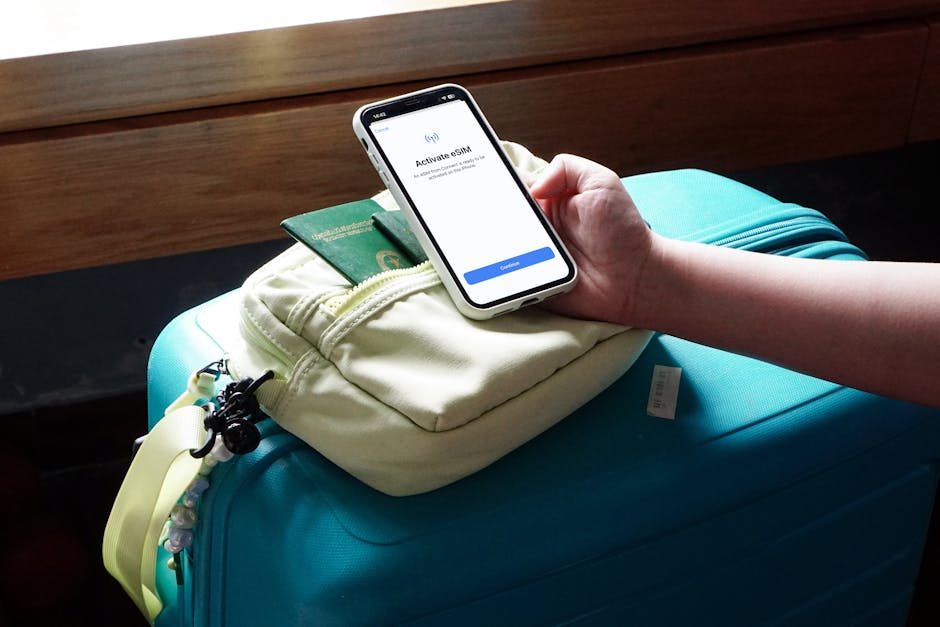
To appreciate the rise of eSIM technology, you must first understand its operational mechanics, which differ significantly from traditional SIM cards. At its core, an eSIM is a secure element—a tamper-resistant chip that stores your subscriber identity, network authentication keys, and service profiles. The critical innovation is the inclusion of a remote SIM provisioning (RSP) system defined by the GSMA, the global mobile industry association. This system allows the eSIM to be programmed and reprogrammed multiple times throughout the device’s lifecycle. When you purchase a new cellular plan, your carrier sends a unique, encrypted activation code (often a QR code) to your device. Your device then securely connects to the carrier’s subscription management platform and downloads the specific profile onto the eSIM chip, activating your service in minutes.
The architecture relies on standardized profiles. Each carrier’s plan is packaged as a separate, isolated profile on the chip. This enables powerful functionality like storing multiple profiles simultaneously and switching between them with a simple software toggle. For instance, you could have a primary profile for your home country and a travel data profile for a country you’re visiting, activating the latter upon landing without searching for a local SIM vendor. The entire process is managed by software, eliminating the logistical friction of physical SIM distribution, inventory management, and manual installation. Moreover, the security protocols embedded in the eSIM and the RSP system are rigorously tested, often making them more secure against SIM swap fraud compared to traditional cards, which can be physically stolen or cloned.
The Role of the GSMA and Standardization
The seamless interoperability we see today is no accident; it is the result of intensive standardization work by the GSMA. The association has published two primary sets of specifications for eSIM: one for consumer devices (like smartphones and watches) and another for Machine-to-Machine (M2M) applications (like connected cars and smart meters). These standards ensure that an eSIM from one manufacturer can work with the provisioning platform of any compliant mobile operator worldwide. This universal framework is the bedrock upon which the global rise of eSIM technology is built. Without it, we would face a fragmented landscape of proprietary systems, stifling innovation and adoption. The GSMA’s ongoing work continues to refine security, simplify user experiences, and expand the technology’s applicability.
Consumer Benefits: Unlocking Flexibility and Convenience
For everyday users, the rise of eSIM technology translates into tangible benefits that simplify mobile connectivity. The most immediate advantage is the elimination of the physical SIM tray, which allows device manufacturers to design slimmer, more water-resistant, and robust gadgets. You no longer need a paperclip or ejector tool to change your carrier. Instead, switching networks or adding a secondary line for data or business can be done entirely within your device’s settings menu. This is particularly transformative for frequent travelers. Imagine landing in a new country and being able to instantly compare and purchase a local data plan from your phone itself, avoiding expensive international roaming fees and the hassle of finding a kiosk. This capability empowers you with choice and control directly from your device.
Another significant benefit is the ability to manage multiple numbers or plans on a single device. Dual-SIM functionality, once a niche feature, is now mainstream thanks to eSIM. You can maintain separate personal and work numbers on one phone, or use a local data eSIM while keeping your primary number active for calls and texts via Wi-Fi calling. This flexibility extends to family plans and connected devices. Setting up a cellular-enabled smartwatch or tablet is now as simple as scanning a QR code, with the device seamlessly inheriting your phone’s number or getting its own independent line. The user experience is streamlined, reducing setup time from what could be a multi-step process to a matter of seconds. This convenience factor is a primary driver of consumer satisfaction and a key reason for the technology’s accelerating adoption in the premium device segment.
“The shift to eSIM is as significant as the move from physical media to digital downloads. It’s not just about removing a piece of plastic; it’s about reimagining the entire service lifecycle—from acquisition and activation to management and support—as a digital-first experience.” – Telecom Industry Analyst
Enterprise and IoT Revolution: Scalability Redefined
While consumer benefits are clear, the most profound impact of the rise of eSIM technology is felt in the enterprise and Internet of Things (IoT) sectors. Deploying thousands of connected devices—be they sensors, trackers, vehicles, or industrial machines—has traditionally been a logistical nightmare involving sourcing, stocking, and physically installing SIM cards for each unit, often across multiple countries with different carriers. eSIM technology obliterates these barriers. A device manufacturer can produce a single, global SKU with an eSIM embedded. Upon deployment in Germany, Argentina, or Japan, the device can automatically or remotely download the optimal local network profile based on cost, coverage, or policy rules defined by the enterprise.
This capability, known as remote provisioning and management, is a game-changer for scalability and operational efficiency. It enables:
- Global Deployment at Scale: Roll out connected products worldwide without carrier-specific hardware variants.
- Dynamic Network Switching: Devices can automatically switch profiles if a network fails or a more cost-effective option becomes available, ensuring constant connectivity.
- Simplified Logistics: No need to manage inventories of physical SIMs or deal with expiry dates and replacements.
- Enhanced Lifecycle Management: Update or change connectivity services over-the-air throughout the device’s entire operational life, even after it’s installed in a remote location.
Industries like automotive, logistics, utilities, and healthcare are rapidly adopting eSIMs. A connected car, for example, can ship with an eSIM and, depending on the owner’s location or the car’s sale territory, connect to the manufacturer’s preferred network for telematics, emergency services, and infotainment updates. This future-proofs the vehicle for its lifespan, which may span over a decade and potentially across different regions. The economic and operational advantages here are monumental, reducing costs and complexity while improving reliability and service quality.
Challenges and Considerations in Adoption
Despite its compelling advantages, the rise of eSIM technology is not without hurdles and important considerations. One of the most significant challenges is carrier and retailer readiness. While the technology is standardized, not all mobile operators have fully deployed consumer-friendly eSIM activation systems. In some regions, you may still need to visit a store to get a QR code, partially defeating the purpose of remote activation. Furthermore, some carriers may impose restrictions, such as locking eSIM profiles to prevent switching, to maintain customer retention. This highlights an ongoing tension between the technology’s promise of user freedom and traditional business models built on subscriber lock-in.
Another consideration is device compatibility and user awareness. Although newer smartphones, tablets, and wearables support eSIM, a vast installed base of older devices does not. For the technology to become truly ubiquitous, it must trickle down to mid-range and budget devices. Moreover, users accustomed to physical SIMs may find the digital process confusing initially. Clear, intuitive guidance from both device makers and carriers is essential for mainstream adoption. From a security perspective, while eSIMs enhance protection against physical tampering, they introduce a new attack surface in the form of the remote provisioning systems. Ensuring these backend platforms are impervious to hacking is paramount, as a breach could theoretically allow malicious actors to remotely provision unauthorized devices.
The Question of Ownership and Control
A subtle but critical debate surrounding eSIMs concerns ownership and control. With a physical SIM, you hold the card; you can easily move it between devices. With an eSIM, the profile is digitally tied to a specific device’s secure chip. The process of transferring a profile to a new phone, while supported by standards, is often controlled by the carrier’s implementation. Does this shift more power to the service providers? Furthermore, in the IoT space, who controls the eSIM—the device manufacturer, the enterprise user, or the connectivity platform provider? These questions of control and the potential for new forms of digital lock-in are active areas of discussion and policy development as the technology matures.
The Future Trajectory: What’s Next for eSIM?
The trajectory for the rise of eSIM technology points toward deeper integration and broader application. In the near term, we will see the complete elimination of the physical SIM slot in most flagship smartphones, making eSIM the default or only option. This will be accompanied by a proliferation of eSIM-only data plans from MVNOs and specialized providers catering to travelers, digital nomads, and specific use cases. The activation process will become even more seamless, potentially integrating directly with device setup wizards or app marketplaces, allowing you to choose a carrier as easily as you download an app. Furthermore, we can expect innovation in profile marketplaces, where you can browse, compare, and purchase connectivity from multiple operators within a single, device-native interface.
Looking further ahead, the concept of the eSIM will likely evolve into a more integrated component, possibly merging with other secure elements in the device to form a universal connectivity and identity anchor. This could facilitate new paradigms like context-aware connectivity, where your device automatically selects the best available network (cellular, Wi-Fi, satellite) based on your activity, location, and cost preferences, all managed by intelligent software profiles on the eSIM. The integration with emerging satellite networks for direct-to-device service is a particularly exciting frontier, where eSIMs could manage hybrid terrestrial-satellite profiles seamlessly. As 5G-Advanced and 6G networks develop, the eSIM’s role in authenticating to advanced network slices—virtualized portions of the network tailored for specific services like ultra-low-latency industrial automation or massive IoT—will become critical.
Impact on Telecom Operators and the Industry Ecosystem
The rise of eSIM technology is fundamentally reshaping the competitive landscape for telecom operators. On one hand, it lowers the barriers to switching, potentially increasing churn as consumers can trial new services with a few taps. On the other hand, it opens massive new revenue streams in the IoT and enterprise sectors, where operators can compete on the quality of their connectivity management platforms and global partnerships, not just network coverage. Successful operators will transition from being mere SIM card distributors to becoming digital service enablers, offering sophisticated tools for profile management, analytics, and security. The ability to form dynamic partnerships with other operators globally through eSIM hubs will be a key differentiator, allowing them to offer truly seamless global connectivity solutions.
This shift also affects the broader ecosystem. Device manufacturers gain more control over the out-of-box experience, potentially offering curated carrier options at the point of sale. Mobile Virtual Network Operators (MVNOs) and new entrants find lower customer acquisition costs, as they can distribute eSIM activation codes digitally via websites and apps, bypassing physical retail distribution entirely. Furthermore, new players are emerging as eSIM platform specialists, providing the subscription management infrastructure that allows any company—from a carmaker to a smart appliance brand—to become a connectivity provider. This democratization of connectivity is fostering innovation and creating a more dynamic, service-oriented market where the best user experience wins.
Conclusion
The rise of eSIM technology is far more than a simple hardware iteration; it is a foundational change that software-defines our connection to mobile networks. By replacing a physical token with a programmable, remote-managed digital identity, eSIMs unlock unprecedented levels of flexibility for consumers and revolutionary scalability for businesses and the IoT. While challenges around carrier adoption, user education, and control models persist, the momentum behind this standard is undeniable, driven by clear efficiency gains and enhanced user experiences. As the technology becomes ubiquitous, it will quietly power a more connected, intelligent, and seamless world—from the smartphone in your pocket to the sensors monitoring critical infrastructure across the globe.
Ultimately, eSIM technology represents the inevitable digitization of connectivity itself, aligning it with the cloud-centric, on-demand nature of modern digital services. It empowers you, the user, with greater choice and control while providing industries with the tools to build the connected future at scale. Are you ready to embrace this eSIM-enabled future, and how will it change the way you interact with your devices and the world around you? The transition is already underway, and its full impact is only beginning to be realized.