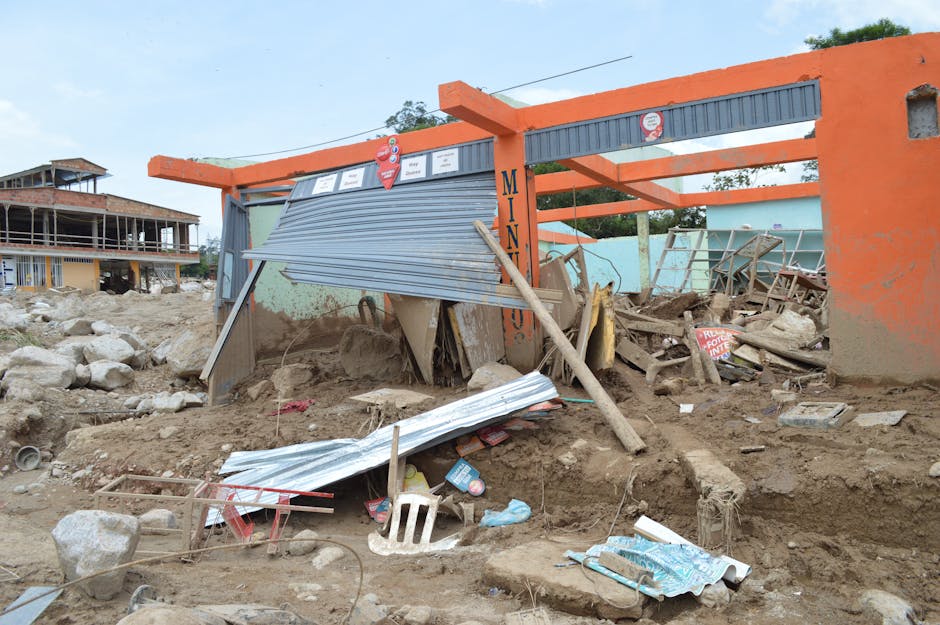
The Future of Satellite Communication: Resilient Solutions for Disaster Response
In an era marked by increasing climate volatility and unpredictable natural disasters, the reliability of communication infrastructure is paramount. When earthquakes strike, hurricanes rage, or floods inundate, traditional terrestrial networks often become casualties, leaving first responders and affected communities in a dangerous state of isolation. This is precisely where the future of satellite communication emerges as a beacon of hope, offering unparalleled resilience and connectivity precisely when it’s needed most. These advanced systems are not merely a backup; they are becoming an integral part of modern disaster preparedness and response strategies, ensuring that critical information flows even when the ground beneath us shakes or the skies unleash their fury.
The evolution of satellite technology has been rapid, moving beyond simple voice and data transmission to encompass high-bandwidth, low-latency solutions that rival terrestrial networks. New constellations of small satellites, advanced ground station technology, and sophisticated signal processing are revolutionizing what’s possible. As we look towards the future, satellite communication is poised to play an even more critical role in safeguarding lives and enabling efficient recovery efforts following catastrophic events. Understanding these advancements is key for anyone involved in emergency management, telecommunications, or public safety.
Key Takeaways
- Satellite communication offers crucial resilience when terrestrial networks fail during disasters.
- Advancements in satellite technology, like LEO constellations, are improving speed and accessibility.
- These systems enable real-time data sharing, coordination, and situational awareness for first responders.
- Satellite technology is vital for restoring connectivity to remote and devastated areas rapidly.
- Future innovations will focus on enhanced bandwidth, lower latency, and integration with other communication platforms.
- Investing in satellite communication is essential for robust disaster preparedness and response plans.
Why Terrestrial Networks Fall Short During Disasters
Terrestrial communication systems, including cellular towers, fiber optic cables, and landlines, are the backbone of our daily connectivity. However, their inherent vulnerability to physical damage makes them exceptionally susceptible to disruptions during natural disasters. Earthquakes can topple towers and sever cables, while floods can inundate underground infrastructure and damage power supplies. High winds from hurricanes and tornadoes can rip antennas from their moorings and tear down power lines, rendering entire regions communication-dead. Consequently, the very infrastructure we rely on most during emergencies can become the first to fail, creating a critical gap in communication capabilities.
Furthermore, the reliance on a centralized power grid exacerbates the problem. Even if the physical infrastructure remains intact, widespread power outages during a disaster can render communication systems inoperable. While backup generators exist, they have limited fuel supplies and require maintenance, which can be impossible to provide in a crisis zone. The complex interdependencies of these networks mean that a failure in one component can cascade, leading to widespread outages that are difficult and time-consuming to repair. This fragility highlights the urgent need for a communication solution that is inherently independent of ground-based infrastructure and local power sources.
The Rise of Resilient Satellite Solutions
Satellite communication operates on a fundamentally different principle, leveraging orbiting satellites to relay signals. This space-based architecture provides inherent resilience against terrestrial damage. Unlike cell towers that can be physically destroyed, satellites are largely unaffected by ground-level events. Signals travel through the atmosphere to satellites and are then re-transmitted to ground terminals, bypassing damaged local infrastructure entirely. This makes satellite technology an indispensable tool for maintaining communication links in disaster-stricken areas.
The advent of Low Earth Orbit (LEO) satellite constellations, such as those pioneered by SpaceX’s Starlink and OneWeb, represents a significant leap forward. These constellations consist of thousands of smaller, interconnected satellites operating at much lower altitudes than traditional geostationary satellites. This proximity results in significantly reduced latency, enabling near real-time data transmission and voice communication that is comparable to terrestrial broadband. For disaster response, this means faster deployment of communication services, quicker information sharing among first responders, and more reliable video conferencing for situational assessments. The ability to rapidly deploy small, portable satellite terminals means connectivity can be established within hours, not days or weeks.
Enabling Real-Time Coordination and Situational Awareness
Effective disaster response hinges on seamless coordination and accurate situational awareness. Satellite communication provides the critical backbone for achieving these objectives. First responders, whether they are coordinating search and rescue operations, managing medical facilities, or distributing aid, require reliable communication channels to share vital information. Satellite terminals can be quickly deployed to establish command centers, providing voice and data links for teams on the ground to report conditions, request resources, and coordinate their efforts in real-time.
Moreover, satellite technology facilitates the transmission of rich media, such as high-resolution imagery and video feeds, which are invaluable for assessing damage and understanding the evolving situation. Drones equipped with cameras can transmit live video feeds via satellite links to emergency operations centers, providing an aerial perspective of the disaster zone. This enables incident commanders to make more informed decisions, allocate resources effectively, and prioritize response efforts. The ability to maintain these communication lines, even in the most remote or devastated areas, significantly enhances the overall efficiency and effectiveness of disaster response operations. How can we better integrate this real-time data into existing emergency management platforms?
Restoring Connectivity to Remote and Isolated Areas
Natural disasters often strike rural or geographically isolated regions that already have limited or unreliable terrestrial communication infrastructure. In these scenarios, the failure of existing services plunges communities into complete isolation. Satellite communication is uniquely positioned to bridge this digital divide during emergencies. Portable satellite terminals can be rapidly deployed by aid organizations and government agencies to re-establish essential communication links for local authorities, hospitals, and community centers.
This restoration of connectivity is not just about enabling phone calls; it’s about facilitating access to critical information and services. It allows affected individuals to contact loved ones, access emergency alerts, and connect with support networks. For aid organizations, it means being able to coordinate the delivery of food, water, and medical supplies more effectively. Furthermore, satellite broadband can power temporary educational facilities or provide internet access for remote work, aiding in the community’s recovery process. The swift re-establishment of communication channels through satellite technology is a crucial step in mitigating the long-term impact of disasters on vulnerable populations.
Future Innovations and Integration
The future of satellite communication for disaster response is not just about deploying more satellites; it’s about smarter, more integrated solutions. Ongoing research and development are focused on several key areas. One major focus is on enhancing bandwidth and reducing latency further, making satellite services even more competitive with terrestrial options and enabling more sophisticated applications like real-time telemedicine and augmented reality support for field technicians.
Another critical area is the seamless integration of satellite networks with other communication technologies. This includes developing hybrid solutions that can automatically switch between terrestrial, cellular, and satellite networks based on availability and performance. Software-defined networking (SDN) and network function virtualization (NFV) are enabling more flexible and dynamic network management, allowing satellite capacity to be allocated rapidly where it’s needed most during an emergency. Furthermore, the development of smaller, more power-efficient user terminals and the integration of satellite capabilities directly into mobile devices will make these resilient solutions more accessible and ubiquitous. We must also consider the role of artificial intelligence in optimizing network performance and predicting communication needs during crises. As satellite technology advancements continue, we can expect even more robust and versatile disaster response capabilities.
Addressing Challenges and Ensuring Accessibility
Despite the immense potential, several challenges need to be addressed to fully leverage satellite communication for disaster response. The cost of terminals and service subscriptions can still be a barrier for some organizations, particularly in resource-limited regions. Ensuring interoperability between different satellite providers and with existing emergency communication systems is also crucial for seamless operations. Furthermore, regulatory frameworks need to adapt to facilitate the rapid deployment of satellite services during emergencies, potentially including streamlined licensing processes and spectrum allocation.
To overcome these hurdles, collaborative efforts between governments, satellite operators, humanitarian organizations, and technology providers are essential. Public-private partnerships can help fund infrastructure development and subsidize service costs for critical response agencies. Standardization efforts can ensure that equipment and protocols are compatible across different systems. As the frequency and intensity of natural disasters continue to rise, investing in and strategically deploying resilient satellite communication networks is not just a technological upgrade; it’s a fundamental necessity for ensuring public safety and enabling effective recovery. The ongoing evolution of satellite communication promises a more connected and resilient future for disaster response efforts worldwide.
Conclusion
The future of satellite communication is intrinsically linked to our ability to respond effectively to increasingly frequent and severe natural disasters. As terrestrial networks prove their vulnerability under duress, the inherent resilience and global reach of satellite systems present an indispensable solution. From enabling real-time coordination among first responders to restoring vital connectivity in the most isolated and devastated regions, satellite technology is transforming disaster preparedness and response.
The ongoing innovations in LEO constellations, bandwidth capabilities, and integration with other networks are paving the way for even more powerful and accessible solutions. Embracing these advancements and addressing the associated challenges through collaboration and strategic investment will be key to building a more resilient global community. The continued development and strategic deployment of satellite communication are essential for ensuring that critical links remain intact, no matter the circumstances.