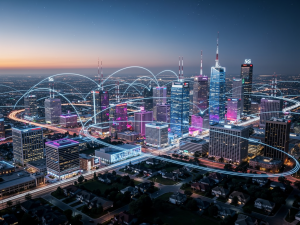
Satellite Communication for Disaster Relief: A Resilient Future
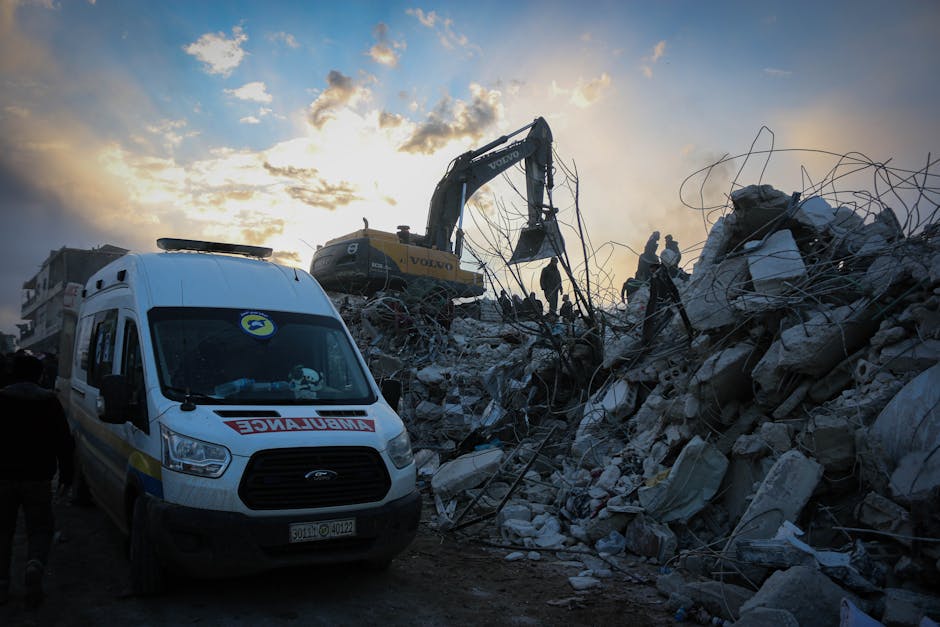
The Resilient Future of Satellite Communication in Disaster Relief
When natural disasters strike, the immediate aftermath often sees traditional communication infrastructure crumble. Power outages, physical destruction of cell towers, and overwhelmed terrestrial networks render conventional methods useless, leaving first responders and affected communities in a perilous state of disconnection. In these critical moments, satellite communication emerges not just as a viable alternative, but as an indispensable lifeline. The future of satellite communication in disaster relief is exceptionally resilient, promising enhanced connectivity and faster response times precisely when they are needed most.
The inherent advantage of satellite technology lies in its independence from terrestrial infrastructure. Satellites orbit above the Earth, unaffected by ground-level damage, making them ideal for establishing immediate communication links in disaster zones. As technology advances, the capabilities and deployment speed of satellite systems are rapidly improving, solidifying their role in modern emergency management. This article delves into the evolving landscape of satellite communication and its crucial contributions to disaster relief efforts worldwide.
Key Takeaways
- Satellite communication offers unparalleled resilience in disaster relief due to its independence from terrestrial infrastructure.
- Advancements in Low Earth Orbit (LEO) constellations are enabling faster, lower-latency, and more affordable satellite internet services for emergency response.
- Medium Earth Orbit (MEO) and Geostationary Orbit (GEO) satellites provide broad coverage and high bandwidth, crucial for large-scale disaster management and coordination.
- Integrating satellite technology with existing emergency protocols significantly enhances situational awareness and operational efficiency.
- The future promises more mobile, adaptable, and integrated satellite solutions tailored for the unique demands of disaster scenarios.
- Government agencies and NGOs are increasingly investing in and training personnel for satellite communication deployment in emergencies.
The Evolving Satellite Landscape: LEO, MEO, and GEO
The satellite communication sector is undergoing a significant transformation, primarily driven by the proliferation of Low Earth Orbit (LEO) constellations. Companies like SpaceX (Starlink), OneWeb, and Amazon (Project Kuiper) are deploying thousands of small, interconnected satellites. These LEO systems offer considerably lower latency compared to traditional Medium Earth Orbit (MEO) and Geostationary Orbit (GEO) satellites. Furthermore, the reduced latency is critical for real-time communication needs during disaster response, such as coordinating rescue efforts or transmitting live video feeds from affected areas.
While LEO systems are gaining prominence for their speed and cost-effectiveness, MEO and GEO satellites continue to play vital roles. MEO satellites, orbiting at intermediate altitudes, strike a balance between latency and coverage area, offering robust connectivity solutions for specific applications. GEO satellites, positioned far above the equator, provide continuous, wide-area coverage and are often used for broadcasting and critical national infrastructure communications. The synergy between these different orbital layers allows for a comprehensive and adaptable satellite communication strategy, capable of meeting diverse disaster relief requirements.
LEO Constellations: The New Frontier
LEO constellations represent a paradigm shift in satellite internet accessibility. Their lower orbital altitude means signals travel shorter distances, resulting in latency figures comparable to terrestrial broadband. For disaster relief, this translates into the ability to quickly deploy terminals that provide high-speed internet, enabling voice calls, video conferencing, and data transfer that were previously impossible in severely damaged areas. For instance, during a major earthquake, relief organizations can rapidly set up Starlink terminals to establish a functioning command center, coordinating aid distribution and medical support almost immediately.
MEO and GEO: Enduring Strengths
MEO satellites, such as those operated by SES (O3b mPOWER), offer high throughput and moderate latency, making them suitable for backbone connectivity supporting multiple users and applications. They are particularly useful for connecting temporary bases or providing broad network coverage over a region. GEO satellites, despite their higher latency, remain indispensable for their unwavering, persistent coverage over vast geographical areas. Their reliability makes them ideal for critical alert systems or continuous monitoring operations that require a stable, long-term communication link, even in the most remote or challenging environments.
Rapid Deployment and Portability in Emergency Scenarios
A significant advancement in satellite communication for disaster relief is the increasing portability and ease of deployment of user terminals. Gone are the days of bulky, complex satellite dishes requiring extensive setup. Modern solutions, particularly from LEO providers, often involve compact, user-friendly terminals that can be set up by a single person in minutes. This speed and simplicity are paramount in disaster zones where time is of the essence and specialized technical personnel may be scarce or inaccessible.
These portable terminals can be powered by portable generators or even solar panels, ensuring functionality even when local power grids are down. This self-sufficiency is a critical factor in maintaining communication lines during prolonged outages. For example, humanitarian aid workers can carry lightweight satellite terminals in their backpacks, establishing instant internet access upon arrival at a disaster site, thereby streamlining the initial assessment and response phases. The ability to quickly establish a communication hub dramatically improves the efficiency and effectiveness of relief operations.
Actionable Tip: Pre-positioning and Training
To maximize the benefits of portable satellite technology, relief organizations should prioritize pre-positioning communication equipment in strategically vulnerable areas. Furthermore, regular training exercises involving the rapid deployment and operation of these terminals are essential. This ensures that teams are proficient and confident when faced with the high-pressure demands of a real disaster scenario. Familiarity breeds efficiency, and efficiency saves lives.
Enhancing Situational Awareness and Coordination
Effective disaster relief hinges on accurate, real-time situational awareness and seamless coordination among various responding agencies. Satellite communication plays a pivotal role in achieving this. High-resolution satellite imagery, transmitted rapidly via satellite links, can provide first responders with an immediate overview of the affected area, identifying damaged infrastructure, accessible routes, and areas requiring urgent attention. This visual data is invaluable for planning rescue missions and resource allocation.
Moreover, reliable communication channels allow for constant updates and information sharing between field teams, command centers, and international aid organizations. This interconnectedness ensures that everyone is working with the most current intelligence, avoiding duplication of efforts and maximizing the impact of aid. For instance, a medical team in a remote village can instantly share patient data and request specific supplies via satellite, enabling faster medical interventions and better patient outcomes. The ability to maintain this level of coordination drastically reduces response times and improves the overall effectiveness of relief operations.
Overcoming Challenges and Future Innovations
Despite the remarkable advancements, challenges remain in the widespread adoption of satellite communication for disaster relief. Cost can still be a barrier, although LEO constellations are driving prices down. Regulatory hurdles and spectrum allocation can also complicate international deployments. Furthermore, ensuring the security of satellite communications against cyber threats is an ongoing concern that requires robust security protocols and constant vigilance.
Looking ahead, the future promises even more integrated and intelligent satellite solutions. Innovations such as satellite-enabled IoT devices for remote monitoring of critical infrastructure or environmental conditions, and AI-powered data analysis for faster disaster assessment, are on the horizon. The development of more resilient and adaptable satellite terminals, capable of operating in extreme conditions and integrating seamlessly with other communication technologies, will further solidify satellite communication’s role in building a more resilient future for disaster relief. The continuous push for innovation ensures that satellite technology remains at the forefront of emergency response capabilities.
The Role of Government and NGOs
Government agencies and non-governmental organizations (NGOs) are increasingly recognizing the critical importance of satellite communication in their disaster preparedness and response strategies. Many national emergency management agencies have integrated satellite capabilities into their operational plans, ensuring access to independent communication networks when terrestrial systems fail. This often involves establishing framework agreements with satellite providers for rapid deployment during emergencies.
NGOs, working on the front lines of humanitarian crises, rely heavily on these technologies to coordinate aid and reach affected populations. They often partner with satellite operators or utilize specialized services designed for humanitarian use. For example, the United Nations utilizes satellite technology extensively for its global operations, including disaster response, peacekeeping missions, and humanitarian aid delivery. This widespread adoption underscores the indispensable nature of satellite communication in disaster relief.
Case Study: Satellite Communication in Action
Following a devastating Category 5 hurricane that crippled communication infrastructure across a large island nation, satellite communication proved to be a critical enabler of the relief effort. Within hours of the storm’s passage, mobile satellite terminals, including LEO-based systems, were deployed by international aid organizations. These terminals provided essential connectivity for coordinating rescue teams, establishing temporary medical facilities, and communicating with the outside world to request further aid.
Emergency managers used satellite phones and terminals to establish a functioning command center, directing relief supplies and personnel to the most affected areas. Furthermore, satellite internet allowed affected residents to connect with loved ones, providing vital emotional support and facilitating family reunification efforts. This real-world application vividly demonstrates how satellite technology bridges the communication gap when traditional networks are rendered inoperable, directly contributing to saving lives and accelerating recovery.
Conclusion
The future of satellite communication in disaster relief is undeniably resilient and increasingly sophisticated. As LEO, MEO, and GEO constellations continue to evolve, offering lower latency, higher bandwidth, and greater accessibility, their role in emergency response becomes more profound. The ability to rapidly deploy portable terminals, enhance situational awareness, and ensure seamless coordination among diverse response teams makes satellite technology an indispensable asset in mitigating the impact of natural disasters.
Governments, NGOs, and international bodies are increasingly integrating these solutions into their preparedness plans, recognizing that reliable communication is a cornerstone of effective disaster management. While challenges related to cost and regulation persist, ongoing innovation promises to overcome these hurdles, making satellite communication an even more potent tool for saving lives and rebuilding communities. Embracing and investing in these advancements is crucial for building a more connected and resilient world, ready to face the challenges of an unpredictable future.