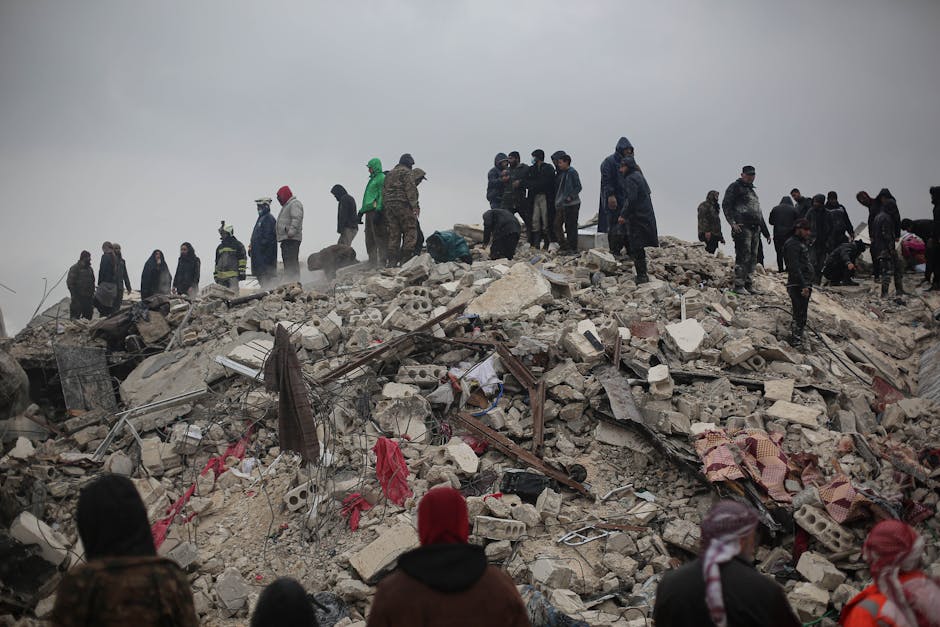
The Resilient Future of Satellite Communication in Disaster Relief
When catastrophic events strike, the immediate aftermath is often characterized by chaos and a critical loss of infrastructure, none more vital than communication networks. In these dire moments, satellite communication emerges as a beacon of hope, providing a lifeline for first responders, aid organizations, and affected populations. The resilient future of satellite communication in disaster relief is not a distant aspiration but a present necessity, offering unparalleled reliability when terrestrial networks are rendered useless by earthquakes, floods, hurricanes, or other natural disasters. Understanding its capabilities and ongoing advancements is crucial for anyone involved in emergency management and global connectivity.
The unique vantage point of satellites in orbit allows them to bypass damaged ground infrastructure, offering a robust alternative for voice, data, and video transmission. This capability is not just about maintaining contact; it’s about enabling coordinated rescue operations, facilitating the dissemination of critical safety information, and supporting the logistical needs of relief efforts. As the frequency and intensity of natural disasters appear to be increasing globally, the role of satellite technology in ensuring continuity of services during crises becomes ever more pronounced. This article delves into why satellite communication is indispensable for disaster relief and explores the innovations shaping its resilient future.
Key Takeaways
- Satellite communication provides an indispensable, reliable connectivity solution when terrestrial networks fail during disasters.
- Its unique orbital advantage bypasses damaged ground infrastructure, enabling critical voice, data, and video transmission.
- Advancements in LEO constellations, miniaturization, and integrated solutions are enhancing the speed, accessibility, and cost-effectiveness of satellite services for disaster response.
- The integration of AI and IoT with satellite networks is enabling proactive disaster monitoring and faster, more targeted relief efforts.
- Policy and regulatory frameworks are evolving to support the broader and more efficient use of satellite communication in emergency scenarios.
The Indispensable Role of Satellite in Crisis Communication
Terrestrial communication networks, including cellular towers and fiber optic cables, are notoriously vulnerable to physical damage during natural disasters. A single seismic event can topple towers, while floods can inundate underground cable systems, rendering vast areas completely disconnected. Satellite communication, however, operates independently of this ground-based infrastructure. Satellites in orbit communicate with ground terminals, which are often portable and can be deployed rapidly to any location, regardless of the condition of local networks. This inherent resilience makes satellite technology the go-to solution for establishing immediate communication channels in the critical first hours and days of a disaster response.
For instance, during the devastating 2010 Haiti earthquake, which crippled most of the island’s infrastructure, satellite phones and terminals were among the few communication tools that remained operational. They enabled international aid organizations and government agencies to coordinate rescue efforts, assess damage, and direct resources to where they were most needed. Similarly, following major hurricanes in the United States and the Caribbean, satellite-based internet and voice services have been crucial for restoring connectivity to affected communities and supporting the operations of emergency management agencies like FEMA. The ability to establish a wide-area network quickly, even in remote or devastated regions, underscores the unparalleled value of satellite communication in disaster relief scenarios.
Advancements Driving the Resilient Future of Satellite Communication
The landscape of satellite communication is evolving rapidly, driven by technological innovation that is making these services faster, more accessible, and more affordable. One of the most significant developments is the rise of Low Earth Orbit (LEO) satellite constellations, such as Starlink and OneWeb. Unlike traditional geostationary (GEO) satellites, LEO satellites orbit much closer to Earth, resulting in significantly lower latency and higher data speeds. This improvement is critical for disaster relief, enabling real-time video feeds from damaged areas, faster data transfer for damage assessment, and more reliable voice communications.
Furthermore, the miniaturization of satellite technology and the development of more robust, user-friendly terminals are making satellite communication more practical for on-the-ground deployment. Devices are becoming smaller, lighter, and more power-efficient, requiring less complex setup. This allows for quicker deployment by first responders who may have limited technical expertise or be operating under extreme stress. The increasing competition among satellite providers is also driving down costs, making these vital services more accessible to a wider range of humanitarian organizations and government agencies that often operate with constrained budgets. These advancements collectively contribute to a more capable and responsive satellite communication infrastructure ready for future crises.
LEO Constellations and Reduced Latency
The advent of large LEO constellations has fundamentally changed the capabilities of satellite internet. Traditional GEO satellites are positioned over 22,000 miles away, leading to noticeable delays (latency) in communication, which can be problematic for applications requiring real-time interaction. LEO satellites, orbiting at altitudes of a few hundred to a couple of thousand miles, drastically reduce this latency. For disaster relief, this means that video conferencing for remote medical consultations, live streaming of situational awareness data, and even basic internet browsing become much more fluid and effective. This enhancement is crucial for maintaining operational tempo and decision-making speed during critical response phases.
Miniaturization and Terminal Accessibility
Gone are the days when satellite terminals were bulky, expensive, and required specialized technicians for setup. Modern satellite terminals are increasingly designed for portability and ease of use. Many are now comparable in size to a laptop or a small briefcase, and their setup can often be accomplished in minutes through simple, guided processes, sometimes even via a smartphone app. This accessibility means that a single aid worker or a small team can quickly establish a vital communication hub, supporting their immediate operational needs without relying on external technical support. This democratization of satellite technology is a game-changer for agile disaster response.
Integrating Satellite Communication with Other Technologies
The true power of satellite communication in disaster relief is amplified when it is integrated with other cutting-edge technologies. The Internet of Things (IoT) and Artificial Intelligence (AI) are poised to revolutionize how satellite networks are used for preparedness and response. For instance, networks of IoT sensors deployed in disaster-prone areas can continuously monitor environmental conditions like seismic activity, water levels, or air quality. These sensors can transmit their data via satellite links, even from remote locations, providing early warnings that allow authorities to prepare and evacuate populations.
Moreover, AI can analyze the vast amounts of data collected by these sensors and transmitted via satellite, identifying patterns and predicting potential disaster scenarios with greater accuracy. During a response, AI can also help optimize communication resource allocation, analyze satellite imagery for damage assessment, and even assist in coordinating drone operations for search and rescue missions. This synergistic approach, where satellite connectivity serves as the backbone for data transmission from IoT devices and enables AI-driven analysis, creates a more proactive, efficient, and effective disaster management ecosystem. The ability to have real-time, globally connected data streams is fundamental to this integrated future.
IoT for Early Warning Systems
Deploying IoT devices in vulnerable regions allows for continuous, real-time data collection. These devices can range from simple weather stations to sophisticated seismic sensors or flood monitors. When these sensors are connected via satellite, they can relay critical data even if local infrastructure is compromised. This continuous stream of information is vital for early warning systems, giving communities precious extra time to prepare or evacuate. For example, a satellite-linked sensor network along a river could provide immediate alerts about rising water levels, enabling timely evacuations before a flood crest hits.
AI-Powered Situational Awareness
Artificial intelligence excels at processing complex datasets. When combined with satellite communication, AI can analyze incoming data from various sources—including IoT sensors, drone imagery, and social media—to create a comprehensive, real-time picture of a disaster zone. This enhanced situational awareness allows response teams to understand the scope of the disaster, identify critical needs, and prioritize resource deployment more effectively. AI can also help predict the path of wildfires or the spread of floods based on real-time data transmitted via satellite, enabling more strategic preventative actions.
Policy, Regulation, and Accessibility Challenges
While the technological advancements are promising, the widespread and effective deployment of satellite communication in disaster relief also depends on supportive policies and regulatory frameworks. Governments and international bodies need to streamline the process for deploying satellite terminals and spectrum usage during emergencies. This includes establishing clear protocols for emergency communications, ensuring interoperability between different satellite systems and agencies, and potentially creating pre-approved agreements for rapid deployment of services by satellite operators.
Furthermore, ensuring equitable access to these technologies is a significant challenge. While costs are decreasing, satellite communication can still be prohibitively expensive for some humanitarian organizations or for reaching the most marginalized populations. Initiatives focused on subsidizing costs, providing training, and developing community-based satellite communication solutions are essential to bridge this gap. Addressing these policy and accessibility hurdles is as critical as technological innovation for realizing the full potential of satellite communication in building a truly resilient future for disaster relief efforts worldwide. How can we ensure that the benefits of advanced satellite technology reach the most vulnerable populations during a crisis?
Streamlining Emergency Spectrum Access
During a disaster, the need for immediate communication bandwidth is paramount. However, accessing the necessary radio frequencies can sometimes be a bureaucratic hurdle. Establishing pre-negotiated emergency spectrum access agreements with regulatory bodies and satellite operators can significantly expedite the deployment of communication services when disaster strikes. This ensures that vital bandwidth is available without delay, enabling responders to communicate effectively from the outset of an operation.
Ensuring Interoperability and Standards
In large-scale disaster response, multiple agencies and organizations, often from different countries, will be involved. For effective coordination, their communication systems must be able to work together. Promoting interoperability standards for satellite terminals and data protocols ensures that diverse systems can communicate seamlessly. This avoids the fragmentation of communication capabilities and allows for a unified, coordinated response effort, maximizing the efficiency of relief operations.
Conclusion
The resilience of satellite communication in disaster relief is no longer a matter of ‘if’ but ‘how’ and ‘how effectively’. As we face an increasingly unpredictable climate, the reliability of satellite technology to bridge communication gaps when terrestrial networks fail is paramount. The ongoing evolution, particularly with LEO constellations, miniaturized terminals, and the integration of AI and IoT, promises a future where disaster response is faster, more informed, and more effective. This resilient future is being built today, ensuring that connectivity remains a constant, even amidst the most challenging circumstances.
Embracing and investing in these advancements, coupled with supportive policies and a commitment to equitable access, will solidify satellite communication’s role as an indispensable tool in saving lives and mitigating the impact of disasters. How will your organization leverage the power of satellite communication to enhance its disaster preparedness and response capabilities?