GSMA Report: The Roadmap to ‘Mobile AI’ and Its Impact on AI Content Creation
In a major report released March 16, 2026, the GSMA (Global System for Mobile Communications Association) has laid out a critical roadmap for the development of ‘Mobile AI’—a future where artificial intelligence is natively integrated into the very fabric of mobile networks and devices. The report, ‘Mobile AI: The Path to the Future of Telecoms’ Role in Smart Networks and Devices,’ identifies significant roadblocks in current network infrastructure and proposes a multi-industry strategy to overcome them. For AI content creators, this signals a profound shift: the impending convergence of ubiquitous, high-speed connectivity and distributed intelligence will fundamentally change how content is created, optimized, and consumed, moving AI workflows from the cloud directly to the user’s pocket.
What the GSMA’s Mobile AI Vision Actually Means

The GSMA report moves beyond the buzzword of ‘AI on phones’ to define a comprehensive ecosystem. Mobile AI envisions a seamless integration of three core layers: intelligent devices (phones, IoT sensors), intelligent networks (5G-Advanced and 6G with native AI capabilities), and intelligent services. The goal is a self-optimizing system where the network can predict traffic, allocate resources for AI inference in real-time, and enable complex, collaborative AI tasks across multiple devices without crippling latency.
The report highlights four key technological pillars required for this future:
- Network AI Native Architectures: Future 6G standards (targeting 2030+) are being designed with AI as a core service, not an add-on. This means network slices dedicated to AI model training and inference, with ultra-reliable low-latency communication (URLLC) for real-time AI applications.
- On-Device & Edge AI Maturity: The proliferation of specialized neural processing units (NPUs) in smartphones and edge servers. The report cites projections that by 2028, over 80% of flagship smartphones will have dedicated AI accelerators capable of running multi-billion parameter models locally.
- Federated Learning & Swarm Intelligence: A shift from centralized cloud training to privacy-preserving, distributed learning where models are trained across millions of devices without raw data ever leaving the device.
- Standardization & Interoperability: The current lack of common APIs and frameworks across chipmakers (Qualcomm, MediaTek, Apple), network vendors (Ericsson, Nokia), and cloud providers (AWS, Google, Azure) is a major roadblock. The GSMA calls for industry-wide collaboration on open standards.
The primary roadblocks identified are not just technical but economic and regulatory: the massive cost of network densification for AI-ready connectivity, spectrum allocation for AI-specific services, and evolving data privacy regulations for distributed AI.
Why AI Content Creators Must Pay Attention Now
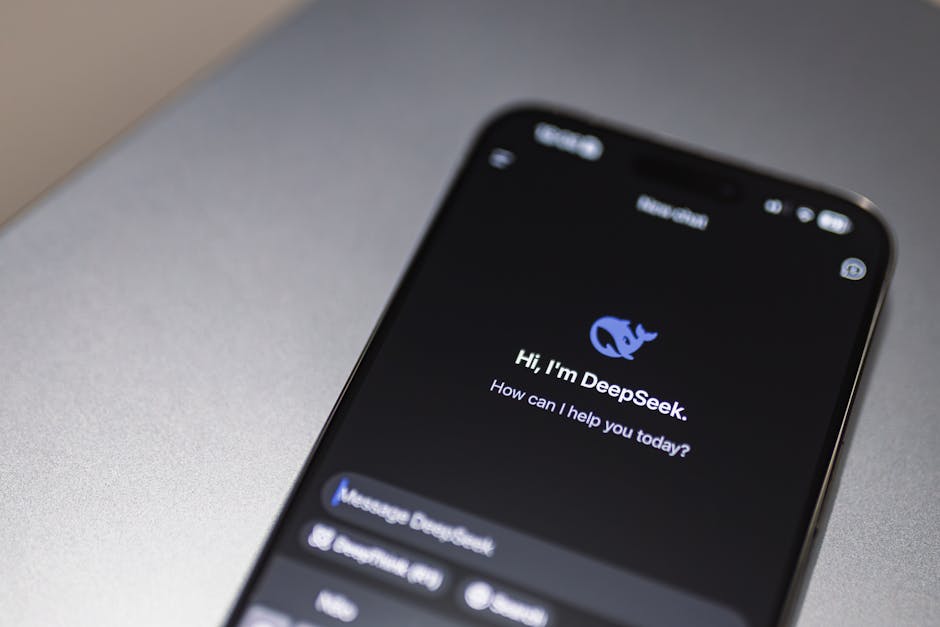
For professionals using tools like EasyAuthor.ai, ChatGPT, Midjourney, or Claude, the move to Mobile AI is not a distant telecom concern—it’s the foundation of the next content paradigm. The implications are immediate for strategy and workflow planning.
1. The Death of Latency for Real-Time AI Content: Today, generating a complex image or a long-form article with AI requires a round-trip to a data center, introducing delays. Mobile AI networks promise sub-10ms latency for AI inference. This enables truly real-time applications: live video stream analysis and overlay generation, instant multilingual translation and dubbing of podcasts, or AI co-pilots that rewrite marketing copy on-the-fly during a live presentation, all happening on the device or at the nearest network edge.
2. Hyper-Personalization at Scale Becomes Feasible: With federated learning, AI models can learn from user interaction patterns (e.g., which headlines a user clicks, how long they read) across millions of devices without compromising individual privacy. This allows content platforms to deploy personalization models that are exponentially more accurate than today’s cookie-based systems. An AI content strategist could deploy a model that dynamically adjusts article tone, length, and format for each subscriber in real-time, based on aggregated, anonymized learning.
3. New Content Formats and Monetization: Mobile AI enables persistent, context-aware AI agents. Imagine a blog post that isn’t static text but is accompanied by an embedded, lightweight AI agent that can answer reader questions, generate custom examples, or update its own statistics based on new data—all running locally on the reader’s phone. This creates opportunities for interactive, ‘living’ content and new engagement-based revenue models.
4. Shift in SEO and Discovery: As on-device AI assistants become more powerful, search will move from keyword-based indexing of static pages to real-time querying of AI agents attached to content. SEO will evolve into ‘Agent Optimization’—ensuring your content’s AI companion is trained, fast, and capable of providing the best answers directly on the device, bypassing traditional search engine result pages entirely.
Practical Steps for AI Content Creators to Prepare

Waiting for 6G in 2030 is not an option. The transition is already underway with 5G-Advanced and on-device AI chips. Content creators and strategists can take concrete steps today to build a Mobile AI-ready workflow.
- Audit Your AI Stack for Edge Compatibility: Evaluate your primary AI tools. Are the models you rely on (e.g., GPT-4, Llama 3, Stable Diffusion) available in smaller, quantized versions optimized for edge deployment? Start experimenting with local AI runners like LM Studio, Ollama, or ComfyUI. Understand the trade-offs between cloud-based power and on-device speed and privacy.
- Design for Modular, Real-Time Content: Move away from thinking of content as a monolithic ‘post.’ Structure your articles, videos, and graphics as modular components that an AI agent could dynamically reassemble. Use clear semantic markup, structured data (JSON-LD), and APIs that allow real-time data fetching. This makes your content ‘agent-ready.’
- Prioritize Lightweight Media and Efficient Code: Mobile AI will thrive on speed. Optimize all assets. Use next-gen formats like WebP for images and AVIF for video. Ensure your website or app has a stellar Core Web Vitals score. A slow-loading page will cripple any on-device AI interaction.
- Develop Skills in Federated Learning Frameworks and Agent Design: The next wave of high-value skills won’t just be prompt engineering, but designing and training lightweight AI models for specific tasks. Familiarize yourself with concepts of federated learning (using frameworks like TensorFlow Federated or Flower) and the architecture of autonomous AI agents (using platforms like LangChain or Microsoft Autogen).
- Integrate Real-Time Data Pipelines: Ensure your content management system (like WordPress) can integrate with real-time data sources via APIs. Mobile AI content will need to pull in live statistics, market prices, or news updates to remain relevant. Tools like Zapier, Make, or custom webhooks will become even more critical.
The Future is Distributed, Intelligent, and In Your Hand

The GSMA report is a clarion call that the infrastructure for a radical shift in computing is being blueprinted today. For AI content creators, the era of sending prompts to a distant cloud and waiting is ending. The future is distributed intelligence: powerful AI models running seamlessly across networks and devices, enabling real-time, personalized, and interactive content experiences we are only beginning to imagine. The time to prepare is now—by optimizing workflows, embracing edge AI tools, and designing content not as a final product, but as an intelligent, adaptable service. The path to Mobile AI is being laid; the most forward-thinking creators will start building on it today.