How AI and 5G-Advanced Are Reshaping the Telecom Industry in 2026

According to a year-end review by IEEE Communications Society, the telecom and ICT landscape has entered 2026 marked by a dramatic convergence of technologies, ranging from artificial intelligence (AI) and 5G-Advanced to cloud-native architectures and edge computing. This evolution positions connectivity as a programmable utility, revolutionizing both enterprise operations and consumer experiences while setting the stage for the next innovation in global digitalization.
AI and 5G-Advanced: Redefining Telecom Infrastructure

AI has become a cornerstone of telecom networks, seamlessly integrating into every layer including RAN (Radio Access Networks), edge, and operations support systems (OSS/BSS). By Q4 2025, over 60% of Tier-1 operators had adopted AI-based network management tools, leading to cost reductions of 15-25% through predictive maintenance and real-time automation. Within the same period, over 70% of new telecom deployments transitioned to cloud-native infrastructure, ensuring scalability and flexibility.
Additionally, 5G-Advanced—a key transition layer between 5G and 6G—is enhancing industrial IoT, autonomous systems, and latency-sensitive enterprise use cases with advanced spectrum aggregation and edge capabilities. In the Middle East, countries like Kuwait and the UAE have already begun deploying pre-standard 5G-Advanced trials, showcasing groundbreaking high-speed services including gaming and premium user experience bundles.
Market Implications: Global Connectivity & Economic Impact

The market outlook for telecoms heading into 2026 reveals a globally interconnected infrastructure driving economic growth. Ookla’s 2025 data showed median broadband download speeds had reached 115.43 Mbps globally, with mobile download performance peaking in the UAE at 672.68 Mbps. Emerging markets like Vietnam climbed the ranks with fixed broadband speeds of 273.64 Mbps, highlighting the transformative impact of FTTH and 5G rollouts.
Cloud hyperscalers (AWS, Microsoft, Google) and telecom operators are also reshaping market dynamics. Partnerships on multi-cloud orchestration and sovereign cloud strategies are enabling a new era of data control. For instance, in Europe, SAP recently joined AWS’s Sovereign Cloud initiative, while SoftBank launched Japan’s sovereign AI cloud in partnership with Oracle. These efforts signal a key shift toward data sovereignty and jurisdiction-first AI ecosystems.
At the same time, industry spending on AI-enhanced cybersecurity surged by 30% in 2025, reaching $220 billion. This investment addresses the rising need for zero-trust models, quantum-safe cryptography, and AI-powered threat detection to secure increasingly interconnected telecom networks.
Future Outlook: A Convergence of Telecom and Intelligence
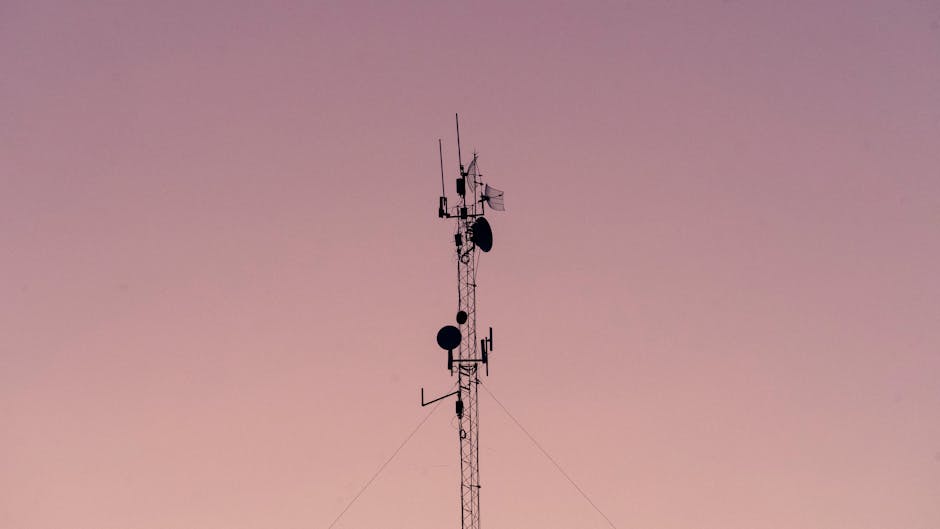
The convergence of telecom and ICT industries continues to position connectivity as a key enabler for AI-driven digital orchestration. By 2026, edge nodes are projected to support 65% of enterprise AI deployments, driving demand for low-latency connectivity and distributed workloads. This trend accelerates multi-cloud, AI-native architectures designed to meet the demands of autonomous operations in industries like manufacturing, health, and finance.
Looking ahead, the transition to 6G remains on the horizon, with rollouts anticipated by 2030. However, the next five years will focus largely on the deployment of 5G-Advanced infrastructure, paving the way for programmable, intelligence-driven networks. Global policymakers, including the UN, are actively establishing frameworks for AI governance, ensuring sustainable and equitable adoption of these emerging technologies.
What This Means for the Telecom Industry

The digital transformation of telecom networks into AI-driven, adaptive ecosystems is no longer just a trend but an imperative for competitiveness. Traditional revenue streams focused on connectivity volume are giving way to new monetization models centered around platforms, APIs, and experience-driven services. For operators, this shift presents both opportunities and challenges, particularly in balancing the need for rapid innovation with the demand for regulatory compliance and data sovereignty.
What are your thoughts on this convergence of AI and telecom technologies? Share your perspective in the comments below.
Source: IEEE Communications Society