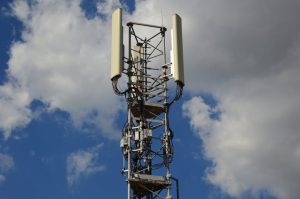
The role of AI in transforming telecom infrastructure is no longer a speculative vision but a fundamental operational reality, driving unprecedented efficiency, automation, and intelligence across global networks. As data consumption skyrockets and the complexity of managing 5G, fiber, and IoT ecosystems intensifies, artificial intelligence has emerged as the critical linchpin for sustainable growth. This transformation is not merely about incremental improvements; it’s a complete overhaul of how networks are designed, operated, and secured. From predictive analytics that prevent costly outages to autonomous systems that dynamically allocate resources, AI is fundamentally rewriting the rulebook for telecommunications. Consequently, operators who fail to integrate these intelligent systems risk falling behind in a hyper-competitive market defined by reliability and ultra-low latency.
From Reactive to Predictive: AI-Powered Network Operations
Traditional network management has historically been a reactive discipline, where engineers respond to alarms and troubleshoot problems after they disrupt service. This approach is increasingly unsustainable. The sheer volume of data generated by modern telecom infrastructure, encompassing millions of network elements, user sessions, and performance metrics, far exceeds human capacity for analysis. Artificial intelligence, particularly machine learning (ML) algorithms, introduces a paradigm shift towards predictive and prescriptive operations. These systems ingest vast, real-time telemetry data to establish behavioral baselines for every component, from cell towers to optical transceivers.
For instance, by analyzing patterns in power consumption, signal quality, and error rates, AI can predict hardware failures like a failing power supply or a degrading optical amplifier weeks in advance. This capability, known as predictive maintenance, allows operators to schedule repairs during off-peak hours, avoiding catastrophic service outages and saving millions in emergency truck rolls and customer credits. Moreover, AI-driven operations centers can correlate thousands of simultaneous events, distinguishing between a localized hardware issue and a broader network-wide anomaly, such as a fiber cut or a distributed denial-of-service (DDoS) attack. This holistic view transforms network operations from a frantic fire-fighting exercise into a calm, strategic command center.
Automating Root Cause Analysis
One of the most time-consuming tasks in telecom is root cause analysis (RCA). When a customer reports a service issue, it could stem from dozens of potential points of failure across the access, transport, and core networks. AI excels at this correlation. Advanced algorithms can instantly sift through logs, performance data, and topology maps to pinpoint the exact network element or configuration change that triggered a cascade of problems. This reduces mean time to repair (MTTR) from hours or days to minutes, dramatically improving customer satisfaction and network availability.
Dynamic Network Optimization and Resource Allocation
Network resources are finite and expensive. Allocating bandwidth, spectrum, and compute power efficiently is paramount for profitability and performance. AI is revolutionizing this domain through real-time, dynamic optimization that adapts to ever-changing demand patterns. Unlike static rule-based systems, AI algorithms learn from historical and real-time data to make intelligent decisions about resource distribution. In a 5G context, this is especially crucial for managing network slicing, where a single physical network is partitioned into multiple virtual networks, each with unique performance requirements for different applications like autonomous vehicles, massive IoT sensor networks, or enhanced mobile broadband.
An AI-powered orchestration layer can continuously monitor the performance of each slice. If a slice for a smart factory begins to experience latency spikes, the AI can automatically reallocate bandwidth from a less critical slice to ensure service level agreements (SLAs) are met. Similarly, in radio access networks (RAN), AI is used for traffic steering and load balancing. Algorithms analyze user density, application types, and signal conditions to intelligently hand off users between different frequency bands (e.g., mid-band 5G and low-band 4G) or even between different network technologies, ensuring the best possible experience while maximizing overall network capacity.
“AI-driven optimization isn’t just about efficiency; it’s about enabling services that were previously impossible. The dynamic resource management required for thousands of autonomous network slices is fundamentally an AI problem,” notes a leading network architect from a tier-1 operator.
Revolutionizing Network Security and Threat Detection
The expanded attack surface of virtualized, software-defined networks makes traditional, signature-based security tools inadequate. Telecom infrastructure is a high-value target for nation-states and cybercriminals alike. AI and machine learning are becoming essential weapons in the cybersecurity arsenal, enabling anomaly detection at scale. By establishing a continuous understanding of ‘normal’ network behavior—including traffic flows, protocol usage, and device communication patterns—AI models can flag subtle deviations that may indicate a sophisticated, low-and-slow attack.
For example, an AI system might detect a pattern of unusual signaling traffic emanating from a specific geographic cluster of cell sites, potentially signaling a coordinated attempt to disrupt network availability. It could also identify data exfiltration attempts hidden within encrypted traffic by analyzing packet timing and size anomalies. This proactive stance allows security teams to quarantine threats before they escalate into full-blown breaches. Furthermore, AI can automate threat response, such as isolating compromised network functions in a virtualized environment or updating firewall rules across the entire infrastructure in seconds, a task that would take humans hours to execute manually.
AI in Planning, Design, and Deployment
The role of AI in transforming telecom infrastructure begins long before a network goes live, deeply influencing the planning and design phases. Deploying new cell towers or laying fiber optic cables represents a massive capital expenditure. AI-powered geospatial analytics and digital twin technology are making these investments far more precise and cost-effective. By analyzing datasets including population density, topography, existing infrastructure, traffic patterns, and even future urban development plans, AI can generate optimal network design blueprints.
These models can predict where demand will be highest and recommend the exact placement of small cells or macro towers to provide blanket coverage with minimal overlap and interference. In fiber deployment, AI can plan the most efficient trenching routes, avoiding known obstacles and minimizing civil works costs. During deployment, computer vision AI, often deployed on drones or vehicles, can inspect cell towers and cable lines for physical damage or construction defects, ensuring quality control at a scale and speed unattainable by human teams. This data-driven approach to planning significantly reduces rollout time and maximizes return on investment.
The Power of Digital Twins
A digital twin is a virtual, dynamic replica of a physical network. AI is the brain that brings this twin to life. Engineers can simulate network upgrades, failure scenarios, or massive traffic events (like a stadium concert) in the digital twin before implementing any changes in the real world. This allows for risk-free testing and optimization, ensuring that new configurations will perform as expected without impacting live customer service.
Enhancing Customer Experience with Proactive Support
Ultimately, the stability and intelligence of the network directly translate to the end-user experience. AI is enabling a shift from reactive, call-center-based customer support to proactive and personalized service management. Network-based AI can detect when a subscriber’s device is experiencing poor quality of service—such as high latency or packet loss—before the user even notices or calls to complain. The system can then trigger automated troubleshooting steps or proactively send an alert to the user’s app, explaining the issue and the expected resolution time.
Conversational AI, or chatbots powered by natural language processing (NLP), handle a growing percentage of routine customer inquiries about billing, plan changes, or basic troubleshooting. This frees human agents to deal with more complex issues. Moreover, AI can analyze aggregate customer behavior data to predict churn risk, enabling marketing teams to offer tailored retention incentives to users who show signs of dissatisfaction. This holistic, AI-driven approach to customer experience closes the loop between network performance and business outcomes, fostering greater loyalty and reducing operational costs.
The Integration of AI with Open RAN and Network Virtualization
The movement towards open, virtualized network architectures like Open RAN (O-RAN) is creating the perfect substrate for AI’s deep integration. O-RAN’s principles of openness and interoperability mandate standardized interfaces, which in turn generate rich, accessible streams of data—the fuel for AI. The O-RAN Alliance itself has defined the RAN Intelligent Controller (RIC), a key architectural component designed specifically to host AI/ML applications, known as xApps and rApps.
These apps can perform real-time control and optimization tasks, such as massive MIMO beamforming management, energy savings by putting cells to sleep during low traffic, or enhanced mobility management. In a virtualized core network, AI manages the lifecycle of containerized network functions (CNFs), automatically scaling them up or down based on demand and healing them if they fail. This marriage of AI with cloud-native, software-defined principles is what enables the vision of a truly autonomous self-organizing network (SON) that can configure, optimize, and heal itself with minimal human intervention.
Overcoming Challenges: Data, Skills, and Trust
Despite its transformative potential, integrating AI into telecom infrastructure is not without significant hurdles. The first challenge is data quality and accessibility. AI models are only as good as the data they train on. Telecom data is often siloed across different departments and legacy systems, and it can be noisy or incomplete. Creating a unified, clean, and real-time data fabric is a prerequisite for successful AI deployment. The second major challenge is the skills gap. The telecom industry needs a new breed of professionals who understand both network engineering and data science, a rare and valuable combination.
Furthermore, there is the critical issue of explainable AI (XAI). Network engineers need to trust the decisions made by AI, especially when they affect critical infrastructure. If an AI model shuts down a cell tower to save energy, engineers must be able to understand the logic behind that decision. Developing transparent, interpretable AI models is essential for gaining operator trust and ensuring safe, reliable operations. Finally, the substantial computational power required for training and running complex AI models raises concerns about energy consumption, pushing operators to seek efficient hardware and optimized algorithms.
The Future Trajectory: Towards Cognitive and Intent-Based Networks
The evolution of AI’s role in telecom points toward increasingly sophisticated and autonomous systems. The next frontier is the development of cognitive networks that can understand context and intent. Instead of operators programming specific rules, they would simply state a business objective—”maximize energy efficiency on the transport network while maintaining 99.999% availability for premium enterprise customers”—and the AI would determine and execute the necessary configurations across thousands of devices to fulfill that intent.
Furthermore, the integration of AI with edge computing will unleash new low-latency applications. AI models deployed at the network edge will enable real-time processing for autonomous vehicle coordination, industrial robotics, and augmented reality. Generative AI could also play a role in automatically generating and testing network code or creating synthetic data to train other AI models. As 6G research begins, AI is already positioned as its native, foundational element, promising to create networks that are not just intelligent but truly adaptive and cognitive partners in delivering digital experiences.
Key Takeaways
- AI shifts network management from reactive troubleshooting to predictive and prescriptive operations, preventing outages and slashing costs.
- Dynamic resource allocation and optimization, especially for 5G network slicing, are only feasible at scale with intelligent AI algorithms.
- AI is critical for defending virtualized, software-defined telecom networks against sophisticated, evolving cyber threats.
- The synergy between AI and open, virtualized architectures like O-RAN is accelerating the development of autonomous self-organizing networks.
- Successful implementation requires overcoming challenges related to data silos, the skills gap, and building trust in AI decisions through explainability.
Frequently Asked Questions (FAQs)
How is AI currently being used in telecom networks?
Today, the most common applications include predictive maintenance for hardware, real-time traffic optimization in RAN and core networks, automated customer service chatbots, and AI-driven security monitoring for anomaly detection. Many operators also use AI for network planning and capacity forecasting.
What is the difference between AI and machine learning in this context?
Artificial Intelligence (AI) is the broad field of creating intelligent machines. Machine Learning (ML) is a subset of AI where algorithms learn patterns from data without being explicitly programmed. In telecom, ML is the primary technique used for tasks like predicting failures, classifying network traffic, and detecting security anomalies.
Will AI replace network engineers?
No, AI is more likely to augment and elevate the role of network engineers. It will automate repetitive, data-intensive tasks (like log analysis), freeing engineers to focus on higher-level strategic planning, complex problem-solving, and overseeing the AI systems themselves. The job will evolve from manual configuration to AI orchestration and governance.
What are the biggest risks of deploying AI in critical infrastructure?
The key risks include over-reliance on poorly understood “black box” models that make erroneous decisions, data privacy concerns if customer data is used in training, vulnerability of the AI systems themselves to adversarial attacks, and the potential for increased energy consumption from running complex models.
Conclusion
The integration of artificial intelligence into telecom infrastructure represents a fundamental and irreversible shift, moving the industry from hardware-centric, manually operated systems to software-defined, intelligent, and autonomous ecosystems. The role of AI in transforming telecom infrastructure is multifaceted, touching every layer from physical maintenance to customer interaction. It delivers tangible value through enhanced operational efficiency, robust security, superior customer experiences, and the enablement of revolutionary services like network slicing. However, the journey requires strategic investment in data governance, talent development, and trustworthy AI frameworks. For telecommunications companies, embracing this AI-driven transformation is no longer a competitive advantage but an existential imperative to thrive in the data-driven, hyper-connected future.