Choosing the best tourist SIM cards for Southeast Asia is your first critical step toward a stress-free, connected journey across this vibrant region. Navigating the myriad of options, from local carriers to international eSIMs, can be daunting, but getting it right means seamless navigation, instant translation, and sharing your adventures without exorbitant roaming fees. This comprehensive guide will break down everything you need to know, from understanding local telecom markets in Thailand, Vietnam, and Indonesia to comparing data packages, spotting hidden fees, and leveraging new technologies like eSIMs. With detailed country-by-country analysis and practical purchase tips, you’ll master the art of staying connected affordably and reliably from the moment you land.
Key Takeaways
- Pre-research is essential: Identify the dominant carrier with the best coverage for your specific itinerary in each country before you arrive.
- eSIMs offer supreme convenience for multi-country trips, allowing instant activation without physical SIM swaps.
- Always verify the exact total cost, including the SIM price, required top-up, and any activation fees, to avoid surprises.
- For stays longer than 2-3 weeks, consider local postpaid plans or long-term tourist packages for significantly better value.
- Carry an unlocked phone and a SIM ejector tool/pin. Consider a dual-SIM phone to maintain your home number.
- Understand data throttling policies; “unlimited” plans often slow speeds dramatically after a certain fair-use limit.
Understanding the Southeast Asian Telecom Landscape
The telecommunications market in Southeast Asia is fiercely competitive, resulting in excellent value for travelers but also a sometimes bewildering array of choices. Unlike more consolidated markets in Europe or North America, most countries here have three to four major mobile network operators (MNOs) battling for market share. This competition drives down prices for data and encourages the creation of specialized tourist-focused packages. However, coverage and network quality can vary dramatically between carriers, especially when venturing outside major cities and tourist hubs. For instance, in Indonesia, Telkomsel’s extensive infrastructure provides superior coverage in remote islands compared to competitors, while in Vietnam, military-owned Viettel often has the edge in mountainous regions. Consequently, your choice of the best tourist SIM cards for Southeast Asia isn’t one-size-fits-all; it requires matching a carrier’s strengths with your travel itinerary.
Furthermore, regulatory environments differ. Some countries, like Thailand and Singapore, have streamlined processes for tourists purchasing SIMs, often with registration handled directly at the point of sale using your passport. Others may have more cumbersome requirements. The rise of digital services is also transforming the landscape. The adoption of 4G LTE is nearly universal in urban areas, with 5G networks rapidly expanding in capital cities like Bangkok, Kuala Lumpur, and Singapore. This means you can expect fast data speeds for streaming and navigation, provided you choose a carrier with robust infrastructure. Understanding this dynamic landscape is the foundation for making an informed decision, ensuring you get reliable service whether you’re exploring Bangkok’s street food stalls or trekking in northern Laos.
Critical Factors to Compare Before You Buy
Selecting the best tourist SIM cards for Southeast Asia requires evaluating several key factors beyond just the advertised data allowance. First and foremost, scrutinize the network coverage and reliability. A cheap 50GB plan is useless if you have no signal at your hotel. Always check coverage maps for the specific regions you’ll visit, paying special attention to rural or coastal areas. Secondly, analyze the true total cost. The price displayed for the SIM pack is rarely the full story. You must often pay for the physical SIM card itself (usually $2-$5), then purchase a separate data package or credit top-up to activate service. Always ask, “What is the total amount I need to pay right now to have working data?” This prevents the common frustration of buying a SIM only to find it lacks credit.
Third, examine the data package specifics. Is the data volume for a specific period (e.g., 8GB for 30 days)? Does it include any social media or app-specific “free data” (common with Facebook, WhatsApp, and Gojek/Grab)? What is the speed policy? Many “unlimited” plans throttle speeds to near-unusable levels after you exceed a high-speed fair-use cap (e.g., 5GB). Fourth, consider validity periods. Most tourist plans are designed for short stays (5-30 days). If you’re traveling longer, you’ll need to understand top-up and extension options. Finally, assess included benefits like local call minutes, SMS, and international calling credit, which can be valuable for booking tours or contacting accommodations.
Speed Throttling and Fair Usage Policies
A crucial and often overlooked detail is the fair usage policy (FUP). Carriers market “unlimited” or “high-speed” plans, but virtually all have a hidden cap. After consuming your high-speed data allocation (e.g., 10GB), your speeds may be reduced to 64Kbps or 128Kbps—sufficient for messaging but painful for maps or web browsing. Always look for the fine print stating “Full-speed data: XXGB” or “Speed capped after XXGB.” For heavy users, a plan with a large, clearly stated data cap (e.g., 50GB) is better than a vague “unlimited” plan with a strict FUP. Resources like the Ookla Global Index provide independent speed comparisons between carriers in each country.
Country-by-Country Breakdown: Top SIM Card Picks
Your choice for the best tourist SIM cards for Southeast Asia will vary significantly depending on your destination. Here’s a focused breakdown for the region’s top tourist countries, highlighting the recommended carrier, typical tourist packages, and purchase tips. This granular approach ensures you get optimal service whether you’re island-hopping in the Philippines or navigating the urban sprawl of Jakarta.
Thailand: The main players are AIS, dtac, and TrueMove H. For the best overall coverage, especially in northern regions and islands, AIS is the leader. Their popular “Tourist SIM” offers packages like 15GB of high-speed data with unlimited slower data for 30 days for around 300-400 THB ($8-$12). dtac offers competitive Happy Tourist SIMs, often with good promotions. Purchase is straightforward at airport counters or any 7-Eleven with your passport.
Vietnam: The top carriers are Viettel, Vinaphone, and Mobifone. Viettel is renowned for having the most extensive nationwide coverage, crucial for trips to Ha Giang or the Central Highlands. Their typical tourist plan provides 2-4GB of high-speed data per day for 30 days, costing about 250,000 VND ($10). You can buy SIMs at the airport or official stores in cities; avoid street vendors to ensure proper registration.
Indonesia: With its vast archipelago, coverage is king. Telkomsel is the undisputed champion for reach, even in remote parts of Bali, Lombok, and Komodo. Their “simPATI” tourist package includes data, calls, and SMS. A popular option is 25GB for 30 days for approximately 150,000 IDR ($10). Competitor XL Axiata also offers good value. Purchase at Telkomsel GraPARI official stores or authorized kiosks at major airports.
Malaysia: Celcom, Maxis (Hotlink), and Digi are the primary networks. Celcom is frequently cited as having the best overall coverage in peninsular Malaysia and East Malaysia (Borneo). Prepaid tourist packs like “Celcom Holiday SIM” offer generous data (e.g., 20-40GB) for 30 days at RM30-50 ($7-$12). Hotlink by Maxis is also excellent for urban areas. SIMs are available at KLIA airport, convenience stores, and phone shops.
The Rise of eSIMs: A Game-Changer for Travelers
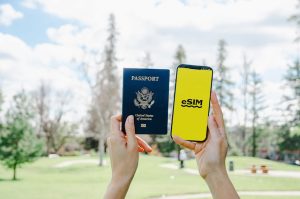
For modern travelers, eSIM (embedded SIM) technology is revolutionizing how we stay connected abroad and is a strong contender for the best tourist SIM cards for Southeast Asia, especially for multi-country trips. An eSIM is a digital SIM embedded in your phone, eliminating the need for a physical chip. You can purchase a data plan online before your trip or upon arrival and activate it by scanning a QR code. This means you can have working data within minutes of clearing immigration, bypassing airport SIM queues entirely. For devices that support it (like newer iPhones, Google Pixels, and Samsung Galaxy models), eSIMs offer unparalleled convenience. You can store multiple eSIM profiles and switch between them, making it easy to have a separate local data plan for each country on a regional tour.
Several providers now cater specifically to travelers in Asia. Companies like Airalo, Nomad, and Ubigi offer regional Asia eSIM data packages that work across multiple countries, simplifying connectivity for trips covering, for example, Thailand, Cambodia, and Vietnam. However, it’s vital to compare costs. While eSIMs are incredibly convenient, they can be slightly more expensive per gigabyte than a local physical SIM purchased in-country. Furthermore, eSIM plans are typically data-only, so if you need a local phone number for calls or SMS verification (e.g., for ride-hailing apps like Grab), a traditional SIM may still be necessary. Always check your phone’s compatibility and consider a hybrid approach: an eSIM for primary data and a cheap local physical SIM for a number, if required.
Where and How to Buy Your Tourist SIM Card
Knowing where to purchase your SIM is as important as choosing the plan. The most common and convenient location is at the arrival airport. Every major international airport in Southeast Asia has counters or kiosks for the leading carriers, usually located in the baggage claim or arrival hall. The advantages are immediate connectivity, English-speaking staff who handle passport registration, and legitimate, guaranteed products. The downside can be slightly higher prices and occasional queues. For better deals, venture to official carrier stores or authorized retailers in city centers, shopping malls, or tech markets. In Thailand, ubiquitous 7-Eleven stores sell SIMs from all major networks, though staff may have limited English.
Regardless of the point of sale, the registration process is non-negotiable due to strict SIM registration laws across the region aimed at preventing fraud and terrorism. You must present your passport, and the vendor will photocopy or digitally scan it to register the SIM to your name. This process is mandatory and protects you as well. Always keep the SIM packaging and any receipt, as it often contains the PUK code and customer service number. Be wary of buying SIMs from unofficial street vendors, as they may be pre-registered to fake names, which could lead to service termination, or worse, be used for illicit activities. For a smooth experience, have your passport ready, know your basic data needs (e.g., “I need 10GB for 14 days”), and ensure the vendor activates the package and shows you that data is working before you leave.
Unlocking Your Phone and Technical Compatibility
All your research on the best tourist SIM cards for Southeast Asia will be for nothing if your phone is locked or incompatible. First, ensure your phone is unlocked from your home carrier’s network. A locked phone will only accept SIMs from that carrier. Contact your provider before you travel to confirm unlock status; this is often free once your contract term is complete. Secondly, verify network band compatibility. Southeast Asian carriers primarily use 4G LTE bands 1, 3, 5, 7, 8, 28, 38, 40, and 41. Most modern smartphones from the last 4-5 years (like iPhones, Samsung Galaxies, and Google Pixels) are “world phones” that support these bands, but it’s prudent to double-check your specific model’s specifications on a site like GSM Arena.
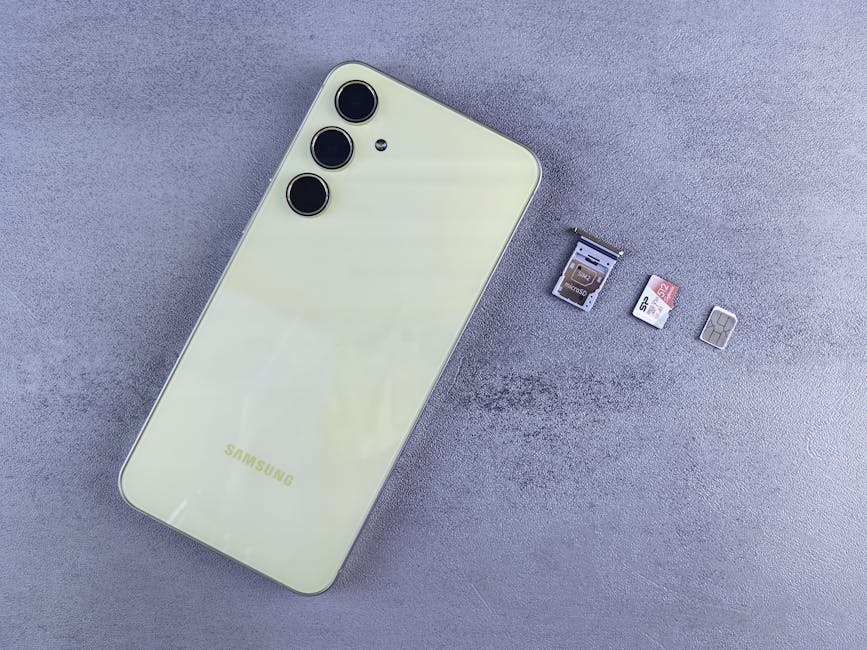
Another critical consideration is whether your phone supports dual SIM functionality (either via two physical nano-SIMs or one physical SIM plus one eSIM). This feature is a traveler’s superpower. It allows you to keep your home country SIM active (perhaps on a low-cost roaming plan for receiving important calls) while using a local data SIM for all your high-bandwidth needs. This setup provides continuity and can be more secure than relying solely on public Wi-Fi. Finally, don’t forget the humble SIM ejector tool (a paperclip works in a pinch). You’ll need it to open your phone’s SIM tray. Having a small, hard-shell case to store your home SIM is also a wise practice to prevent loss.
Managing Your Data Usage and Top-Up Strategies
Once you’ve secured one of the best tourist SIM cards for Southeast Asia, managing it effectively ensures it lasts your entire trip. Start by monitoring your data consumption. Most carriers have USSD codes (e.g., *121#) that you can dial to check your balance and data remaining. Alternatively, download the carrier’s official app (like MyAIS for Thailand or MyTelkomsel for Indonesia) for detailed usage tracking. To conserve data, leverage offline tools. Download Google Maps offline areas for your destinations, save Netflix shows or Spotify playlists on Wi-Fi, and set your photo apps to upload only on Wi-Fi. Furthermore, disable automatic app updates and background data refresh for non-essential applications.
When your credit or data runs low, you’ll need to top up or extend your validity. The easiest method is through the carrier’s official app using an international credit card. You can also purchase top-up scratch cards or vouchers (called “pulsa” in Indonesia, “refill” in Thailand) from convenience stores, supermarkets, or street vendors. Simply scratch off the code and dial the top-up USSD number or enter it in the app. For longer stays, if your initial tourist package expires, you can usually purchase a standard local prepaid package, which often offers even better value for data. For example, in Vietnam, you might migrate from a tourist plan to a regular Viettel “DATA MAX” monthly subscription for a lower cost per gigabyte. Regularly checking your balance prevents unexpected disconnection, especially when you need navigation the most.
Common Pitfalls and How to Avoid Them
Even seasoned travelers can stumble when navigating foreign telecom markets. Awareness of common pitfalls is your best defense. The first major trap is hidden fees and unclear pricing. A vendor might advertise a “199 Baht SIM,” but that may only include minimal credit. You then need to buy an additional data package for 299 Baht, plus a 50 Baht activation fee. Always ask for the “all-in” or “total” price for a working SIM with your desired data amount. Secondly, beware of misleading “unlimited” claims. As discussed, these plans almost always throttle speed after a certain threshold. Insist on knowing the full-speed data cap.
A third pitfall is poor coverage in your specific locations. A carrier may be strong in Bangkok but weak on the islands you’re visiting. Before committing, quickly search online travel forums or ask your hotel/hostel for their recommendation on the best network for that area. Fourth, SIM registration issues can arise if the vendor doesn’t properly process your passport. Ensure you receive an SMS confirming activation and registration. If service is cut off unexpectedly, visit an official carrier store with your passport and SIM pack to resolve it. Finally, not having a backup plan is a risk. Consider downloading an eSIM as a backup before you travel or knowing which cafes offer reliable Wi-Fi. A little preparation ensures you’re never truly offline in an emergency.
“The most common mistake I see is travelers buying the first SIM they see at the airport without comparing data allowances and validity. Spending ten minutes to check the offerings from all three major carriers can save you 50% and double your data.” – Travel Connectivity Expert, Southeast Asia Backpacker Podcast.
Conclusion: Staying Connected with Confidence
Mastering the process of selecting the best tourist SIM cards for Southeast Asia is an essential skill for the modern traveler, transforming potential frustration into seamless connectivity. By understanding the competitive telecom landscape, comparing plans based on true cost and coverage, and leveraging new technologies like eSIMs, you can ensure you have affordable, reliable internet access throughout your journey. Remember, the optimal choice balances convenience, cost, and coverage specific to your itinerary. Whether you opt for a physical SIM from a market leader like Thailand’s AIS or Vietnam’s Viettel, or embrace the digital simplicity of a regional eSIM, the goal is the same: to stay connected to maps, translation, loved ones, and the wealth of information that enriches travel. With the insights from this guide, you’re now equipped to navigate the options like a pro, leaving you free to focus on the incredible experiences that Southeast Asia has to offer. What’s the first app you’ll use once your new SIM is activated?