Blue Origin’s FCC Filing for Orbital Data Centers Sparks AI Infrastructure Race with SpaceX
In a move that directly challenges Elon Musk’s SpaceX, Jeff Bezos’ Blue Origin filed a request with the Federal Communications Commission (FCC) on March 24, 2026, seeking experimental authority to deploy and test a satellite constellation for “orbital data center” technology. According to the original report by RCR Wireless News, this filing marks a significant escalation in the private space race, pivoting the billionaire rivalry from launch services to the high-stakes frontier of off-planet computing infrastructure critical for next-generation AI.
The Technical Blueprint of Blue Origin’s Orbital Ambition

Blue Origin’s FCC application (File No. 0392-EX-ST-2026) is not for a traditional communications network. It outlines a plan for a “highly innovative satellite system designed to demonstrate and validate the core technologies required for orbital data centers.” The proposed testbed would involve a small constellation of satellites operating in low Earth orbit (LEO), between 500 km and 600 km in altitude. The primary objective is to test in-space computing, high-speed inter-satellite laser links, and advanced thermal management systems essential for operating high-performance compute hardware in the vacuum of space.
The filing explicitly positions this infrastructure as a solution to Earth-bound constraints. By moving data centers to orbit, Blue Origin argues they can leverage consistent solar power, natural and extreme cooling from deep space, and reduced latency for certain global data pathways. This vision directly counters the terrestrial mega-data center model, which is increasingly constrained by land use, local water resources for cooling, and energy grid limitations—a growing point of contention for AI companies requiring exponential increases in compute power.
This move places Blue Origin on a collision course with SpaceX’s Starshield, the government and enterprise-focused segment of its Starlink business. While Starlink provides broadband, Starshield is marketed as a platform for hosted payloads, Earth observation, and communications for national security. Analysts see Blue Origin’s data center play as an attempt to carve out a dominant position in the orbital compute niche before SpaceX can fully extend its Starshield architecture into that domain.
Why This Space Race Matters for AI Content and Compute
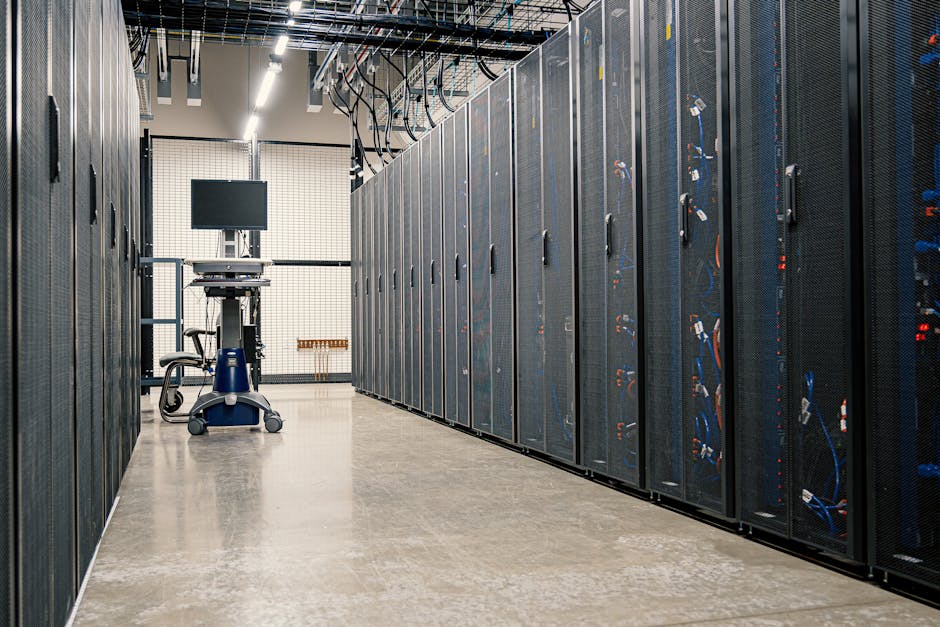
For AI content creators, developers, and businesses, the battle for orbital infrastructure is not science fiction; it’s a strategic pivot that will define the next decade of computational resources. The exponential growth of generative AI models like GPT-5, Gemini Ultra, and Claude 3 Opus is straining global data center capacity. Training these models requires thousands of specialized AI accelerators (like NVIDIA’s H100/H200 GPUs) running for months, consuming gigawatt-hours of energy and generating immense heat.
Orbital data centers propose a paradigm shift. The primary advantages include:
- Unlimited Cooling: In space, waste heat can be radiated directly into the void, eliminating the need for massive, water-intensive cooling towers.
- Sustainable Power: Large, unfiltered solar arrays can provide constant power without the intermittency issues of terrestrial solar farms.
- Latency Optimization: For AI services requiring global data aggregation (e.g., real-time multilingual translation, global trend analysis), orbital data centers could provide lower latency pathways than terrestrial fiber for certain routes.
- Geopolitical Neutrality: Infrastructure in orbit operates under international space law, potentially offering a more stable environment for data sovereignty than earth-based servers in politically volatile regions.
The race between Blue Origin and SpaceX to establish this infrastructure will accelerate the availability of a new class of “space-grade” compute. This could lead to specialized AI models trained in orbit for astronomy, climate modeling, or global logistics, with APIs accessible to developers on Earth. For content strategists, this means future AI tools may have access to cleaner, more abundant, and potentially cheaper compute, lowering barriers to advanced content generation and analysis.
Practical Implications and Strategic Moves for AI-First Businesses

While orbital data centers are likely 5-7 years from commercial viability, forward-thinking AI content creators and tech leaders should start mapping this trend onto their long-term strategy. Here are actionable steps:
- Monitor Regulatory and Tech Milestones: The FCC’s decision on Blue Origin’s experimental license, expected within 6-12 months, is a key indicator. Follow filings on the FCC’s IBFS database (International Bureau Filing System). Similarly, watch for SpaceX Starshield announcements related to compute payloads. These are leading indicators of infrastructure rollout timelines.
- Evaluate “Space-Grade” AI Workloads: Begin identifying which aspects of your AI workflow could benefit from orbital compute. Initial use cases will be highly specialized: massive parallel batch processing for scientific research, training on globally distributed but sensitive datasets (e.g., medical imaging), or running constant, planet-scale simulations. Content businesses focusing on data-driven journalism or hyper-global market analysis could be early beneficiaries.
- Factor Space Infrastructure into Tech Stack Roadmaps: When evaluating long-term partnerships with cloud providers (AWS, Google Cloud, Microsoft Azure), inquire about their strategic investments or partnerships in space-based compute. Amazon’s AWS has clear ties to Blue Origin via Bezos, while Microsoft Azure has a partnership with SpaceX for satellite cloud connectivity. Your future cloud vendor choice may be influenced by their orbital strategy.
- Adapt Content for a Multi-Orbit World: As connectivity and compute blend between terrestrial and orbital layers, ensure your content delivery networks (CDN) and APIs are agile enough to route traffic optimally. This means prioritizing edge computing strategies and exploring tools like Cloudflare’s satellite routing services or AWS’s Ground Station integrations today.
For tools like EasyAuthor.ai, this evolution means backend AI inference could one day run on orbital clusters during peak demand, ensuring consistent performance and lower carbon footprint for content generation tasks. Bloggers and SEO specialists should begin tracking keywords like “orbital AI,” “space-based compute,” and “LEO data centers” to capture early search traffic as public awareness grows.
The New Frontier: From Content Creation to Cosmic Compute

The FCC filing by Blue Origin is more than a regulatory step; it’s the opening gambit in the next great infrastructure race. The rivalry between Bezos and Musk has moved from rockets to routers, from launches to latency. For the AI content ecosystem, this signals a future where the limitations of Earth-bound data centers—power, cooling, land—are transcended, unlocking new scales of model training and real-time analysis.
The winners in this new space will be those who understand that AI content isn’t just created with software; it’s powered by physical infrastructure. By monitoring this high-altitude competition, planning for space-grade workloads, and aligning with forward-looking cloud platforms, content strategists and AI creators can ensure they are not left on the launchpad when the next generation of compute achieves orbit. The battle for AI supremacy will be won not just in silicon valleys, but in the silent valleys between the stars.