Coherent Pluggables: The New AI Content Delivery Network Currency Explained
Coherent Pluggables: The New AI Content Delivery Network Currency Explained
Source: RCR Wireless News, March 25, 2026. The global demand for AI compute is triggering a massive, parallel build-out in optical networking infrastructure, with a specific technology—coherent pluggable optics—emerging as the critical enabler. According to industry analysis from the OFC 2026 conference, these small, hot-swappable modules are creating a “flywheel effect,” driving down costs per bit while exponentially increasing data center interconnect (DCI) capacity. For AI content creators, this isn’t just telecom news; it’s the foundation for the next generation of real-time, data-rich applications and seamless global content delivery.
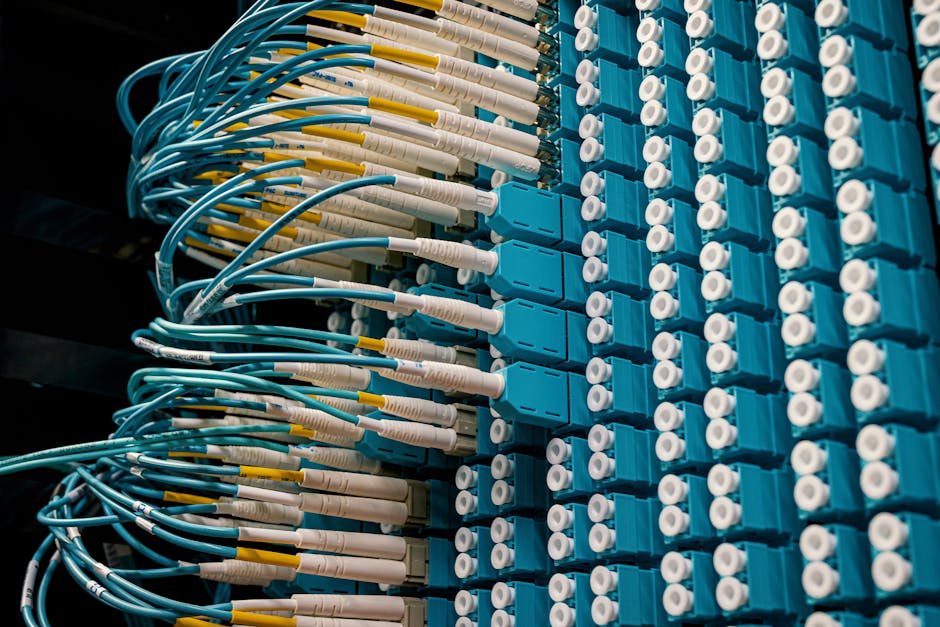
The core insight is simple: AI models and the content they generate are useless if the data can’t move. The explosion in AI training clusters and inference workloads has exposed a critical bottleneck in data center connectivity. Traditional, bulky, and expensive line card systems can’t scale at the pace or price required. Coherent pluggables—compact optical transceivers that plug directly into switches and routers—are solving this by collapsing complex functions into a standardized form factor, slashing costs by up to 70% and power consumption by 50% compared to older systems. This technical shift is what will power the instant, global dissemination of AI-generated video, 3D assets, and real-time personalized content.
Inside the Coherent Pluggable Flywheel: A Technical Deep Dive

The “flywheel” metaphor describes a self-reinforcing cycle of innovation and adoption. In the context of coherent pluggables, it works like this: Increased demand for AI bandwidth (800G, 1.6T) drives volume production of pluggable optics. High volume leads to standardized form factors (like OSFP and QSFP-DD) and massive cost reduction. Lower cost and ease of use then enable broader deployment beyond core networks into edge data centers and even direct server connections, which in turn fuels new AI applications that demand even more bandwidth, restarting the cycle.
Key technical milestones are accelerating this flywheel in 2026:
- 1.6T Coherent Pluggables: Following the 800G generation, 1.6 Terabit modules are now in sampling, with commercial deployment expected by late 2026/early 2027. This doubles the capacity in the same physical space.
- ZR/ZR+ Proliferation: The ZR (80km) and extended ZR+ (120km+) standards allow these pluggables to connect data centers across metropolitan areas without expensive external amplifiers, a game-changer for content delivery network (CDN) architecture.
- Power and Thermal Breakthroughs: New semiconductor designs (using Silicon Photonics and Indium Phosphide) are pushing power consumption below 20W for 800G modules, making them viable for dense switch faceplate deployments.
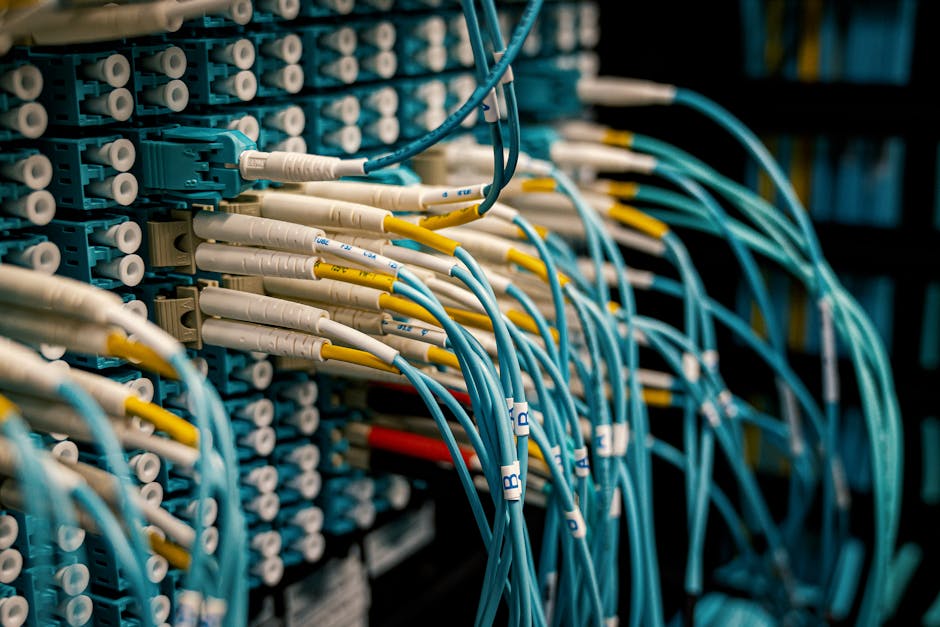
This isn’t incremental change. It’s a wholesale architectural shift from proprietary, chassis-based systems to open, disaggregated networks where bandwidth is a commodity. The result is that the “pipes” for AI content are getting vastly larger, cheaper, and more flexible.
Why This Matters for AI Content Creators and Strategists

For professionals focused on AI content creation, SEO, and blogging automation, this infrastructure revolution has direct, practical implications. The bottleneck for delivering immersive, AI-generated experiences is shifting from compute to connectivity. Here’s what changes:
- Real-Time Becomes Feasible at Scale: The latency and cost barriers to real-time AI applications—like live video generation, interactive 3D environments, or globally synchronized personalized content—are crumbling. A blog post with an AI-generated explainer video can be processed in one region and instantly served worldwide.
- Democratization of High-Fidelity Content: As bandwidth costs plummet, the economic model for distributing large files (4K/8K video, high-res AI art, complex datasets) improves. This allows smaller creators and businesses to compete with media giants on production value.
- SEO and Core Web Vitals Impact: Google’s emphasis on user experience (Core Web Vitals like LCP) rewards fast-loading, rich media. Enhanced global network capacity means your AI-optimized images and videos can be stored in optimal locations and delivered faster, directly boosting SEO rankings.
- New Content Formats Emerge: Infrastructure enables innovation. Expect new formats that blend massive data streams—think AI-driven, personalized documentary feeds that pull real-time data from multiple global sources, all stitched together seamlessly.
In essence, coherent pluggables turn network capacity from a constraint into a canvas. The strategic focus for content creators moves higher up the stack: from “can we deliver this?” to “what incredible experience can we build now that delivery is solved?”
Practical Tips for AI Content Teams to Leverage the Bandwidth Boom
Forward-thinking content teams should start preparing now to capitalize on this network evolution. Here are actionable steps to integrate this infrastructure trend into your AI content strategy:
- Audit Your Content Delivery Stack: Evaluate your current CDN and hosting provider. Are they leveraging the latest 800G/1.6T interconnects between their points of presence (PoPs)? Ask about their roadmap for coherent pluggable adoption and ZR/ZR+ links. Prioritize providers investing in this modern optical layer.
- Plan for Larger, Richer Media Assets: Start production workflows that assume higher bandwidth ceilings. If you’re using AI video tools like RunwayML or Pika Labs, plan to output and store in higher resolutions. Use WordPress plugins like ShortPixel or EWWW Image Optimizer for intelligent compression, but keep master files in high quality for future-proofing.
- Implement Edge-Centric AI Workflows: Design content automation pipelines that can run on edge compute nodes. Use tools like EasyAuthor.ai or other AI content platforms that offer API-driven generation, allowing you to create and cache content geographically closer to end-users, reducing final-mile latency.
- Monitor Infrastructure-Led SEO Opportunities: As global site speeds improve due to better networks, competitors in your niche will also get faster. Differentiate by leveraging the new capacity for unique content. Use AI to generate interactive, data-visualization-heavy articles or embedded real-time simulations that were previously too heavy to load quickly.
- Future-Proof Your Keywords and Topics: Begin incorporating coverage of the infrastructure that powers AI. Write authoritative posts explaining concepts like “coherent pluggables,” “DCI,” and “AI networking” for your technical audience. This positions your blog as a forward-looking source and captures early search traffic for these emerging trends.
The Bottom Line: Content in an Unlimited Bandwidth Era
The rise of coherent pluggable optics is a foundational, not incremental, shift. It decouples the growth of AI content from the physical limitations of data transport. For content strategists and creators, the mandate is clear: stop thinking of the network as a passive pipe and start treating it as an active ingredient in your creative and distribution strategy.
The next wave of dominant online content will not just be AI-generated; it will be AI-generated and instantaneously, globally ubiquitous. It will be interactive, personalized, and data-rich in ways that are only constrained by imagination, not latency or cost-per-gigabit. By understanding the “flywheel” powering this change—and adapting your tools, workflows, and strategy accordingly—you ensure your content doesn’t just ride the wave, but helps define it.