Ethernet Overtakes InfiniBand in Data Centers: AI Investments Propel $80 Billion Market
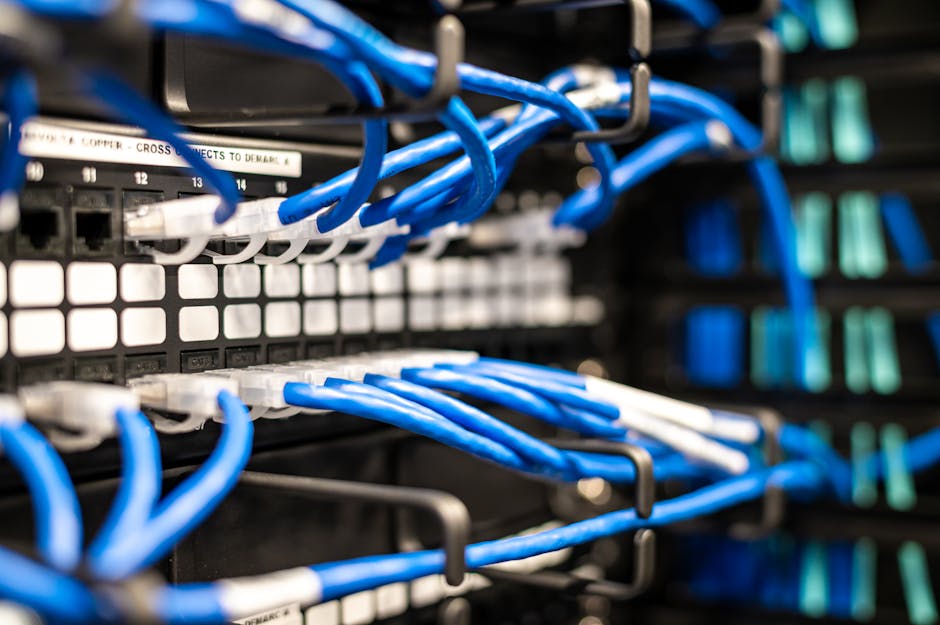
Ethernet has officially overtaken InfiniBand as the dominant data center switch technology, driven by surging investments in AI infrastructure. According to a July 2025 report by Dell’Oro Group, Ethernet now represents the majority of AI-backend switch ports and is projected to power nearly $80 billion in cumulative data center switch revenue over the next five years.
AI Drives the Rise of Ethernet in Data Centers

For years, InfiniBand dominated high-performance computing and AI backends, but Ethernet’s combination of scalability, cost-efficiency, and ecosystem breadth is now winning over hyperscale and hybrid-cloud environments. Analysts note that Ultra Ethernet technologies, such as RDMA over Converged Ethernet (RoCE), have accelerated this shift by reducing latency and improving throughput for AI workloads. As of 2025, Ethernet ports are trending toward an adoption rate of 70–80% in cloud AI clusters.
Ethernet’s technological evolution is a key factor. Current deployments span performance tiers from 100G and 200G links in mid-tier server-to-leaf topologies to ultra-high-performance 400G and 800G connections for AI leaf-spine and spine-to-spine setups. In fact, IEEE’s forthcoming 802.3dj Ethernet standard, expected in 2026, could standardize 1.6T speeds, positioning Ethernet to meet future AI compute demands, particularly in HPC clusters.
Market Context: Competition Among Vendors and ODMs

The shift toward Ethernet has also reshaped vendor market share. NVIDIA, leveraging its Mellanox acquisition, has become a dominant player in the Ethernet ecosystem via its Spectrum-X switches optimized for AI workloads. By bundling high-performance Ethernet switches with its GPUs, NVIDIA captured data center Ethernet leadership over Cisco and Arista in 2025.
Other prominent players, such as Arista Networks, maintain a strong foothold in high-speed cloud-native fabrics, while Cisco holds steady via its Nexus platforms and multi-cloud integrations. Meanwhile, ODMs (Original Design Manufacturers) like Quanta and Celestica continue to expand in hyperscale environments, representing 30–40% of Ethernet ports in cloud data centers, according to IDC data.
What’s Next for Data Center Ethernet?

Market observers predict that Ethernet’s dominance will only deepen as AI workloads scale further in global data centers. Analysts project heightened competition in the transition to 1.6T Ethernet, with companies jockeying for leadership in high-density AI fabrics. Meanwhile, Ethernet’s ability to coexist with protocols like InfiniBand or proprietary AI fabrics ensures its entrenchment across a wide variety of workloads and hybrid-cloud deployments.
This trend highlights a broader strategic question for leaders in telecom and IT: How should companies prepare to integrate next-gen Ethernet architectures into scalable AI workflows? With nearly $80 billion in revenue on the line, decisions made today could define the competitive landscape for years to come.