EU Broadcasters Push to Extend Digital Markets Act to Smart TVs & Assistants: What It Means for AI Content
European broadcasters, led by the Association of Commercial Television and On-Demand Audiovisual Media Services in Europe (ACT), have formally urged the European Commission to extend the scope of the landmark Digital Markets Act (DMA) to cover smart TV operating systems and virtual assistants operated by major tech firms like Google, Apple, and Amazon. In a letter to EU antitrust chief Margrethe Vestager dated March 23, 2026, the broadcasters argue these platforms now act as critical “gatekeepers” to viewers, giving Big Tech undue control over content discovery, user data, and advertising revenue. This direct regulatory push, reported by ETTelecom, signals a pivotal moment for content creators and distributors: the battleground for audience attention and monetization is shifting from browsers and search engines to the living room interface and the AI-powered voice assistant.
The Core Argument: Why Smart TVs and Assistants Are the New Gatekeepers

The broadcasters’ case hinges on a fundamental shift in how users access content. The DMA, which became fully applicable in March 2024, currently designates 22 core platform services from six “gatekeeper” companies (Alphabet, Amazon, Apple, ByteDance, Meta, and Microsoft). These include app stores, search engines, social networks, and messaging services. However, smart TV platforms (like Google’s Android TV/Google TV, Amazon’s Fire TV, and Apple’s tvOS) and virtual assistants (like Google Assistant, Amazon’s Alexa, and Apple’s Siri) were not explicitly listed.
ACT contends this is a glaring oversight. Their argument rests on three pillars:
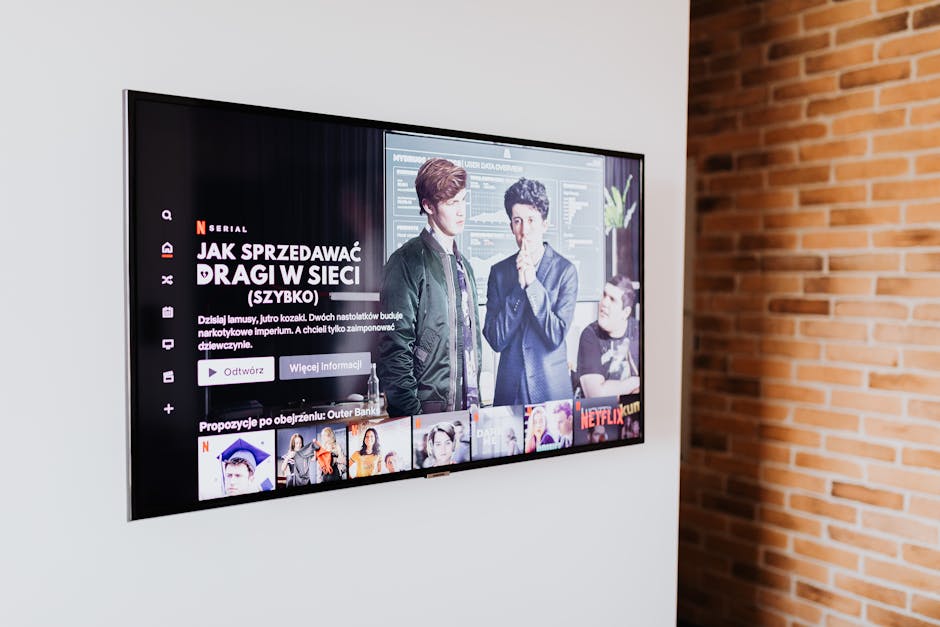
- Control Over Discovery: The home screen of a smart TV or the default response of a voice assistant is the primary gateway for millions of EU households. Broadcasters allege gatekeepers privilege their own services (e.g., YouTube, Apple TV+, Amazon Prime Video) and those of paying partners in search results and recommendations, effectively demoting or hiding independent broadcasters and streaming services.
- Data Advantage: These platforms collect vast amounts of granular viewing data—what is watched, for how long, when, and on which device. Broadcasters argue they are denied fair access to this data, which is essential for content curation, personalized advertising, and strategic planning. This creates a massive asymmetry that stifles competition.
- Economic Leverage: Gatekeepers can impose significant fees for prominent placement or integration, dictate technical standards, and unilaterally change terms. This squeezes broadcaster margins and limits their ability to invest in content.
“The user interface and the voice command have become the new channel zapper,” stated an ACT spokesperson. “If a platform controls that interface, it controls the audience.” The letter specifically calls for the European Commission to designate smart TV OS and virtual assistants as “core platform services” under the DMA in its upcoming market investigation, paving the way for the same strict obligations around interoperability, data portability, and fair access.
Immediate Impact for AI Content Creators and Digital Publishers

For professionals using AI to create and distribute content—from automated news aggregators and SEO-driven blogs to video producers and podcasters—this regulatory push has profound implications. The ecosystem for content discovery is on the cusp of a forced opening.
1. The Rise of the “Voice and Living Room SEO”: Just as Google’s search algorithm defined SEO for the web, the recommendation algorithms of smart TV home screens and voice assistants will define discovery in the ambient computing era. If the DMA forces these platforms to be more transparent and fair, AI content creators will need to optimize for these new environments. This means structuring content metadata for voice queries (e.g., “Hey Google, show me news about European tech regulation”) and ensuring compatibility with TV-optimized formats and APIs. Tools like EasyAuthor.ai may need to evolve to generate not just web-optimized text, but also voice-search-friendly summaries and structured data for TV app stores.
2. A Potential Data Goldmine (with Conditions): One key DMA obligation for gatekeepers is data portability and access for business users. If applied to smart TV platforms, broadcasters—and potentially affiliated content creators—could gain access to aggregated, anonymized viewing insights. For an AI-driven content studio, this data could train more effective recommendation models, identify trending topics in specific regions, and tailor content length and format to actual living room consumption patterns. However, this access would come with strict GDPR and DMA compliance burdens.
3. New Avenues for Distribution and Monetization: The DMA mandates that gatekeepers allow third-party app stores and side-loading on their platforms. While currently focused on mobile, a successful push by broadcasters could see this principle extended to TVs. This could lower barriers for independent content apps. An AI-powered niche news service or a curated video channel could theoretically launch its own TV app more easily, bypassing the gatekeeper’s own app store fees and curation rules. Similarly, fairer terms for ad tech on these platforms could open new programmatic advertising inventory for digital publishers.
Practical Strategies for AI Publishers to Prepare Now
Regulatory changes move slowly, but the underlying trend is clear: content discovery is fragmenting across new, platform-controlled interfaces. Forward-thinking AI content creators should start adapting their workflows today.
1. Audit and Optimize for Structured Data & APIs: Your content’s machine-readability is paramount. Ensure your AI publishing stack is outputting comprehensive schema.org markup, especially for VideoObject, Article, and AudioObject. Explore integrations with platforms like Google’s Actions on Google or Amazon’s Alexa Skills Kit to make your content accessible via voice. For TV apps, investigate standards like HbbTV (Hybrid Broadcast Broadband TV) or the publishing APIs for major TV platforms.
2. Diversify Your Distribution Points: Don’t rely solely on web traffic from Google Search. Actively distribute your AI-generated content to platforms that are already open or less gatekept. This includes:
- Podcast directories (Apple Podcasts, Spotify, Amazon Music).
- News aggregation apps (Flipboard, SmartNews).
- Video platforms (YouTube, Odysee, Rumble) with auto-generated summaries and chapters.
- Building an email newsletter list as a direct channel.
Use automation tools like Zapier or Make to create workflows that syndicate your EasyAuthor.ai outputs across these channels.
3. Plan for a Multi-Interface Content Strategy: Start conceptualizing your core content as adaptable “modules” that can be reconfigured for different interfaces.
- Web/SEO: 1,500-word comprehensive article.
- Voice Assistant: A 30-second audio summary and three key Q&A pairs.
- Smart TV: A visually rich 90-second video recap with full-screen graphics.
- Mobile Notification: A single compelling sentence.
Leverage AI not just for the initial draft, but for this multimodal reformatting. Tools like Descript (for audio/video), Canva’s AI (for graphics), and advanced LLMs with vision capabilities can automate much of this process.
4. Monitor Regulatory Developments Closely: Follow the European Commission’s “5th Market Investigation” under the DMA, expected to begin in late 2026. Its findings will determine if smart TV OS and virtual assistants are formally added to the gatekeeper list. Set up Google Alerts for “DMA smart TV” and “virtual assistant regulation.” This isn’t just legal news; it’s a strategic business intelligence feed that will shape your content distribution roadmap for the next decade.
The broadcasters’ plea to EU regulators is more than an industry lobbying effort; it is a canary in the coal mine for the entire digital content economy. It highlights the next frontier of platform power and the coming regulatory battles. For AI content creators, this signals an inevitable shift from a web-centric, search-dominated world to a multi-interface, ambient computing environment where discovery happens on a TV home screen, through a car’s dashboard, or via a casual voice command. The principles of the DMA—fairness, contestability, and interoperability—could, if extended, force open these new gateways. The savvy creator will begin preparing now, using AI not only to generate content but to engineer its seamless, automated delivery across every screen and speaker that vies for the user’s attention. The future of content isn’t just about what you create, but which gateways you can unlock.


