The Essential Role of Fiber Networks in Future Connectivity
The future of connectivity hinges on the widespread adoption and advancement of fiber optic networks, a technology poised to redefine how we interact, work, and live. As our digital demands escalate, driven by everything from high-definition streaming and immersive virtual reality to the burgeoning Internet of Things (IoT) and artificial intelligence, the limitations of traditional copper infrastructure become increasingly apparent. Fiber optic cables, utilizing light pulses to transmit data at incredible speeds over long distances with minimal signal loss, offer a robust and scalable solution to meet these growing needs. Understanding the role of fiber networks in future connectivity is paramount for businesses, governments, and individuals alike, as they pave the way for a more interconnected and efficient world.
This advanced infrastructure provides the necessary bandwidth and low latency that are critical for next-generation applications and services. Without the unparalleled capabilities of fiber, the digital transformation we are experiencing would stall, leaving us unable to capitalize on the full potential of emerging technologies. The transition to fiber is not merely an upgrade; it’s a fundamental shift towards a more capable and resilient digital ecosystem, ensuring that the pace of innovation accelerates rather than stagnates. Its inherent advantages make it the undisputed champion for delivering the high-performance connectivity required by modern society.
Key Takeaways
- Fiber optic networks are fundamental to future connectivity due to their superior speed, bandwidth, and reliability.
- They enable advanced technologies like 5G, IoT, AI, and immersive experiences by providing the necessary infrastructure.
- Fiber offers significant advantages over traditional copper networks, including lower latency, immunity to electromagnetic interference, and long-term scalability.
- Deployment challenges include high upfront costs and the complexity of installation, but the long-term benefits justify the investment.
- Government initiatives and private investments are crucial for accelerating fiber network expansion globally.
- The continued growth of data consumption and digital services underscores the indispensable role of fiber in the digital economy.
Why Fiber Optics Are Superior to Traditional Networks
The fundamental difference between fiber optic cables and traditional copper wires lies in their transmission medium. Copper networks rely on electrical signals, which are susceptible to degradation over distance and interference from external electromagnetic sources. In contrast, fiber optic cables transmit data as pulses of light through thin strands of glass or plastic. This light-based transmission offers several distinct advantages. Firstly, it allows for significantly higher bandwidth, meaning more data can be transmitted simultaneously. For instance, a single fiber optic cable can carry terabits of data per second, exponentially more than copper cables.
Furthermore, fiber optics are virtually immune to electromagnetic interference (EMI), a common problem that affects copper networks, especially in industrial environments or areas with heavy electrical activity. This immunity ensures a more stable and reliable connection, reducing errors and the need for retransmissions. The signal loss, or attenuation, over long distances is also far lower with fiber optics compared to copper. This means data can travel much further without requiring signal boosters, making it ideal for connecting cities, rural areas, and even continents. The inherent security of fiber is another key benefit; it is much harder to tap into a fiber optic cable covertly than a copper one, enhancing data protection.
Enabling Next-Generation Technologies with Fiber
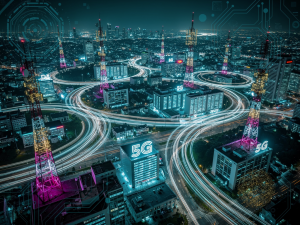
The capabilities of fiber optic networks are not just about faster internet for consumers; they are the foundational infrastructure required for many of the transformative technologies shaping our future. The rollout of 5G mobile networks, for instance, heavily relies on fiber backhaul. 5G’s promise of ultra-low latency and high speeds necessitates a robust network of fiber optic cables connecting cell towers and data centers to handle the massive influx of data generated by connected devices and high-bandwidth applications. Without this fiber backbone, the full potential of 5G would remain largely unrealized, limiting its impact on industries like autonomous vehicles, remote surgery, and advanced gaming.
Moreover, the Internet of Things (IoT) and the burgeoning field of artificial intelligence (AI) depend on the high-speed, low-latency, and high-capacity connections that fiber provides. Billions of IoT devices are expected to come online, generating vast amounts of data that need to be collected, processed, and analyzed in near real-time. AI applications, particularly those involving machine learning and deep learning, require immense computational power and rapid data transfer. Fiber networks offer the necessary bandwidth to support these data-intensive operations, enabling smart cities, intelligent manufacturing, advanced healthcare diagnostics, and personalized education. The role of fiber networks in future connectivity is thus inextricably linked to the success and widespread adoption of these revolutionary technologies.
Fiber’s Impact on 5G Deployment
The connection between fiber and 5G is symbiotic. 5G requires a dense network of small cells, and each of these needs a high-capacity fiber connection to the core network. This fiber infrastructure ensures that the data traffic from these cells can be aggregated and transported efficiently, maintaining the low latency and high throughput that define 5G. Estimates suggest that 5G networks may require a significantly greater fiber optic footprint than previous generations of mobile technology. This increased demand is driving substantial investment in fiber deployment to support the next wave of wireless innovation.
Supporting the Data Deluge from IoT and AI
As more devices become connected, the volume of data generated will explode. Consider a smart city scenario: sensors monitoring traffic, air quality, energy consumption, and public safety all contribute to a constant stream of data. AI algorithms then process this data to optimize city operations. This entire ecosystem is only feasible with the massive data-carrying capacity of fiber optics. Data center interconnect solutions leveraging fiber are also critical, as they facilitate the rapid movement of data between data centers and cloud infrastructure, powering AI computations.
Challenges and Opportunities in Fiber Deployment
Despite the clear advantages and essential role of fiber optics, the widespread deployment of these networks faces significant challenges. The primary hurdle is the substantial upfront cost associated with installation. Laying fiber optic cables, whether underground, aerial, or undersea, is a labor-intensive and capital-intensive process. It often involves trenching, navigating existing infrastructure, and obtaining permits, all of which add to the complexity and expense. Furthermore, the return on investment can be long-term, making it a difficult proposition for some service providers, particularly in less densely populated or economically disadvantaged areas.
However, these challenges also present considerable opportunities. The demand for high-speed, reliable internet is universal, creating a strong market case for fiber expansion. Governments worldwide are recognizing the strategic importance of robust digital infrastructure and are implementing policies and funding initiatives to encourage fiber deployment. Public-private partnerships are becoming increasingly common, pooling resources and expertise to overcome deployment hurdles. Moreover, technological advancements in fiber installation techniques, such as micro-trenching and directional drilling, are helping to reduce costs and installation times. The long-term benefits of fiber—enhanced economic growth, improved educational outcomes, and better access to healthcare—far outweigh the initial investment, making it a critical infrastructure project for the 21st century.
The Economic and Social Impact of Fiber Connectivity
The availability of high-speed fiber optic networks has a profound and multifaceted impact on both economies and societies. Economically, robust broadband infrastructure, powered by fiber, is a key driver of productivity and innovation. Businesses can operate more efficiently, access global markets more easily, and adopt new digital tools and services that enhance their competitiveness. The digital economy thrives on connectivity, and fiber provides the essential high-performance foundation for e-commerce, cloud computing, remote work, and the development of new digital industries. Studies have consistently shown a correlation between broadband penetration and GDP growth, highlighting fiber’s role in fostering economic prosperity.
Socially, fiber connectivity bridges the digital divide, providing equitable access to information, education, and healthcare services. Remote learning becomes more effective with high-speed internet, allowing students in underserved areas to access quality educational resources. Telemedicine can be expanded, enabling patients to consult with doctors remotely, receive diagnoses, and manage chronic conditions without the need for extensive travel. Furthermore, fiber enables greater civic engagement and access to government services online. The ability to connect communities, foster social inclusion, and improve the quality of life for all citizens underscores the critical role of fiber networks in future connectivity and societal development. Is your community benefiting from the full potential of fiber broadband?
Future Trends and Innovations in Fiber Optics
The evolution of fiber optic technology is ongoing, with continuous innovation aimed at increasing capacity, reducing costs, and expanding reach. Researchers are exploring new materials and techniques to push the boundaries of data transmission speeds and distances. Technologies like hollow-core fiber, which transmits light through an air-filled core, promise even lower latency and higher bandwidth than traditional solid-core fibers. Furthermore, advancements in coherent optics and multiplexing techniques allow for more data to be squeezed through existing fiber infrastructure, maximizing the return on investment in deployed cables.
Beyond transmission technology, innovations in network architecture and management are also crucial. Software-defined networking (SDN) and network function virtualization (NFV) are enabling more flexible, agile, and automated fiber networks. These technologies allow network operators to manage resources more efficiently, provision services faster, and adapt to changing traffic demands dynamically. The integration of AI and machine learning into network operations is also paving the way for predictive maintenance, automated fault detection, and optimized network performance. These ongoing developments ensure that fiber networks will remain the leading connectivity solution for decades to come, adapting to the ever-increasing demands of the digital age.
Conclusion
The role of fiber networks in future connectivity cannot be overstated; they are the indispensable foundation upon which tomorrow’s digital world will be built. From enabling the blazing speeds of 5G and the vast data streams of the IoT to powering sophisticated AI applications and immersive digital experiences, fiber optics provide the unparalleled performance required. Its inherent advantages over older copper technologies—superior speed, greater bandwidth, lower latency, and immunity to interference—make it the clear choice for meeting the escalating demands of data consumption and digital services.
While challenges related to deployment costs and complexity persist, the overwhelming economic and social benefits, coupled with ongoing technological innovation and supportive government policies, are driving the expansion of fiber infrastructure globally. Investing in fiber is an investment in future economic growth, enhanced educational and healthcare opportunities, and a more connected, inclusive society. As we navigate an increasingly digital future, ensuring widespread access to high-speed fiber connectivity will be paramount. What steps are being taken in your region to expand fiber network access?