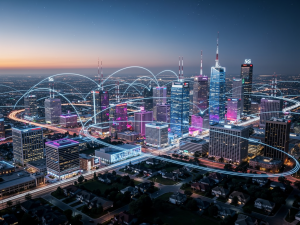
How Geopolitics Shapes the Internet: Insights into Connectivity Amid Crises

The Internet is often thought of as a borderless entity, seamlessly connecting individuals and networks worldwide. Yet, the reality tells a different story. Political events, such as wars, sanctions, and international disputes, have a profound influence on how the global network operates, reshapes itself, and maintains resilience. These issues manifest not only in news headlines or on battlefields but also in the technical infrastructure that underpins our digital age. As part of the 2025 Pulse Research Fellowship, studies have been conducted to systematically examine how geopolitical shocks impact cross-border Internet connectivity. The findings highlight critical lessons for engineers, policymakers, and anyone invested in keeping the Internet open, secure, and reliable.
Measuring the Geopolitical Impact on Internet Connectivity

Pexels
To track these impacts effectively, researchers developed a series of indices designed to evaluate cross-border connectivity under stress. These tools measure disruptions caused by conflict, sanctions, or political changes and help to assess how countries adapt their digital connections. A stark example comes from the Russia-Ukraine conflict. When Russia invaded Ukraine in February 2022, observable digital and economic changes occurred. Ukrainian networks reduced their participation in Russian Internet exchange points (IXPs) by an astounding 85%, reflecting a deliberate move to sever ties. Concurrently, trade volumes between the two countries plunged dramatically—from €1.2 billion in imports to nearly zero. Interestingly, the data also showed that the dependency between the two nations for routing was limited, as evidenced by a gradual decline in Ukrainian reliance on Russian transit from 10% to 5% over six years, further intensifying during the conflict.
Geopolitics and Long-Term Internet Resilience
Pexels
The long-term implications of these changes highlight broader global trends. Geopolitical tensions often lead countries to diversify or reconfigure their Internet pathways, reducing reliance on potentially hostile nations. These adaptive measures may bolster resilience, but they also risk fragmenting the Internet, creating isolated networks and limiting global accessibility. The parallel declines in Ukraine-Russia technical interconnectivity and trade demonstrate how conflicts disrupt not only immediate operations but also influence broader economic and digital policies. The patterns revealed in these indices underscore the importance of viewing the Internet as intertwined with the global political system.
Applications in Policy and Future Research

Pexels
Understanding these shifts has significant policy implications. Governments and international organizations can use Internet connectivity metrics as early-warning systems for geopolitical tensions. A steep decline in cross-border connections can signal political isolation, sanctions enforcement, or even an impending conflict. While the Russia-Ukraine case offers a poignant example, the methodology applies globally. Systematically tracking how countries interconnect allows experts to identify shifts in alliances or vulnerabilities in the global network. Future research efforts aim to refine these indices further, extending the analysis to more country pairs and new case studies to ensure their robustness in capturing geopolitical events. By illuminating these trends, stakeholders can make data-driven decisions to maintain the Internet’s openness and functionality.
The conclusion is clear: the Internet’s resilience is inherently tied to how we, as a global community, navigate its political dimensions. Beyond investing in technical safeguards, it is crucial to recognize and address the role of political events in shaping the Internet’s structure. The study of Internet measurement and connectivity, as highlighted by Antonis Chatzivasiliou—a 2025 Pulse Research Fellow and PhD candidate—reveals that the Internet is not apolitical. Managing its future requires collaboration across technical, regulatory, and diplomatic domains to ensure it remains secure and accessible in an increasingly polarized world.