How Huawei’s Agentic AI is Redefining the Future of Telecoms
As telecommunications continue to evolve, the integration of AI-driven systems is proving to be a game changer for telcos worldwide. For Huawei, the journey toward digital intelligence started as part of its broader digital transformation strategy, launched back in 2018. Now, seven years later, the company is at the forefront of a new era in telecoms, using advanced artificial intelligence tools to not only enhance operational efficiency but also unlock exciting new revenue streams for the industry.
The Evolution of Digital Intelligence in Telecoms

Pexels
The telecom industry has long pursued digital transformation, moving from hardware-led systems to software-driven, cloud-based platforms. However, Huawei argues that this transformation is only a stepping stone toward a more comprehensive shift: the adoption of full digital intelligence. This is where AI, especially agentic AI, takes center stage. By utilizing the vast amounts of data generated through digital operations, Huawei’s AI systems go beyond traditional analytics. The next evolutionary phase involves AI agents capable of making real-time, data-driven decisions autonomously. These agents act as operational partners for telcos, enabling self-optimization, self-healing, and precise fault resolution across networks—transforming how the industry operates.
Digital Twins Meet Agentic AI for Intelligent Networks

Pexels
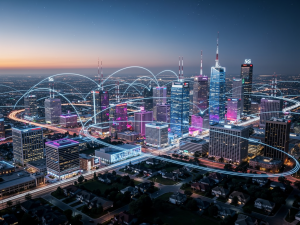
At the heart of Huawei’s AI strategy lies the combination of two groundbreaking technologies: digital twins and agentic AI. Digital twins serve as real-time, virtual replicas of physical networks, allowing telecom operators to simulate scenarios and test solutions in a risk-free environment. Meanwhile, agentic AI complements this by providing autonomous decision-making capabilities. For instance, these AI-driven systems can predict potential network failures before they occur and execute automated solutions without disrupting live operations. By leveraging this synergy, Huawei demonstrated innovative solutions for 5G and fixed networks at MWC Barcelona 2025.
One significant application is in operations and maintenance (O&M), where Huawei has implemented a multi-agent framework. In this setup, various AI agents operate across different network domains—such as transport, core, and radio access networks (RAN)—to detect faults, optimize performance, and collaborate seamlessly. This results in a closed-loop automation chain that drastically reduces fault resolution time, enhancing customer satisfaction and reducing operator churn rates.
Revolutionizing Operations with AI in OSS/BSS

Pexels
Beyond network management, Huawei’s AI agents are transforming business and operational support systems (BSS/OSS). Using its unified AI platform, operators can streamline complex workflows and elevate operational efficiency. Engineers can interact with AI agents using simple prompts, while the system’s Retrieval-Augmented Generation (RAG) ensures accurate and secure responses. This level of automation drastically reduces human intervention, enabling faster decision-making and enhancing data security.
AI is also being applied in customer relationship management (CRM) to deliver hyper-personalized campaigns. From predicting customer churn to creating targeted product bundles, AI in CRM drives precision in marketing. Similarly, the integration of AI in convergent billing systems (CBS) has enabled telcos to reduce time-to-market for new service packages, significantly boosting innovation and customer experience. These capabilities further extend to fraud detection in mobile money transactions and real-time call guidance for improved customer interactions via AI-enhanced contact centers.
A Sustainable Growth Model for Telcos

Pexels
Huawei’s advancements with agentic AI are not just about operational efficiency—they aim to establish a sustainable growth model for telecom operators. For example, CRM tools enabled by AI are allowing businesses to generate insights for better lead management, profitability analysis, and contract reviews. Moreover, innovations in billing processes are offering end-users greater transparency and zero-confusion experiences, enhancing customer loyalty.
This intelligent transformation is already yielding tangible results. Huawei’s efforts were acknowledged at the World Communication Awards, where the company received recognition for its Total Experience and Digital Transformation initiatives. By reducing business processing time and enabling faster fault resolution, Huawei’s AI systems are delivering on their promise of transforming telecom operations on a global scale.
Ultimately, for telcos, the adoption of agentic AI represents a fundamental shift toward a more data-driven, automated, and customer-focused industry. As Huawei continues to push boundaries in digital intelligence, its innovative solutions are setting the standard for telecom operators seeking to thrive in an increasingly competitive marketplace.