Macao Launches Free, Immigration-Free Transfers from Hong Kong Airport
Macao is removing travel friction for international visitors with free direct coach transfers from Hong Kong International Airport (HKIA) to Macao, a logistics upgrade that bypasses immigration and could reshape regional tourism. According to the Macao Government Tourism Office (MGTO), the program launched on January 20, 2026, and will run until December 31, 2026. The service targets travelers from outside Greater China, offering a seamless connection that eliminates the traditional complexity of cross-border travel.
The coach service operates entirely within HKIA’s restricted area. Eligible international travelers proceed to a designated counter upon arrival, complete basic formalities, and receive a free one-way ticket. From here, they take a direct coach through the Hong Kong-Zhuhai-Macao Bridge to reach Macao in just 30-45 minutes, avoiding traditional immigration, baggage rechecks, or detours into Hong Kong city.
Inside the Logistics and Ambition Behind the Free Transfers

This initiative builds on MGTO’s past experiments with cross-border travel incentives, including successful promotions in 2024 and 2025. However, the 2026 version goes further by making the process entirely frictionless. By ensuring travelers never have to exit the airport, MGTO addresses a key tourism bottleneck: the logistical burden of transferring between destinations.
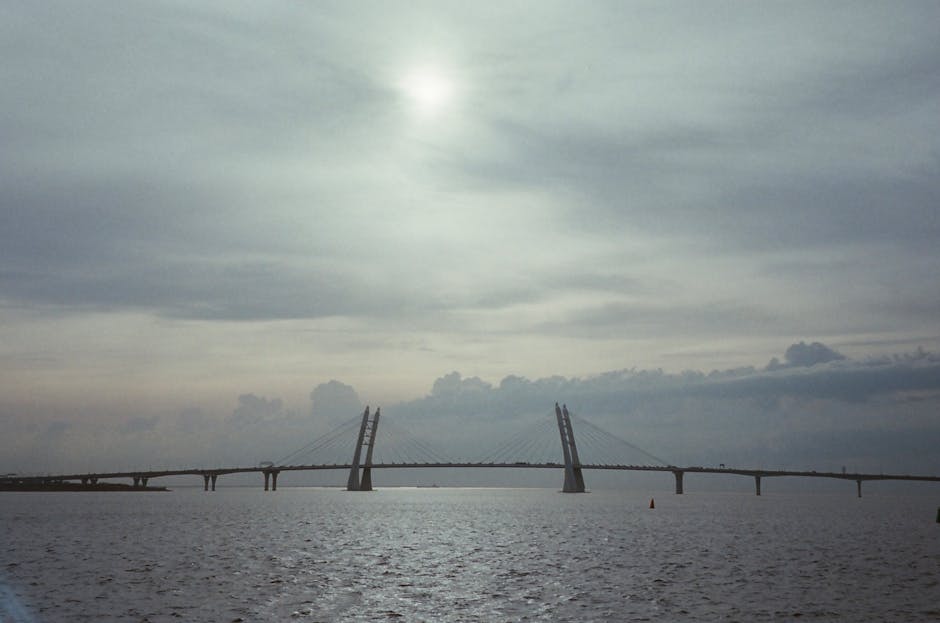
The service’s foundation is the Hong Kong-Zhuhai-Macao Bridge, a $18.8 billion megastructure completed in 2018 that connects the three regions. The 55-km route includes bridges, an undersea tunnel, and artificial islands, cutting what used to be a three-hour journey into less than 45 minutes. This infrastructure not only supports Macao’s tourism ambitions but also strengthens its positioning as a seamless extension of any Hong Kong trip.
Available around the clock, the clockwise scheduling of the coach allows users departing on late-night or early-morning flights to conveniently reach their final destination. Bookings are managed online with a quota system, while terms and conditions apply for repeat use.
Regional and Industry Implications: Why This Matters

Macao’s tourism strategy has long been tied to its reputation as the “Las Vegas of Asia,” but such branding has its limits. While post-pandemic recovery in casino tourism has been swift, long-haul travelers from Europe, North America, and the Middle East still often perceive Macao as an optional stop. Travel friction reinforces this perception—something this initiative directly addresses.
By eliminating costs and logistical hurdles, MGTO is positioning Macao as an intuitive addition to Hong Kong itineraries. Regional analysts have noted this trend fits within a broader stopover tourism strategy being embraced across Asia. Singapore, Dubai, and Seoul have all evolved stopover ecosystems, focusing on ease and short-term accessibility. For Macao, the objective is not just to attract higher visitor numbers but to transform itself into an essential dual-destination package alongside Hong Kong.
The marketing push accompanying the free coach service underscores this ambition. Leveraging partnerships with airlines and travel agencies, MGTO is promoting Macao as part of a twin-destination itinerary. Online campaigns and bundled promotions reinforce Macao’s accessibility, challenging the perception of the area as a stand-alone, high-friction destination.
The Outlook: What’s Next for Seamless Travel?
This promotion is more than a transportation service; it is a strategic play to compete with global tourism hubs for convenience-prioritizing travelers. Convenience, as tourism boards have increasingly recognized, is a powerful currency. Post-pandemic travel trends highlight an appetite for seamless journeys, where every additional step—from immigration lines to transport connections—feels like a dealbreaker.
Compared to traditional tourism discounts, MGTO’s strategy is financially lean and operationally scalable. If results from 2024 and 2025 repeat—both years saw international traveler numbers jump significantly during similar yet more limited initiatives—other markets tied to major aviation hubs may replicate this playbook.
Beyond Macao, the wider industry is making its own leaps toward frictionless travel. Japan is rolling out expanded airport rail infrastructure. Thailand is piloting multi-city visa-free programs. The Gulf states are betting on airline-led stopover tourism ecosystems. The logic remains consistent: seamless transit is becoming a baseline expectation for global travelers.
For Macao, the final takeaway is this: the free transfer isn’t just a functional perk; it’s a strategic entry point designed to convert transit into tourism. As competitive pressures grow across Asia, ensuring every first impression lands smoothly will be key to securing future arrivals.
Read the original story about this announcement on Alertify.