
The telecommunications landscape is undergoing a seismic shift with the rise of non-terrestrial networks (NTN), a term that encapsulates all forms of connectivity delivered from above the Earth’s surface. For decades, terrestrial cellular towers and fiber cables have been the undisputed backbone of global communications. However, these ground-based systems have inherent limitations in geographic reach, deployment cost, and resilience. Consequently, the industry is now looking skyward, leveraging satellites, high-altitude platforms, and airborne systems to create a truly ubiquitous, three-dimensional network fabric. This paradigm is not merely supplemental; it is foundational to realizing the promise of a hyper-connected world where coverage gaps are eliminated, and seamless connectivity becomes a global standard.
Key Takeaways

- Non-terrestrial networks (NTN) integrate satellites, drones, and high-altitude platforms to provide ubiquitous, three-dimensional connectivity beyond terrestrial limits.
- Key technologies include LEO and GEO satellites, HAPS, and UAVs, each offering distinct advantages in latency, coverage, and cost.
- Critical applications span from global IoT and asset tracking to emergency communications, backhaul for remote 5G, and in-flight connectivity.
- NTN integration with 5G-Advanced and 6G standards is a primary industry focus, creating a unified network experience.
- Significant challenges remain, including spectrum allocation, terminal costs, and orbital debris management, requiring international cooperation.
- The future points towards fully integrated, AI-managed space-air-ground networks that will redefine global digital inclusion.
What Are Non-Terrestrial Networks?

At its core, a non-terrestrial network is any communication system that utilizes nodes located in the air or space to relay signals, rather than relying solely on ground-based infrastructure. This broad category is segmented into three primary strata, each with unique characteristics and operational altitudes. First, there are space-based networks, primarily consisting of satellites orbiting Earth. Second, we have airborne networks, which include High-Altitude Platform Stations (HAPS) – quasi-stationary vehicles like balloons or solar-powered aircraft operating in the stratosphere – and Unmanned Aerial Vehicles (UAVs or drones). Finally, some definitions also include low-altitude platforms, such as tethered aerostats, though these often blur the line with tall terrestrial towers.
The fundamental value proposition of NTNs is their ability to overcome the tyranny of distance and terrain. Building and maintaining cell towers in remote mountains, vast deserts, or across archipelagos is prohibitively expensive and logistically challenging. In contrast, a single geostationary satellite can provide a footprint covering millions of square kilometers. Furthermore, NTNs offer inherent resilience; they are largely immune to terrestrial disasters like earthquakes, floods, or conflict that can devastate ground infrastructure. This makes them a critical component for national security and disaster recovery communications. The integration of these aerial and space layers with existing terrestrial networks is what the industry terms a space-air-ground integrated network (SAGIN), the ultimate architecture for seamless global coverage.
Core Technologies Powering NTNs

The functionality and performance of non-terrestrial networks are dictated by the underlying technologies deployed. Each platform type offers a distinct set of trade-offs between coverage area, signal latency, operational lifespan, and cost.
Satellite Constellations: LEO, MEO, and GEO
Satellites form the most mature layer of NTN. They are categorized by their orbit. Geostationary Earth Orbit (GEO) satellites, at about 36,000 km altitude, appear fixed in the sky, providing stable coverage for broadcast and broadband services but suffer from high latency (~600ms round-trip). Low Earth Orbit (LEO) constellations, operating between 500-1,200 km, are revolutionizing the space. Companies like Starlink and OneWeb are deploying thousands of small satellites to deliver low-latency (<50ms), high-throughput broadband globally. Medium Earth Orbit (MEO) satellites, used by systems like O3b, occupy a middle ground, offering a balance between coverage and latency for backhaul and government applications.
High-Altitude Platform Stations (HAPS)
Operating in the stratosphere (typically 20-25 km above Earth), HAPS are designed to be quasi-stationary. These include solar-powered, unmanned aircraft like Airbus’s Zephyr or high-altitude balloons such as those pioneered by Loon (now discontinued). HAPS act as “pseudo-satellites,” providing persistent cellular-like coverage to a region hundreds of kilometers in diameter. Their lower altitude compared to satellites means they can use standard cellular spectrum and offer much lower latency, making them ideal for complementing terrestrial networks during events or in remote areas. You can explore more about innovative connectivity solutions in our article on the future of mobile and wireless networks.
Unmanned Aerial Vehicles (UAVs)
Drones offer the most flexible and rapidly deployable NTN platform. They can be mobilized on-demand to provide temporary cell-on-wings (COW) or flying base stations for disaster response, search and rescue, or to boost capacity at large public gatherings. Advanced research is focused on autonomous drone swarms that can self-organize into a reconfigurable aerial mesh network, providing resilient communications where all other infrastructure has failed.
Key Applications and Use Cases
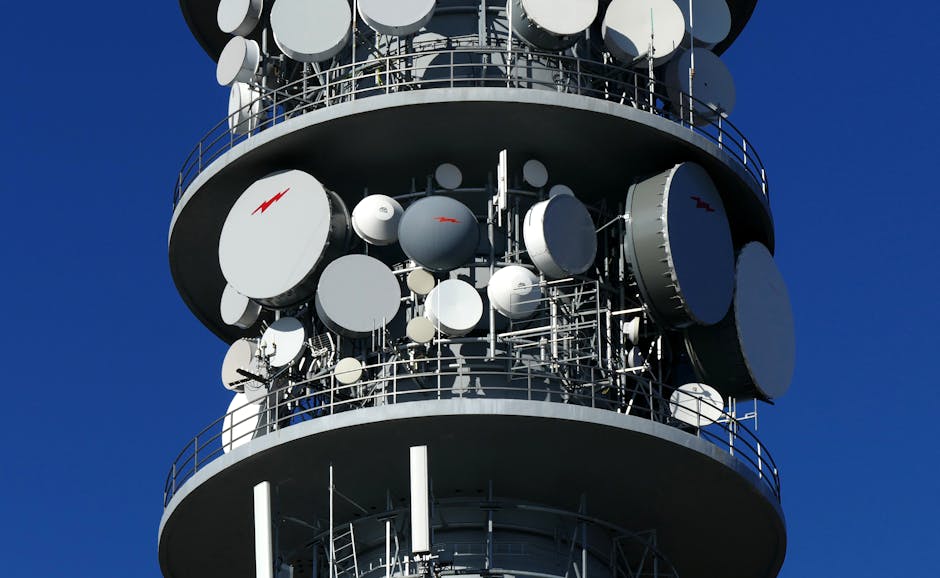
The versatility of non-terrestrial networks unlocks a vast array of applications across commercial, governmental, and humanitarian sectors. These use cases move far beyond simple back-up connectivity, positioning NTNs as enablers of entirely new services and economic models.
Global IoT and Asset Tracking: One of the most immediate and massive markets for NTNs is connecting the billions of sensors and devices that constitute the Internet of Things (IoT). Terrestrial networks cover less than 20% of the Earth’s landmass, leaving vast agricultural fields, shipping lanes, mining operations, and environmental sensors in the dark. NTNs enable seamless tracking of cargo containers across oceans, monitoring of soil conditions in remote farms, and management of utility infrastructure like pipelines and electrical grids. Companies are now producing low-power satellite modems that can be integrated directly into IoT devices for global, lifelong connectivity.
Emergency and Disaster Response Communications: When terrestrial networks are damaged or destroyed by hurricanes, earthquakes, or wildfires, NTNs become a lifeline. Satellites and rapidly deployable drones can restore critical communication links for first responders, support coordination efforts, and allow affected populations to contact loved ones. Organizations like the International Telecommunication Union (ITU) actively promote the use of satellite technology in their emergency telecommunications protocols.
Backhaul for Remote 5G and Rural Broadband: Deploying fiber to a remote village or island is often economically unviable. Here, NTNs provide the perfect backhaul solution, connecting a local 5G or 4G cell site to the global internet. A satellite or HAPS link can serve as the middle-mile, enabling high-speed broadband for communities that would otherwise remain unconnected, thus bridging the digital divide. This is a critical component of global digital inclusion strategies.
“The integration of non-terrestrial networks is not an option for 6G; it is a fundamental requirement. We are designing 6G standards from the ground up to be a native network of networks, seamlessly incorporating satellites and aerial platforms.” – Industry representative from the Next G Alliance.
Aeronautical and Maritime Connectivity: NTNs are the only viable technology for providing consistent, high-quality internet and communication services to aircraft over oceans and ships at sea. This enhances operational efficiency for airlines and shipping companies while providing passenger connectivity, a growing expectation and revenue stream. Furthermore, how will the expansion of satellite networks influence global telecom markets and competition?
Integration with 5G-Advanced and the Path to 6G

The telecommunications standards bodies, notably 3GPP, have made the integration of non-terrestrial networks a cornerstone of 5G-Advanced (Release 18 and beyond) and a defining vision for 6G. The goal is to make NTN access transparent to the user and the application. Your device will automatically and seamlessly connect to the best available network—whether it’s a terrestrial 5G cell, a LEO satellite overhead, or a HAPS—without any manual intervention.
This requires significant technical evolution. Standards are being developed for new radio waveforms that are robust to the high Doppler shifts and longer delays inherent in satellite links. Network architectures are being redesigned to handle mobility across different administrative domains (e.g., from a terrestrial network to a satellite operator’s network). Core network functions may need to be distributed or even hosted in space to reduce latency for certain applications. The work on 3GPP Release 17 introduced foundational NTN support for IoT and enhanced mobile broadband, with later releases expanding capabilities. This convergence promises a future where a single subscription provides truly global coverage, from the depths of a rural valley to the middle of an ocean.
Challenges and Technical Hurdles
Despite the immense promise, deploying and operating non-terrestrial networks at scale presents formidable challenges that the industry must overcome.
Spectrum Allocation and Interference: Suitable radio spectrum is a finite resource. Allocating frequencies for burgeoning satellite mega-constellations, HAPS, and drones without causing harmful interference to existing terrestrial services (and to each other) is a complex international regulatory puzzle. Coordination through the ITU is essential but often slow. Furthermore, the use of higher frequency bands (like Q/V band) for space-to-ground links, while offering more bandwidth, is more susceptible to atmospheric attenuation from rain.
Terminal Cost and Complexity: For NTNs to achieve mass adoption, user equipment must be affordable and simple. Traditional satellite phones and terminals are bulky and expensive. The industry is driving toward direct-to-device technology, where standard smartphones can connect directly to satellites for basic messaging and emergency services (as seen with Apple’s Emergency SOS via Satellite and Qualcomm’s Snapdragon Satellite). Achieving higher data rates for broadband will require more sophisticated, but still consumer-friendly, antenna technology.
Orbital Debris and Space Sustainability: The rapid deployment of thousands of LEO satellites raises serious concerns about space debris. Collisions can create cascading fields of fragments that render entire orbits unusable. Operators must commit to rigorous end-of-life deorbiting protocols, advanced collision avoidance systems, and designs that minimize the risk of creating debris. The long-term sustainability of the space environment is a non-negotiable condition for the success of space-based NTNs.
The Future Trajectory of NTNs
The evolution of non-terrestrial networks points toward an increasingly integrated, intelligent, and autonomous ecosystem. We are moving beyond standalone satellite or HAPS services toward a dynamic, software-defined network fabric where resources are allocated in real-time based on demand. Artificial Intelligence and Machine Learning will manage this complexity, routing traffic through the optimal path (terrestrial, aerial, or space) to meet specific application requirements for bandwidth, latency, and reliability.
Future advancements may include inter-satellite laser links creating a high-speed optical mesh in space, reducing reliance on ground stations. In the longer term, concepts like space-based data centers or computing nodes in orbit could process data locally, reducing the round-trip time to Earth for latency-sensitive applications. The boundary between terrestrial and non-terrestrial will continue to blur, culminating in the 6G vision of a pervasive, intelligent network that is truly ubiquitous. For professionals building this future, understanding the core principles of modern network infrastructure is more critical than ever.
Conclusion
Non-terrestrial networks represent a fundamental expansion of the connectivity paradigm, breaking free from the constraints of geography and terrestrial infrastructure. From empowering global IoT and bridging the digital divide to ensuring communications resilience in the face of disasters, the applications are as vast as the coverage they provide. While significant technical, economic, and regulatory hurdles remain, the trajectory is clear: the future of telecommunications is three-dimensional. The integration of space, air, and ground layers into a cohesive non-terrestrial network ecosystem is not just an incremental improvement; it is the key to unlocking a new era of global digital inclusion, innovation, and security.
As standards mature in 5G-Advanced and 6G, and as launch costs continue to fall, we will witness an acceleration in NTN deployment and adoption. The question is no longer *if* these networks will become mainstream, but *how quickly* and *in what form* they will reshape our connected world. Are you prepared to leverage these sky-high networks for your organization’s connectivity strategy?