The process of Openreach network rearrangement is a fundamental operational reality for every communications provider (CP) operating on the UK’s primary digital infrastructure. For telecom engineers, network planners, and business decision-makers, successfully navigating this complex procedure is not just an administrative task; it is a strategic imperative that directly impacts service delivery, customer satisfaction, and operational costs. Furthermore, a misunderstanding or misstep in this area can lead to significant project delays, unexpected financial penalties, and service disruptions. This comprehensive guide will demystify the Openreach network rearrangement process, providing you with the essential knowledge, actionable strategies, and practical insights needed to manage it effectively. Consequently, you will be equipped to plan with confidence, avoid common pitfalls, and ensure your network operations remain agile and cost-efficient in a dynamic market.
Key Takeaways

- Openreach network rearrangement is a mandatory, chargeable process for modifying the physical or logical configuration of services on its network.
- Understanding the specific rearrangement categories—like Jointing, Jumpering, and D-side moves—is critical for accurate planning and cost forecasting.
- Strategic pre-planning and clear communication with Openreach are the most effective ways to minimize costs and avoid project delays.
- CPs must navigate a detailed set of rules, known as the Network Adjustment Code, which governs the entire rearrangement process.
- Failing to plan for rearrangement can result in significant excess construction charges (ECCs) that impact project profitability.
- Proactive lifecycle management of your duct and cable infrastructure is essential for long-term network efficiency and cost control.
What is Openreach Network Rearrangement?

In essence, Openreach network rearrangement refers to the formal process through which Communications Providers (CPs) request Openreach to physically or logically alter the existing network infrastructure to accommodate new connections, repairs, or optimizations. This is not a simple service order; it is a fundamental network engineering activity. For instance, when a CP needs to run a new cable through a duct that is already at capacity, Openreach must first rearrange the existing cables within that duct to create space. Similarly, if a fault requires a cable to be re-jointed or if services need to be moved from one distribution point (DP) to another, a rearrangement order is triggered. The process is governed by a strict regulatory and commercial framework designed to ensure the shared network is maintained fairly and efficiently for all users.
Moreover, the need for rearrangement arises directly from the physical constraints and historical build of the UK’s telecoms network. Much of the infrastructure, particularly in older areas, was not designed for the dense, fibre-rich environment of today. Ducts can become congested, and cable chambers can be full. Therefore, adding new infrastructure almost always requires adjusting what is already there. This process ensures the long-term health and scalability of the national asset. Consequently, for CPs, understanding rearrangement is not optional; it is a core competency for anyone involved in network build, maintenance, or expansion projects on the Openreach network.
The Core Categories of Network Rearrangement
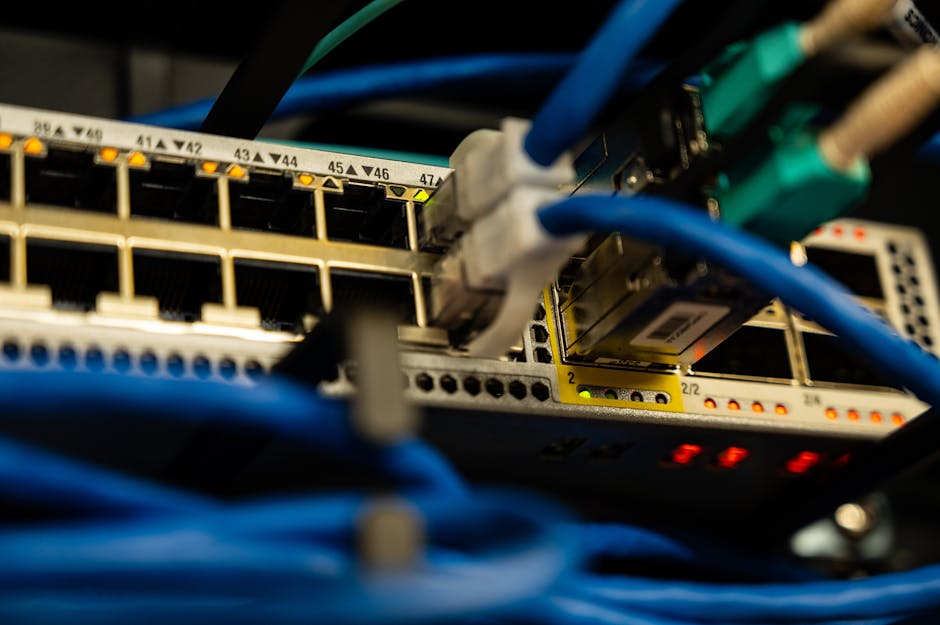
Openreach classifies rearrangement work into several distinct categories, each with its own rules, lead times, and cost implications. Grasping these categories is the first step toward accurate project planning.
Jointing Rearrangement
This is one of the most common types of rearrangement. It involves opening a joint closure (a protective case where cables are spliced together) to modify the connections inside. For example, this might be necessary to repair a faulty cable, to branch a new service off an existing cable, or to manage cable capacity within a duct. The work requires skilled engineers and can be time-consuming, especially if the joint is in a challenging location like a flooded chamber. Furthermore, jointing rearrangement often has a direct impact on live services, so it requires careful scheduling, often within specific Openreach working hours to minimize customer disruption.
Jumpering (Jumpering) Rearrangement
Jumpering refers to the process of adding, removing, or rerouting the short patch cables (jumpers) within an exchange or cabinet. This is typically a logical rearrangement to connect a customer’s line to a different port or piece of equipment. For instance, when migrating a customer from an old copper-based service to a new Fibre to the Premises (FTTP) service, the physical line in the street may remain, but the jumper in the exchange must be moved from the DSLAM to the OLT. This category is crucial for service migrations and technology upgrades.
D-side Rearrangement
The “D-side” refers to the distribution network that runs from the cabinet (PCP) to the distribution point (DP). D-side rearrangement involves work on this segment, such as moving a customer’s connection from one DP to another. This might be required if a DP is being decommissioned, if a customer is moving to a new property served by a different DP, or to balance load across the network. This type of work directly affects the “last mile” of connectivity and requires detailed knowledge of the local network topology.
The Rules and Regulations: Navigating the NAC

All rearrangement activities are governed by the Network Adjustment Code (NAC), a formal document published by Openreach that outlines the rights, responsibilities, and financial arrangements for CPs. The NAC is not a guideline; it is a binding set of rules. It specifies what constitutes rearrangement, how it should be requested, the standard charges applicable, and the timelines for completion. A critical principle within the NAC is the concept of “cable responsibility.” In short, if your company’s cable is the one causing an obstruction that requires rearrangement to clear, you will likely be liable for the costs of that rearrangement work, even if the work is being done to benefit another CP.
“Failure to understand and plan for NAC charges is one of the single biggest causes of budget overruns in fibre network deployment projects. It turns a predictable cost into a reactive, and often painful, expense.” – Senior Network Planner, Major Alt-Net.
Moreover, the NAC details the process for raising a Rearrangement Order (RO). This is a specific order type in Openreach’s systems, distinct from a standard provision or repair job. Submitting an RO requires precise information: the exact location, the specific cables involved, the nature of the work required, and the desired outcome. Providing inaccurate or incomplete information at this stage is a primary cause of delays and requotes. Therefore, thorough on-site surveys and clear documentation are non-negotiable prerequisites before engaging the formal process.
Strategic Planning to Minimize Rearrangement Costs

Given that rearrangement is a chargeable activity, proactive planning is the most powerful tool a CP has to control costs. The goal is not to avoid rearrangement entirely—which is often impossible—but to manage it efficiently and predictably.
First, invest in comprehensive duct and cable intelligence. Before designing a network build or a major repair, you need to know what is already in the ground. Utilize tools like Openreach’s PIA (Physical Infrastructure Access) maps and, crucially, conduct detailed visual surveys. Look for duct blockages, congested chambers, and the condition of existing cables. This intelligence allows you to forecast where rearrangement will be needed and budget for it from the outset, rather than being surprised during the build phase. For instance, discovering a fully congested joint early allows you to include jointing rearrangement in your initial project plan and costs.
Second, practice effective lifecycle management of your own infrastructure. If you are an alt-net using PIA, you have a responsibility to not contribute to future congestion. Use modern, smaller-diameter cables where possible, and ensure your installations are neat and compliant. As a result, you reduce the likelihood that your cable will be the one requiring costly rearrangement in the future. Furthermore, maintain accurate records of exactly where your cables are laid. If you need to access them later for repair or upgrade, this knowledge will streamline the process and prevent unnecessary exploratory work by Openreach, which you would be charged for.
Understanding and Managing Rearrangement Charges

The financial model for rearrangement is not a flat fee; it is based on the time and materials required for the engineering work. Openreach provides a schedule of standard charges, but these are estimates. The final cost can vary based on the complexity of the job, the location, and any unforeseen challenges encountered on-site. The major cost components include engineering labour, materials (new joints, sleeves, cables), and any necessary traffic management or permits. A critical question for CPs is: when does a simple provision job trigger a full rearrangement charge? The answer often lies in the state of the existing infrastructure.
One of the most significant financial risks is the Excess Construction Charge (ECC). This is applied when the work required exceeds the scope of a standard installation. For example, if a duct run is blocked and requires extensive clearance before a new cable can be pulled, that clearance work will likely be billed as an ECC, which is fundamentally a rearrangement charge. To manage this, always build a contingency budget (typically 10-20%) for rearrangement and ECCs into your project plans. Engage with Openreach’s planning teams early for complex jobs; they can often provide a more accurate forecast of potential charges, helping you avoid nasty surprises.
The Request Process: From Identification to Completion
Navigating the official process requires a methodical approach. It begins with identification, often during a survey or when a build crew hits an unexpected obstacle. Once a need is identified, the CP must gather all relevant evidence: photos of the congested duct or chamber, cable IDs, and precise GPS coordinates. This package of information is then used to raise a Rearrangement Order through the appropriate Openreach portal or via your business account manager.
Following submission, Openreach will review the request and issue a quote. This is a critical juncture. You must review the quote carefully to ensure it aligns with the work you believe is needed. Discrepancies here must be resolved before authorizing the work. Upon authorization, the job is scheduled. Lead times can vary from a few weeks to several months, depending on resource availability and complexity. Consequently, factoring this lead time into your project timeline is essential. Finally, once the work is completed, Openreach will provide documentation and the final invoice. Keep this documentation for your records, as it proves what work was done and is vital for future network planning in that area.
- Step 1: Identify & Document: Survey the site, take photos, note cable IDs and locations.
- Step 2: Raise the Order: Submit a formal Rearrangement Order (RO) with all evidence.
- Step 3: Review & Authorize: Carefully review Openreach’s quote and authorize the work.
- Step 4: Schedule & Execute: Work is scheduled by Openreach and carried out by their engineers.
- Step 5: Verify & Archive: Receive completion documentation and invoice; archive for future reference.
Common Pitfalls and How to Avoid Them
Even experienced CPs can stumble in the rearrangement process. One of the most common pitfalls is poor pre-survey intelligence. Relying solely on map data without a physical survey is a recipe for disaster. Maps may not show internal duct blockages or the true condition of a chamber. Always conduct a thorough walkout. Another major pitfall is unclear communication in the RO. Vague descriptions like “duct is blocked” are insufficient. Be specific: “10m blockage of 100mm duct at chamber XYZ, requires rodding and roding.” Clear communication prevents mis-scoping and rework.
Additionally, many CPs fail to plan for the lead time. They design a project with a tight timeline, discover a rearrangement need, and then face a multi-week delay waiting for Openreach to schedule the work, which cascades into missed deadlines and unhappy customers. Build rearrangement lead time into your critical path from the start. Finally, there is the pitfall of ignoring the NAC rules on cable responsibility. Assuming rearrangement is always the other provider’s problem can lead to disputed charges and project stalls. Understand the rules, know where your cables are, and accept liability when it is rightly yours to keep projects moving.
The Future of Network Rearrangement
The landscape of Openreach network rearrangement is evolving alongside the UK’s digital transformation. The massive rollout of full-fibre networks is putting unprecedented pressure on existing duct infrastructure. In response, Openreach is continuously refining its processes and systems. We can expect to see a greater push towards digital tools for surveying and ordering, potentially using AI to analyze survey photos and auto-generate rearrangement quotes. Moreover, as more alt-nets build their own networks, a new layer of complexity arises: rearrangement between different operators’ infrastructure, which may require new forms of commercial and operational agreements.
Furthermore, regulatory focus on the efficiency of the PIA product may lead to updates in the NAC, aiming to make the rearrangement process more transparent and predictable. The ultimate goal for the industry is a smoother, more automated process that minimizes delays and keeps the focus on building world-class digital infrastructure. For CPs, staying informed about these changes through forums, industry publications, and direct engagement with Openreach will be key to maintaining a competitive edge.
Conclusion
Successfully navigating the complexities of Openreach network rearrangement is a defining capability for any communications provider operating in the UK. It demands a blend of detailed technical knowledge, rigorous planning, and disciplined process management. From understanding the specific categories of jointing and jumpering work to mastering the financial rules of the Network Adjustment Code, each element plays a crucial role in ensuring efficient network operations. By investing in thorough surveys, building contingency plans for charges and lead times, and maintaining clear communication with Openreach, CPs can transform rearrangement from a reactive cost centre into a predictable, managed component of their network strategy.
In the final analysis, the process of Openreach network rearrangement is not merely an administrative hurdle; it is the mechanism that allows the UK’s shared digital infrastructure to grow and adapt. Embracing its intricacies is essential for delivering reliable, future-proof services to customers. As the fibre rollout accelerates, the providers who master this discipline will be the ones who build fastest, operate most efficiently, and ultimately thrive. Are you ready to audit your current rearrangement processes and identify your first step toward greater efficiency?