Qualcomm CEO: AI Will Power India’s Manufacturing Hub Vision by 2026
Source: Speaking at the India AI Impact Summit 2026 on February 20, Qualcomm CEO Cristiano Amon declared that India is emerging as a premier global manufacturing hub, a transformation fundamentally accelerated by the integration of artificial intelligence and automation. This strategic pivot, as reported by ETTelecom, signals a massive shift in global supply chains and creates a new frontier for industrial content and digital strategy. For AI content creators, this represents a burgeoning market for specialized, technical, and localized content focused on smart factories, industrial IoT, and the future of work.
India’s Manufacturing Ambition: A Deep Dive into the AI-Powered Vision

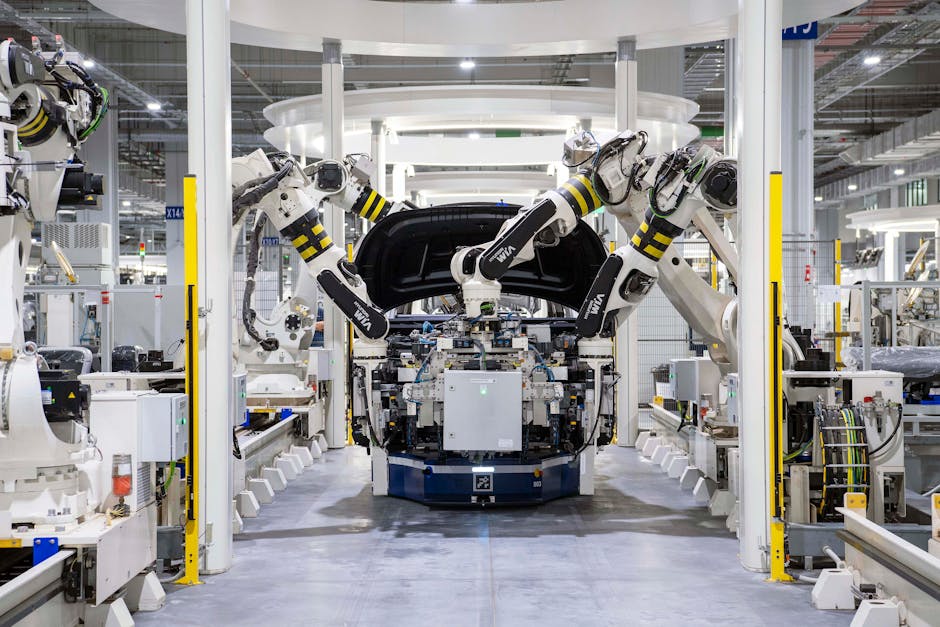
Cristiano Amon’s statement at the summit is not an isolated prediction but a reflection of converging national policy and technological capability. The vision hinges on smart manufacturing, where AI-driven systems manage production lines, predictive maintenance, quality control, and supply chain logistics with minimal human intervention. Qualcomm, a leader in wireless semiconductors and edge AI processing, is positioning its technologies—from advanced 5G and upcoming 6G connectivity to its AI-optimized Snapdragon platforms—as the foundational layer for this industrial revolution.
The key drivers are clear. First, global companies are actively diversifying their manufacturing bases away from single-region dependencies, a trend known as “China Plus One.” India’s vast talent pool, improving infrastructure, and supportive government initiatives like the Production-Linked Incentive (PLI) scheme make it a prime candidate. Second, the maturation of AI at the edge allows for real-time data processing directly on factory floor devices—sensors, robots, and cameras—enabling decisions in milliseconds without cloud latency. This is critical for precision manufacturing and operational safety. Amon highlighted that this AI-powered automation will not just replace manual tasks but augment human capabilities, creating new, high-skill roles in robotics programming, data analysis, and system maintenance.
The timeline is aggressive. With the India AI Impact Summit setting the stage in early 2026, the next 24-36 months will see accelerated deployment. This creates a compressed content cycle where information, tutorials, and case studies on implementing these technologies will be in extremely high demand.
The Direct Impact on AI Content Creators and Strategists

This macro-economic shift creates specific, high-value opportunities for content professionals specializing in AI and technology. The demand for content will bifurcate into two primary streams: B2B technical documentation and B2C educational awareness.
For B2B audiences—factory managers, CTOs, operations heads—the content need is deeply practical. This includes detailed whitepapers on integrating Qualcomm’s AI hardware into legacy manufacturing systems, comparative analyses of edge AI platforms (e.g., Qualcomm Cloud AI 100 vs. NVIDIA Jetson), and step-by-step tutorials on setting up AI-powered predictive maintenance using tools like TensorFlow Lite for Microcontrollers. The language must be precise, data-driven, and focused on ROI metrics like uptime improvement, defect reduction, and energy savings.
For a broader B2C and professional audience, content must demystify the impact of AI on manufacturing jobs and the economy. This involves creating accessible explainer videos, podcast interviews with industry experts, and long-form articles analyzing the skill sets needed for the “factory of the future.” There is also a significant SEO opportunity in ranking for nascent but growing keyword clusters like “AI in Indian manufacturing,” “smart factory solutions,” and “industrial automation training.”
Content automation platforms like EasyAuthor.ai become force multipliers here. They can be configured to generate first drafts of technical specification overviews, localized case studies for different Indian industrial sectors (automotive, electronics, pharmaceuticals), and consistent social media updates tracking factory modernization projects. The key is to combine AI-generated efficiency with human editorial oversight for technical accuracy and strategic nuance.
Practical Content Strategy Tips for the AI Manufacturing Boom
To capitalize on this trend, content creators and strategists should implement the following actionable plans immediately:
- Develop a Vertical-Specific Knowledge Base: Don’t create generic “AI in manufacturing” content. Drill down into sub-verticals. Use AI tools to research and produce comprehensive guides on AI for automotive component testing, computer vision in textile quality control, or generative AI for supply chain optimization. This specificity builds authority and captures targeted search traffic.
- Localize for the Indian Market: This means more than translation. Incorporate references to Indian government schemes (PLI, Make in India), partner with local tech bloggers for guest posts, and use AI content generators to adapt global case studies into an Indian context. Discuss challenges specific to the region, such as power reliability or workforce upskilling, and how AI solutions address them.
- Focus on the “How-To” and the “So What”: Your content must bridge the gap between technological capability and practical implementation. Create detailed tutorials: “How to Set Up a Qualcomm RB5 Robotics Kit for a Simple Assembly Line” or “A 5-Step Plan to Audit Your Factory for AI Readiness.” Simultaneously, publish data-rich analyses that quantify the impact, using real or projected numbers—e.g., “How AI Cut Defect Rates by 40% in a Pune Electronics Plant.”
- Leverage Automation for Scale and Consistency: Use a platform like EasyAuthor.ai to establish a content assembly line. Automate the creation of weekly news digests on AI manufacturing trends, generate meta-descriptions and title tags for a large portfolio of pillar pages, and produce templated reports on different AI chipsets. This frees up human experts to focus on high-level strategy, interviews, and complex analytical pieces.
- Prepare for the 6G Content Wave: Amon explicitly tied this manufacturing future to next-generation connectivity. Start building foundational content now on 6G and industrial IoT. Explain concepts like network sensing, ultra-reliable low-latency communication (URLLC), and AI-native air interfaces. Being an early authority in this niche will pay dividends as the technology rolls out post-2026.
Conclusion: The Content Factory Must Evolve with the Smart Factory

Cristiano Amon’s vision at the India AI Impact Summit 2026 is a clarion call for the entire tech ecosystem. As India’s manufacturing sector undergoes an AI-infused metamorphosis, the demand for intelligent, accurate, and scalable content will explode. For AI content creators, this is a golden opportunity to move beyond generic topics and establish deep expertise in the industrial domain. By combining strategic human insight with the power of content automation tools, creators can build authoritative digital hubs that serve as essential resources for this multi-billion dollar transformation. The factories of the future are being built today, and the content that enables them must be written now.