Resilient Satcom Networks for Disaster Response are the unsung heroes of modern emergency management, providing a vital communication lifeline when terrestrial infrastructure collapses. When hurricanes level cell towers, earthquakes sever fiber cables, or wildfires ravage terrestrial networks, satellite communications (satcom) stand as the last line of defense for coordinating rescue efforts, delivering situational awareness, and reuniting families. In an era of escalating climate-related disasters and complex emergencies, the ability to rapidly deploy and rely upon these networks is not just an operational advantage—it is a matter of life and death. This comprehensive guide delves into the architecture, key technologies, deployment strategies, and future innovations that define truly resilient satcom systems designed to operate in the world’s most challenging environments.
Key Takeaways

- Resilient satcom networks integrate GEO, MEO, and LEO constellations with hybrid terminals for maximum redundancy and coverage.
- Key enabling technologies include VSAT, BGAN, and emerging Direct-to-Device (D2D) services that work with standard smartphones.
- Effective disaster response requires pre-positioned equipment, standardized SOPs, and interoperable systems for seamless multi-agency coordination.
- Cyber resilience through encryption, zero-trust architectures, and anti-jamming features is critical to protect emergency communications.
- The future of disaster satcom lies in multi-orbit, software-defined networks and AI-driven resource allocation for dynamic response.
- Successful deployment hinges on realistic training, regular exercises, and integrating satcom into broader emergency communication plans.
The Critical Role of Satellite Communications in Disaster Scenarios
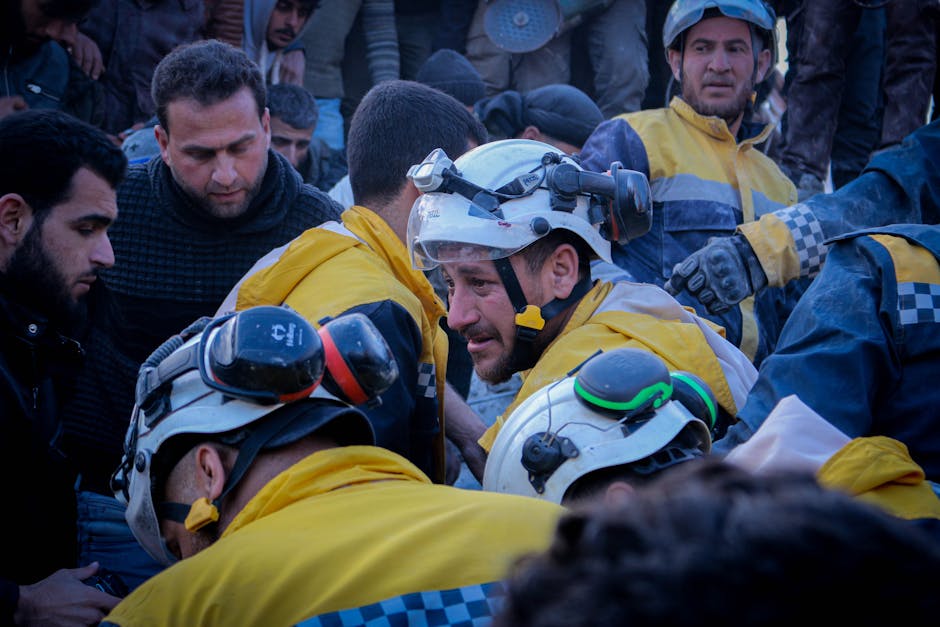
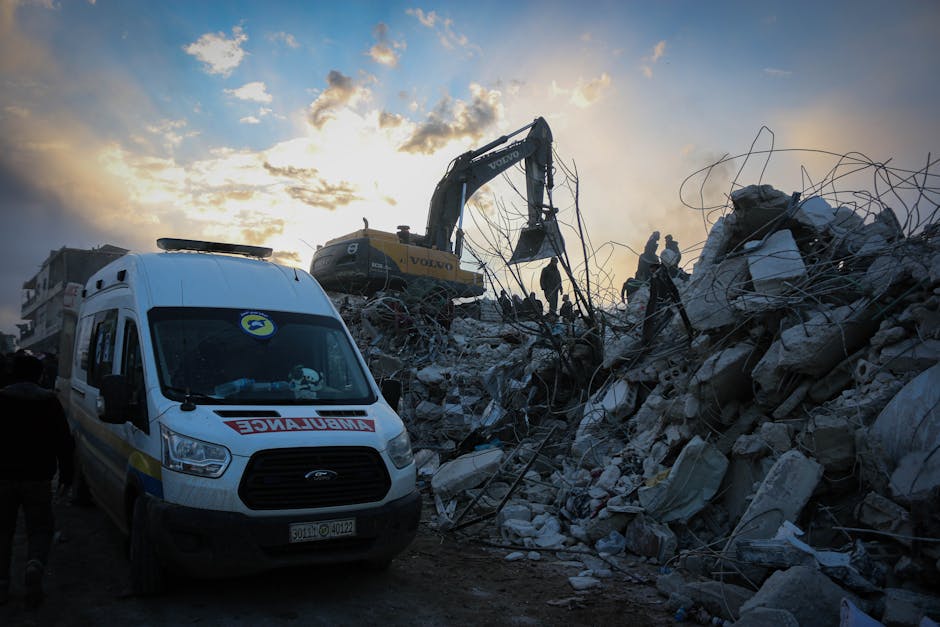
In the immediate aftermath of a major disaster, the collapse of terrestrial communication networks creates a state of profound isolation and chaos. Cellular networks fail due to power loss, physical damage, or network congestion as panicked individuals attempt to call for help. Fiber-optic cables, the backbone of the internet and landline telephony, can be severed by seismic activity, flooding, or debris. Consequently, first responders lose the ability to coordinate their life-saving efforts, emergency operation centers operate in an information vacuum, and affected communities are cut off from critical warnings and instructions. This communication blackout severely impedes the entire disaster response cycle, from initial assessment to resource mobilization and recovery.
Satellite communications provide the only guaranteed method to bypass this terrestrial fragility. Unlike ground-based systems, satellites in space are immune to terrestrial hazards. A satellite signal can travel directly from a portable terminal in a disaster zone to a satellite orbiting thousands of kilometers above, connecting to an operational ground station elsewhere on the planet. This capability enables the rapid re-establishment of command and control (C2) links for emergency services, facilitates telemedicine consultations for the injured, and supports data backhaul for drones conducting damage assessments. For instance, following Hurricane Maria’s devastation in Puerto Rico, satellite phones and terminals were among the first assets deployed to re-establish contact with isolated communities and coordinate the distribution of aid.
“When every second counts, satellite communications are often the first and only tool that can cut through the chaos of a disaster zone to save lives and coordinate a effective response.” – Industry Expert on Emergency Telecommunications.
Historical Case Studies: Satcom in Action
Examining past disasters clearly illustrates the indispensable value of satcom. During the 2010 Haiti earthquake, the near-total destruction of local infrastructure made satellite phones and VSAT terminals the primary means of communication for international aid agencies and the United Nations. Similarly, in the 2011 Tōhoku earthquake and tsunami in Japan, satellite imagery and communications played a pivotal role in assessing the extent of the damage, particularly at the Fukushima Daiichi Nuclear Power Plant, where other systems were compromised. These examples underscore that resilience is not an abstract concept but a proven operational requirement validated in the field under extreme duress.
Architecting a Truly Resilient Satcom Network

Building a satcom network for disaster response requires more than just having a satellite phone in a kit. True resilience is engineered through a layered, redundant, and flexible architecture designed to withstand multiple points of failure. The foundation of this architecture is multi-orbit diversity. Relying on a single type of satellite orbit creates a single point of failure. A resilient network strategically leverages a combination of Geostationary Earth Orbit (GEO), Medium Earth Orbit (MEO), and Low Earth Orbit (LEO) constellations. GEO satellites provide stable, wide-area coverage for fixed command posts. MEO constellations, like those used for GPS and some communication services, offer a balance of latency and coverage. The new generation of massive LEO constellations, such as Starlink and OneWeb, deliver high-bandwidth, low-latency connectivity ideal for data-intensive applications like live video feeds from drones.
Furthermore, resilience is built at the terminal level with hybrid and multi-band terminals. A modern resilient terminal is not locked to a single satellite network or frequency band. It can automatically or manually switch between L-band for reliable, weather-resistant voice and low-rate data (via services like BGAN) and Ka/Ku-band for high-throughput data links. This capability ensures that if one service is degraded—for example, Ka-band during a severe rainstorm—the terminal can failover to a more robust L-band connection without dropping the critical communication link. This approach to network redundancy is fundamental to maintaining operational continuity.
The Importance of Redundancy and Interoperability
Redundancy must extend beyond the space segment to include ground infrastructure. A resilient network design incorporates multiple teleports (ground stations) in geographically diverse locations to ensure that if one is affected by a regional disaster, traffic can be routed through another. Equally critical is interoperability. Disaster response involves a multitude of agencies—local fire and police, state/provincial emergency management, federal entities, NGOs, and international organizations. If each agency operates on a different, incompatible satcom system, the response effort fragments. Adherence to open standards and the use of gateway solutions that can bridge different network technologies are essential for creating a unified communication environment where all stakeholders can collaborate effectively.
Key Technologies and Terminals for Rapid Deployment

The effectiveness of a satcom response hinges on the speed and ease with which connectivity can be established. Several key technologies have been developed specifically for this purpose. Very Small Aperture Terminals (VSAT) are the workhorses for establishing semi-permanent or temporary communication hubs. Modern fly-away VSAT kits can be packed into a few cases, transported on any vehicle or aircraft, and set up by a small team in under 30 minutes to provide broadband internet and telephony for an entire forward operating base. For individual or small-team mobility, Broadband Global Area Network (BGAN) terminals are indispensable. These briefcase-sized devices connect to GEO satellites to provide reliable, global IP data and voice services, enabling email, web access, and VoIP calls from virtually anywhere.
The technology landscape is rapidly evolving with innovations that promise to integrate satcom more seamlessly into disaster response. The most significant is the emergence of Direct-to-Device (D2D) satellite services. Companies like SpaceX (Starlink), AST SpaceMobile, and Lynk Global are developing capabilities to allow standard, unmodified 4G/5G smartphones to connect directly to satellites in areas without cellular coverage. This could revolutionize disaster response by empowering every affected citizen or responder with a smartphone to send SOS messages, receive emergency alerts, and access basic data services without needing specialized hardware. Meanwhile, lightweight, low-power IoT satellite sensors can be deployed to monitor environmental conditions like flood levels, air quality, or structural integrity, transmitting data via satellite to command centers.
Operational Deployment: Strategies and Best Practices

Having advanced technology is meaningless without a robust plan to deploy and use it under pressure. The first principle of operational deployment is pre-positioning. Critical satcom assets should be stored in hardened, strategically located caches that are accessible even when transportation networks are disrupted. These caches might include portable terminals, power solutions (solar/generator), and pre-configured network equipment. The second principle is the development of Standard Operating Procedures (SOPs). Every member of a response team should be trained on how to activate, set up, and operate the designated satcom equipment. Drills and regular exercises that simulate communication blackouts are essential to build muscle memory and troubleshoot potential issues before a real disaster strikes.
Once deployed, network management becomes paramount. A best practice is to establish a tiered communication architecture:
- Tier 1 (Strategic): High-bandwidth VSAT links for Emergency Operations Centers (EOCs) supporting video conferencing, large data transfers, and overall command.
- Tier 2 (Tactical): Mobile BGAN or LEO terminals for field command posts and key response units (e.g., search & rescue, medical teams).
- Tier 3 (Individual): Satellite phones or future D2D smartphone services for individual responders and for outreach to isolated community points.
This tiered approach ensures that limited bandwidth is allocated efficiently based on mission priority. Furthermore, integrating satcom with other technologies like tactical mesh networks can create a resilient local area network in the disaster zone, using a single satellite backhaul link to connect many users.
Cyber Resilience and Security Considerations
In the heightened tension of a disaster, communication systems become high-value targets for malicious actors, ranging from opportunistic hackers to hostile state entities seeking to disrupt response efforts. Therefore, cyber resilience is a non-negotiable component of a resilient satcom network. The broadcast nature of satellite signals makes them inherently susceptible to interception, jamming, and spoofing. To counter these threats, end-to-end encryption must be applied to all voice, data, and video traffic, ensuring confidentiality even if signals are intercepted. Modern military-grade encryption standards are increasingly available for civilian emergency response agencies.
Beyond encryption, network architectures must adopt a zero-trust security model. Every device and user attempting to access the disaster network must be authenticated and authorized, with access limited to only the resources necessary for their role. Additionally, terminals should be equipped with anti-jam and anti-spoof features, such as adaptive filtering and cryptographic signal authentication (like GPS M-Code). Regular security audits and penetration testing of the entire satcom ecosystem—from the user terminal to the network operating center—are essential to identify and remediate vulnerabilities before they can be exploited during a crisis. Protecting these lifelines is as important as establishing them.
The Future of Resilient Satcom: Multi-Orbit and AI Integration
The next frontier for resilient satcom networks for disaster response is the intelligent, seamless integration of multiple orbital layers into a single, managed service. The future is a Multi-Orbit Satellite Network where a user terminal can dynamically and automatically connect to the best available satellite—whether GEO, MEO, or LEO—based on latency needs, bandwidth requirements, link reliability, and cost. This creates an unprecedented level of robustness; if a LEO satellite moves out of view or a GEO link experiences rain fade, the terminal hands off the session to another satellite in a different orbit without the user noticing. This requires advanced software-defined networking (SDN) and virtualization in space, turning the physical constellation into a flexible, programmable resource.
Artificial Intelligence (AI) and Machine Learning (ML) will supercharge this capability. AI algorithms can be used to predict network congestion and dynamically allocate bandwidth to priority missions, such as a live video feed from a search drone. ML can analyze historical disaster data and real-time sensor feeds to pre-position satellite capacity (by maneuvering satellites or allocating beams) over areas forecast to be impacted by an approaching hurricane or wildfire. Furthermore, AI-driven analytics can process the massive amounts of satellite imagery and sensor data collected during a disaster to automatically identify damaged infrastructure, flooded areas, and population movements, providing responders with actionable intelligence faster than ever before. This evolution from a static communication pipe to an intelligent, predictive situational awareness platform will define the next generation of disaster response.
Conclusion
Building and maintaining resilient satcom networks for disaster response is a complex but critical undertaking that blends advanced space technology with pragmatic operational planning. As this guide has detailed, resilience is achieved not through a single piece of hardware, but through a holistic strategy encompassing multi-orbit architecture, hybrid terminals, rigorous training, robust cybersecurity, and a forward-looking embrace of AI and software-defined systems. These networks serve as the ultimate insurance policy against communication failure when terrestrial systems are most vulnerable.
The increasing frequency and severity of natural and man-made disasters make investment in these capabilities more urgent than ever. For emergency managers, policymakers, and communication professionals, the task is clear: to integrate satellite communications not as a last-resort backup, but as a foundational, always-on component of comprehensive emergency preparedness plans. By doing so, we ensure that when the unthinkable happens, the lines of communication remain open, coordination persists, and help can reach those in need without delay. Is your organization’s disaster communication plan built on a foundation of true satcom resilience?