Revolutionizing Air Traffic Management with Satellite Communication Technology
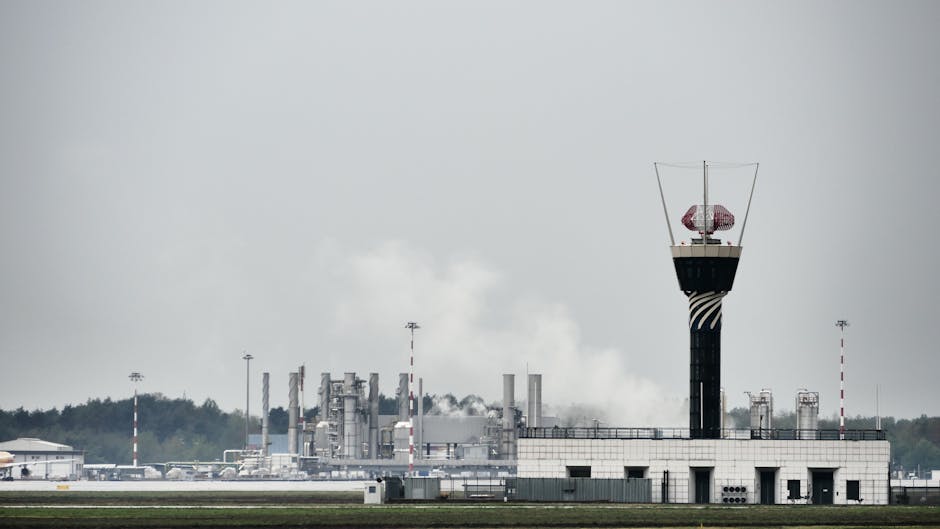
Air travel is entering a new era of sustainability and efficiency, thanks to a significant collaboration between the European Space Agency (ESA), satellite operator Viasat, and aerospace giant Boeing. Recent test flights involving United Airlines’ Boeing aircraft have successfully demonstrated the transformative capabilities of satellite-based technology for air traffic management. Utilizing the Iris system developed by ESA in partnership with Viasat, these flights have made an important leap towards optimizing flight routes, reducing fuel consumption, and shrinking the aviation industry’s carbon footprint. This milestone paves the way for global deployment, promising an exciting future for air travel.
Transforming Air Traffic Management with Iris Technology

Pexels
The Iris system, which became operational in European airspace in 2024, provides a digital communication platform that connects pilots, air traffic controllers, and airline operation centers via satellite. The system complements existing analog and terrestrial communication technologies, enabling enhanced operational efficiency. Since its deployment, Iris has been utilized in over 17,000 flights across Europe, achieving remarkable results in route optimization and fuel savings. The recent collaboration between ESA, Boeing, and Viasat demonstrates the potential for scaling this technology to a global level, which could revolutionize how air traffic is managed worldwide.
One key capability of Iris is its ability to optimize flight trajectories in real-time by taking into account weather conditions and operational constraints. This not only reduces delays but also significantly cuts CO2 emissions, thereby aligning with the aviation sector’s sustainability goals. The program also addresses the growing demand for air travel, which is projected to increase by 50% by 2050, emphasizing the need for advanced technologies that can ensure efficiency across increasingly busy skies.
Global Collaboration for a Greener Aviation Industry

Pexels
The Boeing ecoDemonstrator program, active since 2012, served as the testing ground for this satellite-based innovation. As part of the program, a United Airlines aircraft successfully trialed the Iris technology in late October and early November, on routes between Houston, Texas, and Edinburgh, UK. Notably, the ecoDemonstrator program has been instrumental in testing and implementing innovative technologies, with about one-third of the tested solutions being deployed operationally. This highlights the immense impact of Iris, which is poised to play a critical role in reducing global aviation emissions and enhancing passenger experiences through fewer delays.
Industry leaders have shown confidence in the partnership. Laurent Jaffart, ESA’s Director for Connectivity and Secure Communications, emphasized the significance of a unified global solution for air traffic management, while Boeing’s Chief Technology Officer, Todd Citron, underscored the importance of digital communication technologies in creating a secure and sustainable aviation future. Similarly, Lauren Riley, Chief Sustainability Officer of United Airlines, highlighted how these innovations align with the airline’s decarbonization goals, making flying safer and more efficient for both passengers and crews.
The Road Ahead: Scaling Innovation for the Future

Pexels
The collaboration between ESA, Viasat, and Boeing is one of many ongoing efforts in the aviation industry to align with global environmental objectives. With the successful implementation of the Iris technology across Europe and recent trials in transatlantic routes, the system’s global adoption appears to be within reach. Viasat’s Joel Klooster noted that satellite communication systems like Iris are critical to supporting the transition to next-generation, IP-based datalink technologies, which are essential for managing increased air traffic volumes in a sustainable manner.
As the aviation industry continues to grow, partnerships such as this will remain crucial in meeting the dual challenges of scalability and sustainability. By investing in advanced satellite communication technologies and fostering international collaboration, the sector is not only responding to current demands but also paving the way for a future where air travel is safer, greener, and more connected than ever before. The Iris program represents a bold step in this direction, ensuring a brighter horizon for both the aviation industry and the environment.