Samsung’s $73B AI Chip Bet: What It Means for AI Content Creation in 2026
Samsung Electronics announced a landmark investment of over $73 billion for 2026 to advance its position in the artificial intelligence chip sector through research, development, and strategic acquisitions, according to an exclusive report from ETTelecom.com. This monumental capital injection, targeting next-generation memory (HBM), logic chips, and advanced packaging, directly signals the hardware acceleration of the AI era. For AI content creators, this move promises a future of more powerful, efficient, and accessible generative AI models, fundamentally altering the economics and capabilities of tools like GPT-5, Claude 4, and Midjourney v7. The race for AI supremacy is now being fought at the silicon level, and the resulting hardware boom will determine the speed, cost, and creativity of automated content production for years to come.
Samsung’s $73 Billion Gambit: A Deep Dive into the AI Chip Arms Race

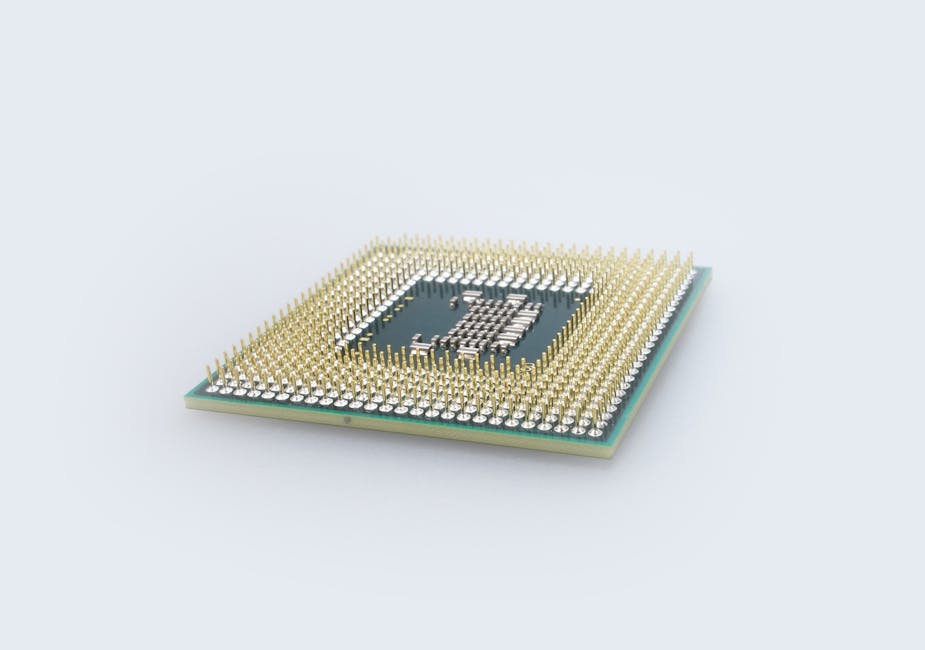
Samsung’s planned $73 billion investment for 2026 isn’t a vague commitment; it’s a targeted strategic offensive in a high-stakes global competition. The funds are earmarked for three critical fronts: High-Bandwidth Memory (HBM), next-generation logic semiconductors (like 2nm GAA transistors), and advanced chip packaging technologies like X-Cube. This triad addresses the primary bottlenecks in current AI systems: data transfer speed, processing power, and thermal/power efficiency. Rivals like TSMC and Intel have announced similar multi-billion dollar expansions, but Samsung’s scale—it’s already the world’s largest memory chip maker—positions it to potentially dominate the supply chain for AI training and inference hardware. This investment cycle, culminating in 2026, aims to move beyond today’s constraints, enabling AI models that are not just larger but significantly faster and cheaper to run, directly lowering the operational cost for AI-as-a-Service platforms that content creators rely on.
How Cheaper, Faster AI Chips Will Revolutionize Content Creation

The downstream impact of Samsung’s chip investment on AI content creation will be profound and multifaceted. First, the cost of inference—the process of generating text, images, or video—will plummet. As specialized AI chips (NPUs, TPUs) become more powerful and ubiquitous, the operational expenses for services like ChatGPT Plus, Jasper, or Copy.ai will decrease, potentially leading to lower subscription fees or higher usage limits for end-users. Second, latency will vanish. Real-time, high-quality video generation, instantaneous long-form article drafting, and complex multi-modal content creation will become standard. Third, on-device AI will explode. With efficient chips, advanced AI models could run locally on laptops and smartphones, bypassing cloud costs and privacy concerns entirely. This means tools like EasyAuthor.ai could offer offline, ultra-fast drafting modules. Finally, model specialization will thrive. Reduced hardware costs allow for the economical training of niche models—think a hyper-specialized AI for legal blogging, medical content, or local news—delivering superior quality over generalized LLMs.
Practical Tips for Content Creators to Prepare for the 2026 AI Shift
AI content creators and strategists must start adapting their workflows and business models now to harness the coming hardware revolution. Here are four actionable steps:
- Audit for Latency-Sensitive Tasks: Identify content processes where speed is a bottleneck—real-time social media responses, live-blogging, or client revisions. Plan to migrate these to the new generation of low-latency AI tools that will emerge post-2026.
- Embrace Multi-Modal Workflows: The new chip architecture will seamlessly blend text, image, and video generation. Start experimenting with integrated platforms now. Use tools like Runway ML, Pika Labs, or HeyGen alongside your text AI to build competency in composite content creation.
- Factor in Cost Reduction: In your long-term content budgeting, assume a significant decrease in per-piece AI generation costs. This could justify scaling content production 5x or 10x without a linear cost increase. Plan expansive content hubs, dynamic personalization, or interactive content formats that are currently cost-prohibitive.
- Prioritize On-Device AI Tools: Begin testing and preferring AI tools that offer robust offline capabilities or edge computing features. This prepares you for a shift away from pure cloud dependency, enhancing data security and availability.
The Road to 2026: An AI Content Creator’s Strategic Outlook

The $73 billion investment by Samsung is a definitive market signal: the foundational infrastructure for ubiquitous, powerful AI is being built now. For content professionals, the period between today and 2026 is a critical preparation window. The competitive advantage will shift from those who merely use AI to those who architect content systems leveraging faster inference, lower costs, and new multi-modal capabilities. The key will be flexibility—adopting agile content platforms (like WordPress with advanced AI plugins) and maintaining a toolkit mentality. Watch for AI service providers that announce partnerships with chip manufacturers like Samsung, NVIDIA, or Intel; these alliances will yield the first-mover advantages in speed and efficiency. The content landscape post-2026 won’t be defined by a lack of ideas, but by the strategic capacity to execute them at unprecedented scale and quality, powered by the silicon now being forged.