
The rapid deployment of Starlink internet is fundamentally reshaping the global connectivity landscape, offering high-speed broadband from space to previously underserved regions. As a mega-constellation of low Earth orbit (LEO) satellites developed by SpaceX, Starlink promises to deliver internet access with latencies and speeds that challenge traditional geostationary satellite and terrestrial options. This comprehensive guide dives deep into the technology powering this network, its real-world performance, the profound implications for bridging the digital divide, and the competitive and regulatory challenges it faces. For anyone curious about the future of internet access, understanding Starlink’s capabilities and limitations is essential.
Key Takeaways

- Starlink utilizes a massive constellation of LEO satellites to provide lower-latency internet compared to traditional GEO satellites.
- Its primary impact is in connecting rural, remote, and maritime regions where fiber and cable are impractical or too costly.
- Performance is impressive for satellite tech, but can be affected by obstructions, weather, and network congestion.
- The service is disrupting traditional telecom markets and prompting regulatory debates on spectrum use and space debris.
- Future expansion plans include global mobile phone connectivity and in-motion services for vehicles and vessels.
- While transformative, Starlink is part of a larger connectivity ecosystem, not a universal replacement for fiber.
Understanding Starlink’s Revolutionary Technology

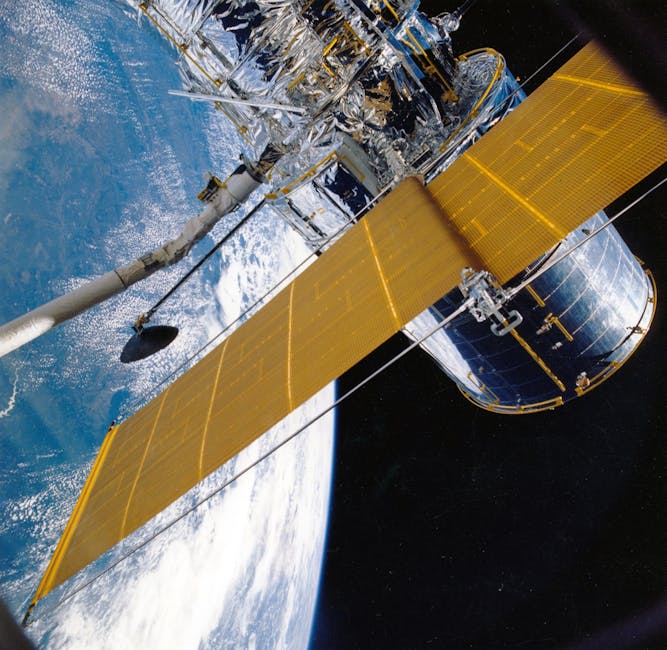
Starlink’s core innovation lies in its use of a massive constellation of satellites orbiting in low Earth orbit, typically between 340 and 550 kilometers above the planet. This proximity is the key differentiator from traditional geostationary (GEO) satellites, which orbit at about 35,786 kilometers. The significantly shorter distance dramatically reduces signal travel time, which translates to much lower latency. Consequently, Starlink can achieve latencies between 20ms and 50ms, making activities like online gaming, video conferencing, and real-time trading feasible, whereas GEO satellite internet often suffers from latencies of 600ms or more. This technological leap is what enables Starlink to market itself as a viable alternative not just for basic browsing, but for modern, data-intensive applications.
Furthermore, the system employs advanced phased-array antennas in its user terminals, commonly called “Dishy McFlatface.” These terminals are electronically steered to maintain a connection with the fastest-moving satellites overhead without any mechanical movement. They communicate using Ku-band and Ka-band radio frequencies, with future generations slated to incorporate optical laser links for inter-satellite communication. These laser links will allow data to hop between satellites in space, reducing reliance on a dense global network of ground stations and further improving latency for long-distance connections. For instance, data traveling from London to Tokyo could route through space via lasers faster than through terrestrial fiber optic cables that follow the curvature of the Earth.
The Architecture of the Constellation
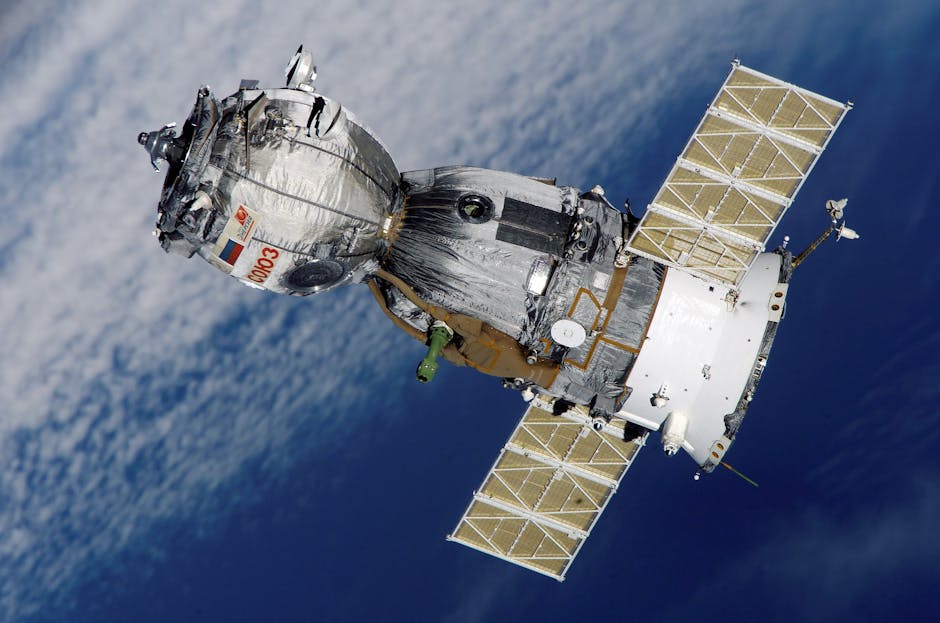
The scale of the Starlink project is unprecedented in commercial space history. SpaceX has regulatory approval from the Federal Communications Commission (FCC) to launch nearly 12,000 satellites, with plans filed for a second generation of up to 30,000 more. These satellites are launched in batches of 50-60 on SpaceX’s reusable Falcon 9 rockets, a process that has become remarkably routine. Each satellite is relatively small, weighing about 260 kilograms, and is designed with a krypton-fueled ion propulsion system for orbital maneuvering and end-of-life deorbiting. The constellation is organized in specific orbital shells at different inclinations to provide coverage from the equator to the poles, ensuring global service.
Real-World Performance and User Experience

So, how does Starlink internet perform in everyday use? According to data from Ookla’s Speedtest Intelligence, median download speeds for Starlink in the United States consistently exceed 100 Mbps, with upload speeds around 10-20 Mbps. These figures far outpace legacy satellite providers and are competitive with, or superior to, many rural DSL and fixed wireless offerings. However, it’s crucial to understand the variables at play. Performance is highly dependent on having a completely clear view of the sky; even a single tree branch in the field of view can cause intermittent outages. Moreover, network performance can dip during peak usage hours in densely subscribed cells as bandwidth is shared among users, a common challenge for any wireless network.
The user setup process is designed for simplicity. Customers receive a kit containing the dish, a Wi-Fi router, a power supply, and cables. The Starlink app uses augmented reality to help find the optimal installation spot with a clear view. Once positioned, the dish automatically aligns itself and connects to the constellation. Users report that the experience is transformative for rural living, enabling effective remote work, seamless streaming in 4K, and reliable communication that was previously impossible. Nevertheless, is Starlink the right choice for a user in a suburban area with access to cable or fiber? In most cases, no—terrestrial options will likely offer higher speeds, greater reliability, and lower cost without being susceptible to weather-related degradation.
Bridging the Digital Divide in Remote and Rural Areas
The most significant and celebrated impact of Starlink internet is its potential to bridge the persistent digital divide. In the United States alone, the FCC estimates that millions of Americans, particularly in rural communities, lack access to broadband meeting the 25/3 Mbps benchmark. Globally, the problem is magnitudes worse. Traditional telecom companies often find it economically unviable to run fiber or cable lines to sparsely populated areas, leaving residents with outdated dial-up, sluggish satellite, or expensive cellular data as their only options. Starlink’s satellite-delivered service requires no extensive ground infrastructure beyond a user’s dish, making it equally viable for a farm in Kansas, a research station in Antarctica, or a remote village in the Amazon.
“Starlink represents a paradigm shift in connecting the unconnected. It’s not just an incremental improvement; it’s providing a service tier that simply did not exist for vast swaths of the planet,” notes a telecommunications policy analyst from a major research institute.
This capability has profound implications for economic development, education, and healthcare. Schools can access digital curricula and video resources, clinics can facilitate telemedicine consultations with specialists in urban centers, and small businesses can participate in the global digital economy. Furthermore, governments and disaster response agencies are increasingly viewing Starlink as a critical tool for emergency communications when terrestrial networks are damaged by natural disasters like hurricanes or wildfires. The system’s rapid deployability was demonstrated in Ukraine, where terminals provided crucial connectivity after the invasion damaged infrastructure.
The Competitive Landscape and Market Disruption
Starlink’s entry has sent shockwaves through the telecommunications industry, particularly for incumbent satellite providers like Viasat and HughesNet, and rural fixed wireless internet service providers (WISPs). For decades, GEO satellite providers offered a monopoly on satellite internet with high-latency, data-capped plans. Starlink’s superior performance is forcing these companies to accelerate their own LEO projects, such as Viasat’s planned acquisition of Inmarsat and Project Kuiper, Amazon’s multi-billion dollar LEO constellation. The competition is heating up in the race to dominate the new space-based internet economy.
On the ground, the dynamic is more nuanced. In areas where a single provider offered poor DSL service at a high price, Starlink provides a welcome competitive alternative, often driving the incumbent to improve its offerings or lower prices—a classic benefit of market competition. However, for WISPs that have invested in building local fixed wireless networks, Starlink represents a direct threat that could undermine their business model. This raises a critical question: will Starlink stifle investment in terrestrial broadband expansion in hard-to-reach areas? Some policymakers worry that the availability of a ‘good enough’ satellite solution might reduce the political and economic pressure to fund future-proof fiber optic networks, which ultimately have far higher capacity and longevity.
Regulatory Hurdles and Global Expansion Challenges

Operating a global satellite internet service is as much a regulatory endeavor as a technological one. SpaceX must obtain landing rights and spectrum licenses from every country where it wishes to offer service. This process is fraught with complexity, as nations are protective of their sovereign airwaves and may have partnerships with local telecom operators who view Starlink as a competitor. Countries like India initially resisted, citing regulatory non-compliance, before eventually granting provisional licenses. Others, like France, have raised concerns about the electromagnetic interference Starlink terminals might cause with other satellite services.
Beyond spectrum, the astronomical number of satellites has ignited intense debate among astronomers, who warn that bright satellite trails are interfering with scientific observations and polluting the night sky. In response, SpaceX has experimented with darkening coatings, sun visors, and changing orbital orientations to reduce reflectivity. Additionally, the issue of space debris is paramount. With tens of thousands of planned satellites, the risk of collisions increases, potentially creating cascading fields of debris that could render valuable orbits unusable—a scenario known as Kessler Syndrome. SpaceX designs its satellites for full demisability and maintains a high reliability rate for post-mission deorbiting, but the long-term sustainability of such massive constellations remains a topic of global regulatory focus at bodies like the International Telecommunication Union (ITU).
The Future Roadmap: Starlink 2.0 and New Services
Starlink is not a static product; its roadmap points toward even more ambitious services. The most anticipated development is the rollout of Starlink Gen2 satellites. These larger, more powerful satellites will leverage SpaceX’s fully reusable Starship launch vehicle for deployment and will enhance capacity, coverage, and potentially enable direct-to-cell phone connectivity. This latter service, announced in partnership with T-Mobile and other global carriers, aims to provide basic texting, calling, and data to existing LTE phones anywhere under the sky, eliminating dead zones for emergency communications and basic connectivity.
Furthermore, SpaceX is aggressively expanding its in-motion services. Starlink Maritime already provides high-speed internet to ships at sea, while Starlink Aviation is being certified for commercial airlines, promising in-flight connectivity that rivals ground-based speeds. The service for recreational vehicles (RV) allows for nomadic use, albeit with potential deprioritization during network congestion. Looking further ahead, the potential integration of Starlink with Tesla vehicles and other IoT applications could create a seamlessly connected ecosystem for transportation and logistics. However, each new service layer adds complexity to network management and intensifies the debate over fair access and network neutrality in space.
Weighing the Pros and Cons for Potential Users
For consumers considering Starlink, a clear-eyed evaluation of its advantages and drawbacks is essential. On the pro side, the list is compelling: high-speed internet in locations with no other viable options, relatively low latency suitable for real-time applications, straightforward self-installation, and no long-term contracts. The upfront equipment cost, while significant, is a one-time fee for a powerful piece of technology. For remote homeowners, digital nomads, and businesses operating off the grid, these benefits are game-changing.
Conversely, the cons must be carefully weighed. The service is susceptible to weather degradation, particularly during heavy rain or snowstorms (rain fade). Speeds can be inconsistent and are explicitly not guaranteed, as stated in the service terms. The monthly subscription fee places it at the premium end of the residential internet market. Moreover, there are ethical considerations for some users, including the astronomical impact and the centralization of critical communications infrastructure under a single private company. Potential subscribers must ask themselves: is the premium for reliable, high-speed access in my remote location worth these trade-offs? For a growing number of people around the world, the answer is a resounding yes.
Conclusion
Starlink internet stands as a monumental achievement in aerospace engineering and telecommunications, delivering a practical solution to one of the modern world’s most stubborn problems: universal connectivity. Its impact is already being felt from remote family farms to conflict zones, proving that space-based infrastructure can play a direct and vital role in everyday life. While it faces legitimate challenges related to sustainability, regulation, and competition, its trajectory suggests a permanent and expanding role in the global network infrastructure.
In conclusion, Starlink is more than just another internet service provider; it is a catalyst for change, forcing the entire industry to innovate and expanding the very definition of what is possible for global communications. As the constellation grows and new services come online, its influence on how we work, learn, and connect will only deepen. The era of global, low-latency satellite internet is no longer a futuristic concept—it is here. Are you ready to see how it will reshape your world?