
Imagine landing in a foreign country and having instant, high-speed mobile data the moment you step off the plane, without ever touching a physical SIM card. This is the revolutionary promise of switchless eSIM technology, a game-changing advancement that is fundamentally reshaping how frequent travelers stay connected. Unlike traditional eSIMs that still require you to manually select a mobile network operator (MNO) profile, switchless eSIMs provide a truly seamless, automated connection experience. This innovation leverages a global network of partner carriers, intelligent software, and dynamic network switching to deliver uninterrupted internet access across borders. Consequently, for the modern digital nomad, international business professional, or avid vacationer, the era of hunting for local SIM cards, dealing with exorbitant roaming fees, or fiddling with APN settings is rapidly coming to an end.
Key Takeaways

- Switchless eSIMs provide automatic, intelligent network selection without any manual intervention from the user.
- This technology eliminates the need for physical SIM swaps and significantly reduces international roaming costs.
- Connectivity is managed through a single app, offering a unified dashboard for data usage and top-ups.
- It leverages a global network of local carrier partners to ensure the best possible signal and speed.
- Security is enhanced, as the digital profile is less susceptible to physical theft or loss compared to a plastic SIM.
- Adoption is accelerating as more smartphone manufacturers and telecom providers build native support.
What is Switchless eSIM Technology and How Does It Work?

At its core, switchless eSIM technology represents the next evolutionary step beyond the standard embedded SIM (eSIM). A traditional eSIM is a small, programmable chip soldered onto a device’s motherboard, capable of storing multiple carrier profiles. However, switching between these profiles—for example, from your home carrier to a local travel data plan—often requires a manual process through your device settings or a carrier’s app. In contrast, a switchless eSIM automates this entire process. The technology uses a sophisticated software layer, often delivered via a dedicated mobile application, that intelligently manages your connection based on your geographic location. When you land in a new country, the system automatically identifies and connects you to the best available local network from its pre-negotiated portfolio, all without a single tap from you.
Furthermore, the operational magic happens through a combination of cloud-based management and multi-IMSI (International Mobile Subscriber Identity) technology. Each switchless eSIM profile is not tied to a single carrier’s IMSI but can access a pool of IMSIs from various partner networks worldwide. The backend system continuously monitors signal strength, network congestion, and contractual data rates. Based on this real-time analysis, it can seamlessly roam intelligently between networks within a country or region to maintain optimal service. For instance, if you are in central London and your primary partner network experiences a temporary outage, the system can silently hand your connection over to a secondary partner, ensuring you remain online. This dynamic, user-transparent switching is the defining characteristic that sets it apart from earlier connectivity solutions.
The Tangible Benefits for the Frequent Traveler

The advantages of adopting a global data connectivity solution powered by switchless eSIMs are profound and multifaceted. First and foremost is the sheer convenience. The mental overhead of travel planning is significantly reduced when you remove the task of researching local SIM options, locating kiosks at busy airports, or ensuring your phone is unlocked. Your connectivity becomes a solved problem before you even depart. Secondly, the financial benefits are substantial. By connecting directly to local networks at negotiated rates, you avoid the predatory roaming charges imposed by your home carrier. A day of typical data usage abroad on a traditional roaming plan can cost upwards of $10-$15; a switchless eSIM plan for the same usage often costs a fraction of that, sometimes as low as $2-$5 per day for unlimited data in many regions.
Moreover, this technology enhances both productivity and personal experience. Business travelers can jump straight into work from the taxi ride from the airport, attending video calls and accessing cloud documents without delay. Leisure travelers can instantly use maps, translation apps, and social media to share their journey. There is also a notable security improvement. Losing a phone with a physical SIM card can be a double disaster, potentially allowing the finder to access two-factor authentication codes sent via SMS. With an eSIM, the profile is digitally locked to the device and can be remotely wiped or disabled through the provider’s app, adding a critical layer of protection. In essence, switchless eSIMs transform mobile data from a logistical hurdle into a reliable, invisible utility.
“Switchless eSIM technology is not just an incremental improvement; it’s a paradigm shift in global mobility. It treats the world as a single, contiguous coverage zone, which is how frequent travelers actually experience it,” notes a telecom analyst from GSMA Intelligence.
How Switchless eSIMs Compare to Traditional Roaming and Local SIMs

To fully appreciate the innovation, it’s essential to contrast switchless eSIMs with the two established methods of staying connected abroad: traditional international roaming and purchasing local physical SIM cards. Traditional roaming is the path of least resistance but also the most costly. Your phone simply uses partner networks of your home carrier, leading to often shockingly high per-megabyte charges for data. While some carriers offer daily or monthly travel passes, these are still premium-priced and may have throttling limits after a certain amount of usage. The primary advantage is convenience, but the financial and performance trade-offs are significant.
On the other hand, local SIM cards are the budget-conscious traveler’s traditional go-to. They offer cheap, high-speed data directly from a local carrier. However, the downsides are considerable: you need an unlocked device, you must find a retailer (often at an inconvenient time), you lose your original phone number while the local SIM is active, and you have to manage a new, temporary number. The process is time-consuming and can be confusing in countries with multiple carrier options and language barriers. Switchless eSIMs elegantly solve for the drawbacks of both methods. They provide the automated convenience of roaming (but smarter) at prices competitive with, or better than, local SIMs, while allowing you to keep your primary number active via Wi-Fi Calling or dual-SIM functionality.
A Direct Comparison Table
Consider the following pain points across different connectivity methods:
- Cost: Roaming (High) | Local SIM (Low) | Switchless eSIM (Low-Medium, high value)
- Convenience: Roaming (High) | Local SIM (Low) | Switchless eSIM (Very High)
- Setup Speed: Roaming (Instant) | Local SIM (Slow) | Switchless eSIM (Instant after initial app setup)
- Network Quality: Roaming (Variable) | Local SIM (Excellent) | Switchless eSIM (Excellent, intelligent selection)
- Number Management: Roaming (Keeps home #) | Local SIM (New #) | Switchless eSIM (Keeps home # via dual-SIM)
Setting Up and Managing Your Switchless eSIM Service
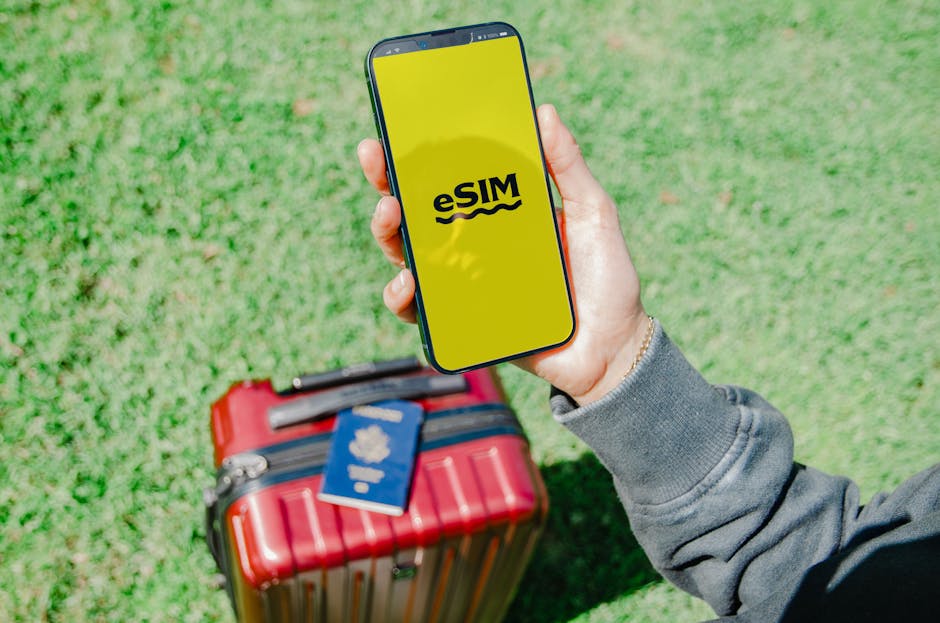
Getting started with a switchless eSIM is a remarkably straightforward process, designed for the tech-savvy traveler. The first step is to ensure your device is compatible. Most flagship smartphones from Apple, Google, and Samsung released in the last 3-4 years support eSIM technology. You then choose a service provider specializing in global eSIM data, such as Airalo, Truphone, or Nomad. Instead of visiting a store, you simply download their app from the official App Store or Google Play. Within the app, you browse and purchase a data plan for a specific region, country, or globally. The purchase and provisioning are entirely digital.
Upon purchase, the provider’s app will guide you through installing the eSIM profile onto your device. This typically involves scanning a QR code generated within the app or following a manual setup prompt. Crucially, this is a one-time process. Once the profile is installed, the switchless functionality takes over. For all future trips to covered regions, the system automatically activates the appropriate network. Management is centralized within the provider’s app, where you can monitor real-time data usage, top up your plan, view coverage maps, and access customer support. This unified dashboard is a stark contrast to the clutter of multiple SIM cards and carrier apps, providing a clean, modern interface for all your international connectivity needs. For more on managing multiple connections, see our guide on leveraging dual SIM smartphones.
The Current Landscape and Leading Providers

The market for travel eSIM providers is growing rapidly, fueled by increasing eSIM adoption in devices and a resurgence in global travel. Providers generally fall into two models: aggregators and full-fledged mobile virtual network operators (MVNOs). Aggregators, like Airalo, act as a marketplace, reselling data plans from local carriers in dozens of countries. Their strength lies in vast coverage and competitive, localized pricing. MVNOs, such as Truphone, often provide a more integrated service, sometimes including a real phone number for calls and texts alongside data, and may have deeper network integration for more reliable switching.
When evaluating providers, key considerations include coverage breadth (do they have strong partners in your target countries?), pricing transparency (are there hidden fees or throttling?), the quality of their mobile app, and customer support responsiveness. Some providers specialize in specific regions, offering unparalleled depth there. It’s also wise to check the technology behind the switchless claim—some providers offer true, automated switching, while others may still require a manual network selection in their app, which is a less seamless experience. Research from Statista projects the number of eSIM-enabled devices to exceed 6 billion by 2025, indicating this technology is moving swiftly into the mainstream.
Future Trends and The Road Ahead for Seamless Connectivity
The trajectory for switchless eSIM technology points toward even deeper integration and intelligence. In the near future, we can expect these systems to move beyond simple geographic switching. Imagine a system that predicts your travel itinerary based on calendar entries or flight confirmations and pre-provisions the necessary network profiles in the background. Furthermore, AI-driven network selection will become more sophisticated, factoring in real-time data not just on signal strength, but also on latency for specific applications (like video conferencing vs. web browsing), and even battery consumption patterns of different network technologies (5G NSA vs. 4G LTE).
Another significant trend is the move toward bundled offerings. We are already seeing travel companies, airlines, and insurance providers partnering with eSIM providers to offer connectivity as a value-added service with bookings. Soon, your flight ticket might automatically include a 72-hour data plan for your destination. Moreover, as the Internet of Things (IoT) expands, this technology will be critical for logistics, automotive (connected cars), and portable healthcare devices that operate globally. The ultimate goal is a completely frictionless experience where the concept of a “mobile network” becomes invisible to the user, replaced by a pervasive, intelligent, and personal internet bubble that moves with you everywhere. This vision is closely tied to broader advancements in 5G network architecture and edge computing.
Potential Challenges and Considerations
Despite its many benefits, adopting switchless eSIM technology is not without potential hurdles. Device compatibility remains the primary gatekeeper. While newer devices are universally supported, users with older smartphones or certain budget models may find their hardware lacking an eSIM capability. Additionally, in some rare cases, the automated switching logic might not perform perfectly, potentially connecting to a slower network when a faster one is available. However, most provider apps include a manual network selection override for such situations.
Another consideration is the regulatory environment. A few countries still have restrictions on eSIM usage for tourists, often to protect local telecom monopolies. For example, in some nations, eSIMs can only be activated by a locally registered carrier, which may preclude use by foreign-based eSIM providers. It is always crucial to check the provider’s coverage list and terms for your specific destination. Finally, while the technology is secure, it does centralize your connectivity management within a third-party app. Choosing a reputable provider with strong data privacy policies is essential. For insights into how policies shape technology, explore our analysis on telecom regulations from the ITU.
Conclusion
In summary, switchless eSIM technology is delivering on the long-held promise of seamless global connectivity, effectively making country borders irrelevant to your mobile internet experience. By eliminating the manual processes, high costs, and uncertainty associated with traditional roaming and local SIMs, it empowers the frequent traveler with instant, reliable, and affordable data access anywhere in the world. The combination of automated network switching, centralized app management, and robust security features positions it as the definitive connectivity solution for the modern global citizen.
As device support becomes ubiquitous and provider networks expand, this technology will soon transition from a travel hack to a standard expectation. The journey from hunting for a SIM card kiosk to enjoying automatic internet access upon arrival is a profound improvement in the travel experience. Therefore, if you regularly cross borders, investing time in selecting a reputable switchless eSIM provider may be one of the most impactful travel upgrades you can make. Are you ready to leave the plastic SIM card in the past and step into the future of frictionless global connectivity?