Key Takeaways
- Verizon’s 2025 network strategy is heavily focused on densifying its 5G Ultra Wideband network to deliver multi-gigabit speeds and lower latency.
- A massive fiber optic expansion is the critical backbone for both 5G and fixed wireless access, enabling new revenue streams.
- Strategic use of C-Band and mmWave spectrum will create a layered network architecture optimized for both coverage and capacity.
- Artificial Intelligence and machine learning will be fully operationalized for predictive network maintenance and automated optimization.
- The strategy pivots towards becoming a platform business, leveraging the network for IoT, edge computing, and private 5G solutions.
- Consumers and businesses should expect more reliable home broadband alternatives and powerful new enterprise-grade services.
Verizon’s 2025 network strategy represents a pivotal year for the telecommunications giant as it moves from building the foundation of its next-generation network to fully monetizing and optimizing it. The initial rollout phase of 5G is largely complete, and the focus has decisively shifted toward network densification, fiber deep deployment, and the integration of artificial intelligence. Consequently, 2025 will be the year where Verizon’s substantial investments in spectrum, infrastructure, and technology begin to coalesce into tangible, differentiated services for consumers, businesses, and wholesale partners. This comprehensive guide will dissect every major pillar of Verizon’s plan, providing you with a clear expectation of the network’s capabilities, coverage, and competitive impact.
The Core Pillar: 5G Ultra Wideband Densification and Evolution
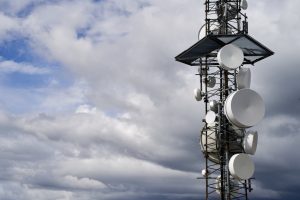
At the heart of Verizon’s 2025 network strategy is the aggressive densification of its 5G Ultra Wideband network. While nationwide coverage was the goal of the early 2020s, the focus for 2025 is squarely on capacity and performance in key markets. Verizon will deploy tens of thousands of new cell sites, particularly small cells, in urban cores, dense suburban areas, stadiums, airports, and major transportation corridors. This densification is essential to support the exploding data demand and to deliver on the promise of consistent multi-gigabit speeds and single-digit millisecond latency. Moreover, the company is transitioning its 5G core network to a fully virtualized, cloud-native architecture, which provides unprecedented agility and service creation capabilities.
In addition to physical densification, Verizon is evolving its 5G technology stack. The deployment of Standalone (SA) 5G will move from limited trials to broader commercialization. SA 5G, which operates independently of the 4G LTE anchor, unlocks advanced network features like network slicing, ultra-reliable low-latency communication (URLLC), and massive machine-type communication (mMTC). For instance, a factory could use a dedicated network slice for mission-critical robotics while another slice handles employee Wi-Fi, all on the same physical infrastructure. This technological evolution is what will truly separate 5G from enhanced 4G, enabling transformative business applications.
Spectrum Strategy: Layering C-Band and mmWave
Verizon’s spectrum portfolio is a key competitive advantage, and its 2025 strategy involves intelligent layering. The workhorse spectrum will be its vast holdings in the C-Band (3.7-3.98 GHz), which offers an ideal balance of coverage and capacity. By 2025, Verizon expects to have fully cleared and deployed its entire C-Band license, significantly boosting mid-band 5G coverage. For extreme capacity in hyper-dense locations, millimeter wave (mmWave) spectrum remains crucial. You can expect to see mmWave deployments expand beyond street-level coverage to inside more public venues, enterprise campuses, and for fixed wireless access hubs. This layered approach ensures that the right tool is used for the right job: C-Band for reliable, fast coverage across cities and towns, and mmWave for stadiums, concert venues, and tech campuses where data demand is astronomical.
The Critical Backbone: Accelerating Fiber Optic Deployment
Fiber is the unsung hero of Verizon’s 2025 network strategy. Every advanced 5G cell site, every fixed wireless access tower, and every enterprise edge computing node requires a high-capacity fiber connection. Verizon is engaged in one of the industry’s most ambitious fiber buildouts, not just to homes but also to cell towers and business premises—a concept known as fiber deep. This investment serves a dual purpose: it backhauls the tremendous data from the 5G network, and it directly supports Verizon’s Fios and business fiber services. In fact, the synergy between fiber and wireless is a central thesis; fiber enables wireless, and wireless can extend the reach of fiber’s capabilities.
For consumers and businesses, this means two things. First, the reliability and speed of Verizon’s 5G and FWA services will improve dramatically as they are supported by robust fiber links. Second, Verizon is likely to expand its Fios footprint into new, adjacent markets where the economics of a combined fiber/wireless build make sense. The company has signaled that where it builds fiber, it will also build 5G, creating a powerful, integrated infrastructure platform. This strategy directly counters cable competitors by offering a symmetrical multi-gigabit alternative, both via a physical fiber line and over the air.
Intelligent Operations: The AI and Automation Transformation
Managing a network of Verizon’s scale and complexity is impossible with human effort alone. Therefore, a major component of the 2025 strategy is the full operationalization of artificial intelligence and machine learning. Verizon is deploying AI across its network operations centers to shift from reactive troubleshooting to predictive maintenance and automated optimization. These systems analyze petabytes of network performance data in real-time to predict equipment failures before they happen, dynamically re-route traffic around congestion, and optimize radio frequency parameters for the best possible user experience.
“The future network is a self-optimizing, self-healing entity. By 2025, we expect a significant majority of network anomalies and performance adjustments to be managed autonomously by our AI platforms, freeing our engineers to focus on innovation and new service development,” explains a senior network architect familiar with Verizon’s roadmap.
For you, the end-user, this translates to a more reliable and consistent connection. Dropped calls, buffering videos, and latency spikes will become increasingly rare as the network intelligently adapts to usage patterns and potential failure points. Furthermore, this automation drives down operational costs for Verizon, savings that can be reinvested in further network expansion or used to improve margin profiles.
Beyond Connectivity: The Platform and Enterprise Pivot
Verizon’s 2025 vision extends far beyond merely providing a pipe for data. The strategy is to leverage the advanced 5G and fiber network as a platform for higher-value services. This is most evident in the enterprise and business sector. Verizon is aggressively marketing Private 5G networks, Mobile Edge Compute (MEC), and comprehensive IoT solutions. A manufacturing plant, for example, can lease a private slice of Verizon’s network or have a fully on-premises private 5G system installed, connecting thousands of sensors, autonomous guided vehicles, and augmented reality tools for maintenance with ultra-reliable, low-latency connectivity.
Similarly, by partnering with cloud giants like Amazon Web Services (AWS) and Microsoft Azure, Verizon is bringing compute and storage resources to the edge of its network. This means data from an IoT device or a video analytics application can be processed locally at a Verizon network edge location instead of traveling hundreds of miles to a centralized cloud data center, slashing latency. In 2025, expect Verizon to launch more packaged, industry-specific solutions (e.g., for logistics, healthcare, retail) that bundle connectivity, edge compute, security, and software, moving up the value chain from a connectivity provider to a digital transformation partner. For more on how this impacts broader infrastructure, see our analysis on future network infrastructure trends.
Consumer Market Impact: Fixed Wireless Access and Home Ecosystem
For the average consumer, the most visible impact of Verizon’s 2025 network strategy will be the continued rise of 5G Home Internet (Fixed Wireless Access – FWA). Leveraging its densifying 5G network, Verizon aims to make FWA a true, mass-market competitor to cable and DSL. The goal is to offer download speeds consistently exceeding 300 Mbps, with peak speeds hitting 1 Gbps in mmWave-equipped areas, all with simple self-installation and no long-term contracts. This product is a key growth engine for Verizon, allowing it to compete in the broadband market without the immense cost of wiring every single home with fiber.
Furthermore, Verizon will deepen the integration of its network with the smart home. Expect tighter bundling of 5G Home internet with its myPlan mobile offerings and partnerships with smart home device manufacturers. The vision is a seamless, managed home ecosystem where Verizon provides not just the connectivity, but also the security, device management, and support for a fully connected home. The reliability of this ecosystem will be directly tied to the underlying network densification and fiber deployment happening now.
Network Performance and Coverage Expectations
What does all this mean for the actual map and the speed test results? By 2025, customers can expect Verizon’s 5G Ultra Wideband (using C-Band) coverage to be nearly ubiquitous in urban and suburban areas, with solid penetration into many rural communities along major highways. The notorious “5G nationwide” (dynamic spectrum sharing on low-band) will increasingly serve as a fallback layer, with the primary experience being the faster mid-band spectrum. Independent drive-test results from firms like RootMetrics and Ookla will likely show Verizon closing any performance gaps and potentially leading in more metropolitan markets for both speed and consistency.
However, challenges remain. Network densification faces hurdles like municipal permitting delays and community opposition to new cell sites. The physical buildout of fiber is time-consuming and capital-intensive. Consequently, while the trajectory is positive, improvements will be iterative and market-specific. Users in top-tier cities will see dramatic improvements faster than those in secondary markets. Verizon’s public coverage maps will become more detailed, but the real test will be real-world performance in your specific neighborhood, which hinges on the completion of local infrastructure projects.
Competitive Landscape and Market Positioning
Verizon’s 2025 moves must be viewed in the context of fierce competition. T-Mobile, with its deep Sprint-acquired mid-band spectrum, has a current lead in 5G coverage and is also pushing into FWA and enterprise services. AT&T is executing its own fiber and 5G expansion plans. Verizon’s strategy is a clear response: it is betting that its superior spectrum quality (especially its mmWave holdings), coupled with its massive fiber investment, will create a network that is not just wide, but also deep and capable of handling the most demanding applications. Its marketing will likely shift from claiming “most reliable” 4G network to touting “most advanced” or “most powerful” 5G network.
The battleground will increasingly be the enterprise and wholesale markets. Can Verizon’s private network and edge compute offerings outflank its rivals and capture lucrative contracts? Furthermore, how will it leverage its network to create unique consumer experiences, perhaps in gaming, augmented reality, or live event streaming? Success will depend on flawless execution of its technical roadmap and effective partnerships with application developers. To understand the regulatory environment shaping this competition, explore our coverage of key telecom regulation updates.
Challenges and Risks on the Road to 2025
No strategy is without its risks. Verizon’s ambitious 2025 network strategy faces significant headwinds. First is the enormous capital expenditure required. The company is guiding to capital spending in the $17-18 billion range annually through at least 2025, a level that pressures free cash flow and limits financial flexibility. Second, the return on this investment (ROI) is not instantaneous. Monetizing 5G through new enterprise services takes time, and consumer ARPU (average revenue per user) growth is slow. Verizon must successfully upsell customers to more premium plans and services to justify the spend.
Third, execution risk is high. Coordinating nationwide fiber builds, cell site deployments, and software upgrades is a logistical nightmare. Delays in equipment supply chains or software development could push timelines back. Finally, there is competitive risk. If T-Mobile or AT&T executes faster or innovates in service bundling, they could capture market share before Verizon’s network advantages fully materialize. Verizon’s leadership is betting that its methodical, quality-focused approach will win in the long run, but the market’s patience is finite.
Conclusion
In summary, Verizon’s 2025 network strategy is a comprehensive blueprint to transition from a leading wireless carrier to a leader in integrated connectivity and digital platforms. The core of the plan rests on three interconnected pillars: densifying a layered 5G network, building a future-proof fiber optic backbone, and infusing the entire operation with AI-driven intelligence. For consumers, this means faster, more reliable home and mobile internet. For businesses, it opens the door to transformative technologies like private networks and edge computing that can redefine operations.
The success of Verizon’s 2025 network strategy hinges on flawless execution and its ability to translate technical superiority into compelling customer experiences and new revenue streams. While challenges around cost and competition are real, the direction is clear: Verizon is building a network designed not just for today’s smartphone traffic, but for the data-intensive, latency-sensitive applications of the rest of this decade. As these plans unfold, what aspect of network performance—be it rural coverage, in-home gaming latency, or business application support—is most critical to you?