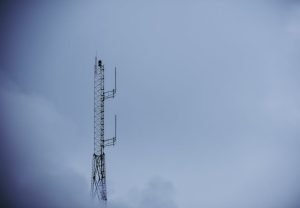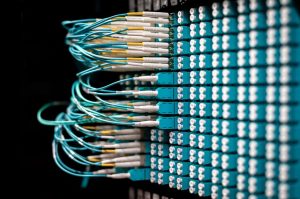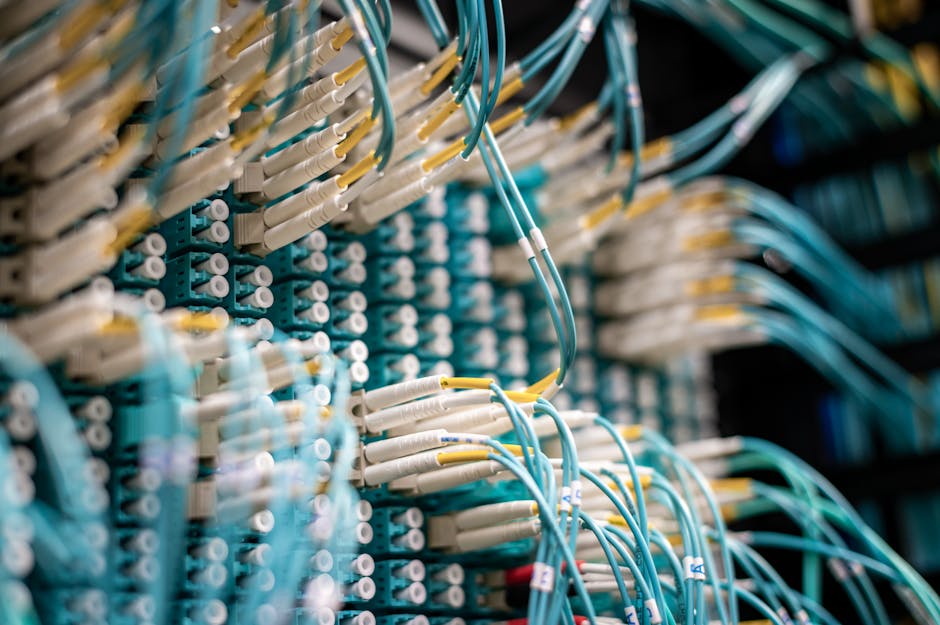
The future of mobile networks is inextricably linked to the pervasive deployment and evolution of fiber optics. As the telecommunications industry races to deliver on the full promise of 5G and lays the groundwork for 6G, the limitations of traditional copper and microwave backhaul are becoming starkly apparent. Fiber optics, with its unparalleled bandwidth, low latency, and reliability, is not merely an enhancement but the fundamental backbone required to support the explosive growth in data traffic, the proliferation of Internet of Things (IoT) devices, and the stringent demands of real-time applications like autonomous vehicles and immersive extended reality (XR). Consequently, exploring the future of fiber optics in mobile networks reveals a landscape of deep convergence, where the radio access network (RAN) and the optical transport network become a single, cohesive, and intelligent system.
Key Takeaways

- Fiber optics is the non-negotiable backbone for 5G Advanced and 6G, enabling the extreme speeds and ultra-low latency these technologies demand.
- Network densification through small cells is economically viable only with a deep fiber footprint reaching deep into neighborhoods and urban cores.
- Architectural shifts like Cloud RAN and Open RAN are dissolving the boundary between radio and transport, making fiber fronthaul essential.
- Emerging technologies like hollow-core fiber and advanced wavelength division multiplexing (WDM) will push optical capacities into the petabit-per-second realm.
- The convergence of fixed and mobile networks (FMC) onto a single fiber infrastructure is a major trend for operational efficiency and service delivery.
- Investments in fiber deployment today are strategic investments in a nation’s or company’s competitive digital future.
The Indispensable Role of Fiber in 5G and 6G Evolution

5G technology is often discussed in terms of its radio innovations, such as massive MIMO and millimeter-wave (mmWave) spectrum. However, these advanced radio capabilities are rendered ineffective without a corresponding revolution in the underlying transport network. The International Telecommunication Union (ITU) defines three key usage scenarios for 5G: enhanced Mobile Broadband (eMBB), Ultra-Reliable Low-Latency Communications (URLLC), and massive Machine-Type Communications (mMTC). Each of these scenarios places unique and extreme demands on the network backbone. For instance, URLLC applications like remote surgery or industrial automation require end-to-end latency of less than one millisecond—a target impossible to achieve without the near-speed-of-light transmission and deterministic performance of fiber optics. Furthermore, the shift towards Cloud RAN (C-RAN) architectures, where baseband processing is centralized, necessitates high-capacity, low-latency fiber links known as fronthaul to connect remote radio units to centralized hubs.
Looking beyond 5G to the nascent concept of 6G, the role of fiber becomes even more profound. Researchers envision 6G networks supporting terabit-per-second speeds, sub-millisecond latencies, and the seamless integration of sensing, communication, and AI. These visions hinge on the availability of an ultra-dense, intelligent optical network. As a result, the fiber plant is evolving from a passive transport layer into an active, programmable resource. This transformation is critical for managing the complex network slicing required to provide guaranteed quality of service (QoS) for diverse applications on a shared physical infrastructure. In essence, the radio network provides the final wireless hop, but the fiber optic core provides the intelligent highway system that directs and prioritizes all traffic.
Network Densification and the Small Cell Challenge

The quest for higher capacity and coverage, especially in dense urban environments, drives the relentless densification of mobile networks. Network operators are deploying thousands of small cells—low-power radio nodes—on lampposts, building facades, and inside venues. This strategy is essential for harnessing high-frequency mmWave spectrum, which offers vast bandwidth but has limited range and poor penetration. However, this proliferation of small cells creates a massive backhaul challenge. Each small cell requires a high-speed connection to the core network. Microwave radio can be a solution in some cases, but it is constrained by spectrum availability, line-of-sight requirements, and weather susceptibility. For reliable, future-proof, and high-capacity connectivity, fiber is the only viable medium.
The economics of small cell deployment are heavily dependent on the availability of deep fiber infrastructure. The “last hundred meters” problem becomes a significant cost and logistical bottleneck. Operators and municipalities are increasingly collaborating on Dig Once policies and joint-build agreements to lay conduit during other construction projects, thereby reducing future deployment costs. Companies like Crown Castle have built businesses around leasing fiber and physical infrastructure to mobile operators. Without a dense mesh of fiber reaching every street corner, the vision of ubiquitous gigabit+ mobile connectivity will remain economically unfeasible. This reality makes fiber deployment a critical national infrastructure priority, akin to building the interstate highway system in the 20th century.
Architectural Shifts: From Backhaul to Fronthaul and xHaul

The traditional mobile network architecture clearly separated the radio access network (RAN) from the core network, connected via a backhaul link. The future is blurring these lines. The emergence of Open RAN (O-RAN) and virtualized RAN (vRAN) is disaggregating hardware and software, promoting vendor interoperability, and centralizing processing functions. This architectural revolution creates new categories of fiber connectivity requirements, collectively known as “xHaul.”
The Criticality of Fronthaul
In a centralized RAN (C-RAN) architecture, the baseband unit (BBU) is pulled away from the cell site and pooled in a centralized location. The connection between the remote radio unit (RRU) at the cell site and the centralized BBU is called fronthaul. This link has extremely demanding specifications, particularly for the Common Public Radio Interface (CPRI) protocol used in 4G and early 5G. It requires massive bandwidth (often multiple 10 Gbps or 25 Gbps links) and ultra-low, deterministic latency. Only direct fiber connections can meet these stringent requirements. The evolution towards more efficient fronthaul protocols like enhanced CPRI (eCPRI) in 5G helps, but the underlying need for high-performance fiber remains absolute.
Midhaul and the Distributed Unit
5G’s 3GPP standards introduced a new functional split, creating a Distributed Unit (DU) and a Centralized Unit (CU). The link between the DU and the CU is termed midhaul. Midhaul has slightly more relaxed latency requirements than fronthaul but still demands high capacity and reliability, typically served by fiber. This layered xHaul architecture (fronthaul, midhaul, backhaul) creates a hierarchical fiber network, where different segments have different performance profiles, all crucial for the overall network function. Managing this complex fiber ecosystem requires sophisticated network orchestration software and intelligent management systems.
Technological Innovations in Optical Fiber Itself

To keep pace with the demands of future mobile networks, the physical fiber cable and the transmission technology are undergoing significant innovation. The goal is to increase capacity, reduce latency, and improve flexibility.
One of the most promising advancements is hollow-core fiber. Traditional solid-core glass fiber carries light at about 70% of the speed of light in a vacuum. Hollow-core fiber, which guides light through an air-filled central channel, can achieve speeds much closer to the vacuum speed of light, reducing latency by approximately 30%. For long-haul and metropolitan links, this reduction is a game-changer for financial trading networks and other ultra-low-latency applications. Furthermore, researchers are pushing the limits of wavelength division multiplexing (WDM) and space-division multiplexing (SDM) to cram more data down a single strand of fiber. Coherent optical technology, which uses advanced modulation of light’s phase and amplitude, is now standard for high-capacity long-haul links and is moving into metro and access networks.
Another key innovation is the development of more flexible and durable fiber cables suitable for dense urban deployment. Micro-ducts, which allow multiple fiber cables to be blown through small conduits, and ruggedized, bend-insensitive fibers enable faster, cheaper, and less intrusive installations. These innovations are vital for the economics of connecting the myriad of small cells and antenna sites required for future networks. According to a report by the OFS Optics, bend-insensitive fibers can reduce installation losses and improve network reliability in tight spaces.
The Convergence of Fixed and Mobile Networks (FMC)

A powerful trend shaping the future is Fixed Mobile Convergence (FMC). This concept involves the seamless integration of fixed broadband (like fiber-to-the-home, or FTTH) and mobile services over a single, unified network infrastructure. For network operators, this is a strategic efficiency play. Instead of maintaining separate transport networks for fixed and mobile customers, they can converge traffic onto a single, high-capacity fiber backbone. This approach simplifies operations, reduces costs, and allows for more innovative service bundles.
From a consumer perspective, FMC enables truly ubiquitous connectivity. Your smartphone could seamlessly hand off between a cellular connection outdoors and your home Wi-Fi (which is fed by FTTH) indoors, with no perceptible change in service quality. More importantly, the deep fiber deployed for FTTH becomes the same infrastructure that feeds nearby 5G small cells. This symbiotic relationship accelerates the business case for fiber deployment. Companies like Verizon have explicitly linked their 5G Ultra Wideband rollout with their Fios fiber footprint, using fiber to anchor both their fixed and mobile networks. This convergence is a clear indicator that the future is not about choosing between fiber or wireless, but about leveraging fiber to make wireless infinitely better.
Economic and Strategic Implications for Operators and Nations
The transition to fiber-centric mobile networks represents a colossal capital investment. For mobile network operators (MNOs), the calculus involves balancing the immense upfront cost of trenching and laying fiber against the long-term operational benefits and revenue potential from new 5G/6G services. This dynamic is leading to new business models, including increased collaboration between incumbent telcos, competitive fiber providers (like Altice), and infrastructure investment funds. Furthermore, the sharing of fiber infrastructure among multiple operators (through neutral host models or network-as-a-service offerings) is becoming more common to defray costs and accelerate deployment.
On a national and global scale, the extent and quality of a country’s fiber infrastructure are becoming key determinants of economic competitiveness. Nations with widespread, deep fiber networks will be better positioned to foster innovation, attract digital industries, and ensure digital inclusion. Governments are recognizing this, leading to significant public funding initiatives, such as the United States’ Internet for All program and the European Union’s Digital Decade targets. As one industry analyst noted in a recent piece on telecom infrastructure investment:
“The nations that win the 21st-century digital economy will be those that treated fiber not as a utility, but as a strategic national asset, woven into the fabric of their infrastructure planning from the outset.”
The race for digital supremacy is, at its core, a race to deploy fiber.
Addressing Deployment Challenges and the Road Ahead
Despite the clear imperative, deploying fiber on the scale required is fraught with challenges. The most significant hurdles are not technological but regulatory and logistical. Obtaining permits from thousands of different municipal authorities, coordinating with other utilities, and managing the public disruption of construction (often called “road-mending”) are time-consuming and expensive processes. The skilled labor shortage for fiber splicing and network engineering also constrains the pace of rollout.
To overcome these challenges, a multi-stakeholder approach is essential. Standardized, streamlined permitting processes at the state or national level can reduce delays. Increased investment in workforce training programs is critical. Moreover, technological solutions like improved planning software, micro-trenching equipment, and aerial fiber deployment can help reduce costs and disruption. The industry must also continue to innovate in fiber technology itself, making cables cheaper, easier to install, and more future-proof to justify the initial investment. The roadmap ahead is clear: fiber will form the nervous system of our digital world, and its continued evolution will directly enable the next generation of mobile connectivity, from enhanced 5G to the terabit era of 6G.
Conclusion
Exploring the future of fiber optics in mobile networks reveals a simple, powerful truth: wireless freedom is built on a foundation of wired fiber. The journey from 5G to 6G and beyond is not just a story of radio spectrum and antenna technology; it is a story of light pulses traveling through glass threads. The architectural shifts towards Open RAN and cloud-native networks, the relentless drive for network densification, and the strategic convergence of fixed and mobile services all converge on a single, non-negotiable requirement: more fiber, deeper into the network, with greater intelligence and capacity. Consequently, investments made today in deploying and upgrading fiber optic infrastructure are investments in the very fabric of our future digital society. The question for operators, policymakers, and communities is not if this fiber future will arrive, but how quickly and equitably they can build it. Are you prepared for the fiber-centric world that will power the next decade of innovation?