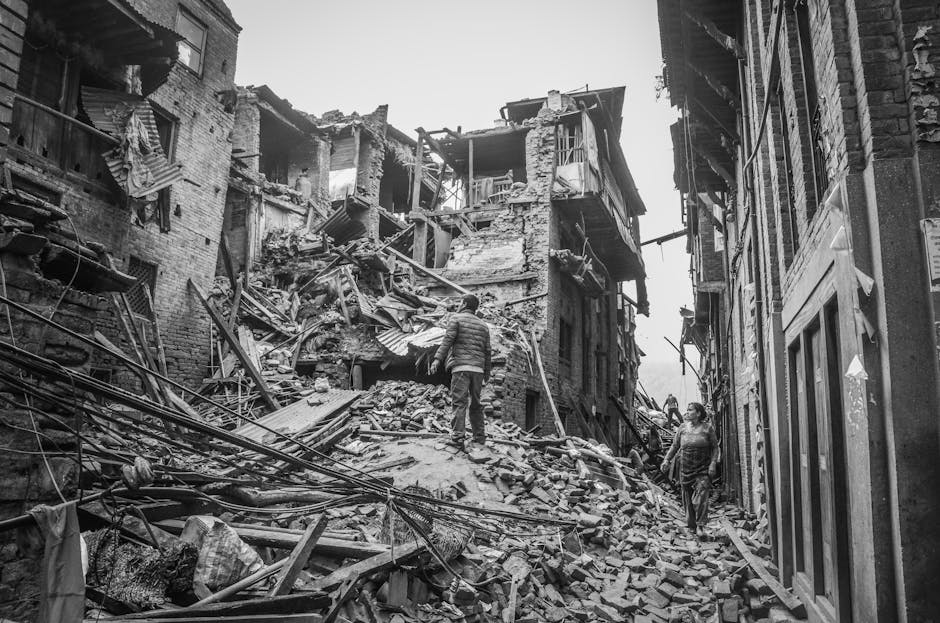
The future of satellite communication in disaster recovery is being reshaped by a convergence of technological leaps, from low Earth orbit constellations to artificial intelligence, fundamentally altering how first responders and communities respond to crises. As climate change intensifies the frequency and severity of natural disasters, the limitations of traditional terrestrial networks become glaringly apparent. Consequently, a new paradigm is emerging where satellite systems provide not just a backup, but a primary, resilient, and intelligent layer of global connectivity. This evolution promises to bridge the dangerous communication gaps that have historically hampered rescue efforts, resource allocation, and public safety warnings in the immediate aftermath of catastrophic events.
Key Takeaways
- Next-generation LEO constellations like Starlink provide low-latency, high-bandwidth connectivity that is deployable within hours of a disaster.
- Direct-to-device satellite services will enable emergency alerts and basic communication on standard smartphones without cellular infrastructure.
- AI and machine learning are being integrated to autonomously predict network demand, optimize satellite resource allocation, and analyze disaster imagery.
- Hybrid networks that seamlessly blend satellite, aerial, and terrestrial assets will create ultra-resilient communication fabrics.
- Standardized global protocols and pre-positioned equipment are critical to ensuring interoperability and rapid deployment across international borders.
- The commercial space sector is driving down costs and accelerating innovation, making advanced satcom solutions more accessible to all levels of government.
From Backup to Frontline: The Paradigm Shift in Emergency Comms
For decades, satellite communication in disaster scenarios was viewed as a last-resort backup—a bulky, expensive, and slow-to-deploy option used only when all ground-based systems had failed. This perspective is now obsolete. The future positions satellite connectivity as an integrated, frontline component of any robust disaster recovery strategy. This shift is driven by the recognition that terrestrial networks are inherently vulnerable; fiber can be cut, cell towers can lose power or be physically destroyed, and microwave links can be disrupted. In contrast, satellites, especially those in diverse orbits, offer a layer of resilience that originates from outside the disaster zone itself.
Furthermore, the nature of modern emergency response demands real-time data exchange that goes far beyond voice calls. High-definition video feeds from drones surveying damage, real-time GIS mapping of floodwaters or fire fronts, and the continuous telemetry from IoT sensors monitoring structural integrity or chemical leaks all require substantial bandwidth. Next-generation satellite systems are uniquely equipped to meet this demand from day one of a crisis. As a result, emergency operations centers are beginning to pre-integrate satellite terminals into their command vehicles and supply caches, treating them with the same operational priority as water and medical supplies.
The Critical Role of LEO Constellations
The advent of massive low Earth orbit (LEO) constellations, such as SpaceX’s Starlink, OneWeb, and Amazon’s Project Kuiper, is the single most transformative factor in this paradigm shift. Unlike traditional geostationary (GEO) satellites stationed 36,000 km away, LEO satellites orbit at altitudes between 500-2,000 km. This proximity drastically reduces latency—the signal delay—from several hundred milliseconds to under 50 ms. For disaster recovery, this means functional video conferencing, cloud access, and real-time collaborative tools that were previously impractical over satellite. Moreover, the sheer number of satellites in these constellations creates a dense mesh network in the sky, ensuring redundancy; if one satellite loses link, another can almost instantly take over.
Next-Generation Technologies Redefining Response Capabilities
The future toolkit for disaster recovery communicators will be powered by a suite of interoperable technologies that make satellite links faster, smarter, and more user-friendly. First, the terminals themselves are undergoing a revolution. Companies are developing ultra-portable, rapidly deployable user terminals that can be set up by a single person in minutes. These range from briefcase-sized units to even smaller, pizza-box-sized flat panels with auto-pointing capabilities. Secondly, onboard processing and inter-satellite laser links are becoming standard. These lasers allow satellites to relay data between themselves without needing to downlink to a ground station that might be in the disaster zone, creating a resilient space-based internet backbone.
Perhaps the most groundbreaking development for public safety is the emergence of direct-to-device satellite services. Companies like SpaceX (partnering with T-Mobile), Apple (via Globalstar), and AST SpaceMobile are pioneering the ability for standard, unmodified smartphones to connect directly to satellites for emergency messaging and basic data. In a disaster where cell towers are inoperable, this technology could allow survivors to send SOS messages, receive evacuation orders, and share their location directly from their pocket. This democratizes access to life-saving connectivity, moving beyond specialized equipment for first responders to empower every individual in the crisis area.
“The integration of direct-to-device satellite capability into public warning systems represents a quantum leap in community resilience. It turns every smartphone into a potential lifeline, fundamentally changing the calculus of search and rescue.” – Dr. Elena Vance, Director, Institute for Crisis Informatics.
The AI-Powered Satellite Network: Predictive and Adaptive Response
Artificial intelligence and machine learning are injecting a new level of intelligence into satellite disaster response, transforming networks from passive pipes into active, predictive partners. One major application is in disaster prediction and preparedness. AI models can analyze historical data, weather patterns, and real-time sensor feeds to predict areas of high risk for floods, wildfires, or landslides. Satellite operators can then use this intelligence to pre-position bandwidth capacity or even steer satellite resources to hover over high-probability crisis zones before an event even strikes, ensuring immediate connectivity the moment it’s needed.
Once a disaster hits, AI takes on critical roles in network management and damage assessment. Machine learning algorithms can dynamically manage the satellite network’s resources, prioritizing bandwidth for emergency services, hospitals, and command centers while efficiently allocating remaining capacity to the public. Furthermore, AI can be deployed for rapid analysis of satellite imagery. Automated systems can compare pre- and post-disaster satellite photos to identify collapsed buildings, blocked roads, flooded areas, and population displacements within hours, providing responders with actionable intelligence maps far faster than human analysts could produce.
Autonomous Systems and IoT Integration
The synergy between satellites, AI, and the Internet of Things (IoT) will create an autonomous response ecosystem. Imagine a network of seismic, hydrological, and meteorological sensors deployed in a wildfire-prone region. These sensors, connected via low-power satellite links (like those offered by IoT-focused satellite networks), can detect the earliest signs of a fire—heat, smoke, and wind shifts. An AI system can analyze this data, confirm the threat with satellite thermal imagery, and automatically trigger a cascade of actions: alerting authorities, issuing public warnings via direct-to-device satellite alerts, and even directing unmanned aerial vehicles (UAVs) to the location for initial assessment, all before a human dispatcher is fully briefed.
Building the Hybrid, Interoperable Network of the Future
The ultimate resilience will not come from any single technology but from a seamlessly integrated hybrid network. The future disaster recovery communication fabric will intelligently blend multiple layers: GEO satellites for broad broadcast coverage, LEO constellations for high-speed data, high-altitude platform stations (HAPS) like solar-powered drones or balloons for persistent local coverage, and whatever remnants of the terrestrial cellular and fiber network remain operational. The key to making this work is sophisticated software-defined networking (SDN) and network virtualization. These technologies will allow the system to automatically and dynamically route traffic over the best available path, switching between satellite and terrestrial links without the user noticing.
However, technology alone is insufficient without interoperability. A major challenge today is the proliferation of different satellite systems, frequencies, and terminal types that may not work together. The future requires the development and adoption of global standards and open protocols for disaster communications. Initiatives like the International Telecommunication Union’s (ITU) focus on emergency telecommunications and the work of groups like the TCCA (Critical Communications Association) are vital. Furthermore, pre-positioned, interoperable equipment kits at strategic locations—such as airports, military bases, and UN depots—can ensure that international aid teams arriving in a disaster-stricken country can immediately establish communication with local authorities.
Overcoming the Remaining Challenges: Cost, Access, and Regulation
Despite the promising trajectory, significant hurdles must be cleared to fully realize the future of satellite communication in disaster recovery. Cost, while decreasing due to commercial innovation, remains a barrier for many developing nations and local emergency management agencies. The initial investment in terminals and service contracts can be prohibitive. Solutions are emerging in the form of “connectivity as a service” models and public-private partnerships where governments or humanitarian organizations pay only for the capacity they use during a crisis, with satellites on standby the rest of the time. Additionally, the proliferation of low-cost, mass-produced user terminals will continue to drive accessibility.
Regulatory and spectrum allocation issues also pose a complex challenge. The radio spectrum is a finite resource, and the exploding number of satellite constellations is creating congestion and interference risks. Coordinating spectrum for emergency use across national borders requires intense diplomatic and regulatory cooperation. Moreover, questions of data sovereignty, privacy, and cybersecurity in satellite networks used during crises are paramount. Ensuring these networks are resilient against jamming, spoofing, or cyber-attacks when a nation or region is most vulnerable is a critical area of ongoing research and development.
Real-World Applications and Future Scenarios
We can already see glimpses of this future in action. During the 2023 floods in Pakistan, Starlink terminals were rapidly deployed to restore connectivity for aid organizations when terrestrial infrastructure was submerged. In the wake of the 2022 volcanic eruption and tsunami in Tonga, which severed the country’s sole undersea fiber optic cable, satellite links became the nation’s lifeline for weeks. Looking forward, imagine a near-future scenario where a major earthquake strikes a megacity. Within the first hour, LEO satellite constellations automatically increase power and focus coverage over the affected grid. AI-analysis of satellite imagery identifies the most damaged neighborhoods. First responders arrive with instantly connecting portable terminals. Meanwhile, every citizen with a smartphone receives a government alert with evacuation routes and safe zone locations via direct-to-device satellite SMS, and can respond with their status and location.
This integrated approach extends to long-term recovery as well. Satellite connectivity enables the re-establishment of banking, supply chain logistics, and remote education and healthcare services while physical infrastructure is rebuilt. It supports the deployment of temporary network infrastructure for reconstruction crews and displaced populations in temporary shelters. The continuum of care from immediate response to sustained recovery will be underpinned by persistent, reliable satellite links.
Conclusion
The future of satellite communication in disaster recovery is not a distant concept but an accelerating reality. It is a future defined by resilience, intelligence, and ubiquity, where space-based assets form an always-available nervous system for our planet during its most vulnerable moments. The convergence of mega-constellations, direct-to-device technology, artificial intelligence, and hybrid networking promises to eliminate communication blackouts, accelerate response times, and ultimately save lives on an unprecedented scale. However, realizing this potential fully requires continued technological innovation, strategic investment, and, most importantly, global collaboration to establish the standards and partnerships that will ensure this powerful tool serves all of humanity when disaster strikes. The question is no longer if satellite communication will be central to disaster recovery, but how quickly we can build the integrated, equitable, and resilient system the future demands.